


NEARLY 1,000 women died during childbirth across health facilities in the country last year.
According to the Ghana Health Service (GHS), the figure translates to about 122 per 100,000 live births, significantly above the World Health Organization (WHO) target of 70 deaths per 100,000 live births by 2030 under the Sustainable Development Goals (SDGs).
In 2024, Ghana recorded a marginal increase in institutional maternal mortality ratio (MMR), rising to 110 deaths per 100,000 live births from 109 in 2023, indicating that maternal deaths remain a major public health challenge.
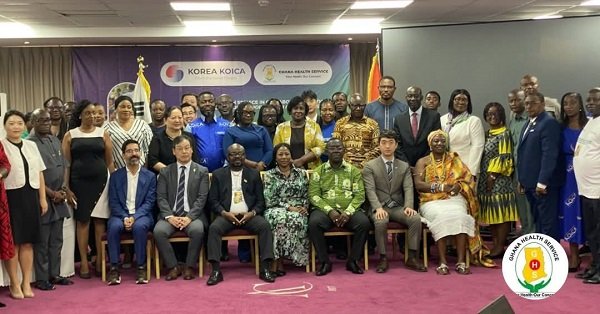
The Director of the Family Health Division of the GHS, Dr. Kennedy T. C. Brightson, disclosed this in Accra yesterday at the launch of a five-year project titled “Improving Reproductive, Maternal, Newborn, Child, Adolescent Health and Nutrition (RMNCAH+N) Service Delivery by Strengthening the Network of Practice (NoP) in Ghana.”
The project, fully funded by the Republic of Korea with a total investment of $13 million, will focus on strengthening health care systems and service delivery for women, children, and adolescents in the Ashanti, Central, and Eastern regions.
“Last year alone, we lost 958 women who walked into our institutions full of hope to deliver their babies, but they never returned home,” Dr. Brightson said.
“These are not deaths that occurred at home. They came to our facilities expecting safe delivery, yet their families were directed to the mortuary instead,” he added.
Dr. Brightson said although Ghana had made significant progress in improving maternal health, including reducing maternal mortality from 310 deaths per 100,000 live births in 2017 to the current levels, more work still needed to be done.
He cited improvements in antenatal care coverage, skilled delivery services, postnatal care, and family planning services, but stressed that sustained efforts were needed to further reduce maternal deaths.
Touching on newborn and adolescent health, Dr. Brightson called for stronger collaboration among government, development partners, and communities to accelerate efforts to reduce maternal and child deaths in the country.
“Society is changing and social media is influencing behaviours among adolescents. Unfortunately, some of these changes are leading to unintended pregnancies and other health challenges. We must gather our knowledge and strengthen our efforts so that we can save more lives,” he said.
The Deputy Minister of Health, Dr. Grace Ayensu-Danquah, said the Network of Practice model, on which the project is based, would provide an opportunity to strengthen collaboration, mentorship, and knowledge exchange among health professionals.
“Through this project, Ghana aims to improve the quality of maternal and newborn care, strengthen the clinical capacity of health workers, enhance peer learning and mentorship, and ultimately improve health outcomes for women, children, and adolescents,” she said.
Dr. Ayensu-Danquah expressed confidence that the project would significantly strengthen the delivery of reproductive, maternal, newborn, adolescent health and nutrition services in the country.
The Country Director of the Korea International Cooperation Agency (KOICA), Dong Hyun Lee, expressed hope that the initiative would contribute to the long-term sustainability of Ghana’s health system.
BY ABIGAIL ANNOH & PERPETUAL MENSAH
Join our WhatsApp Channel now! https://whatsapp.com/channel/0029VbAjG7g3gvWajUAEX12Q
Follow our WhatsApp Channel now! https://whatsapp.com/channel/0029VbAjG7g3gvWajUAEX12Q

