


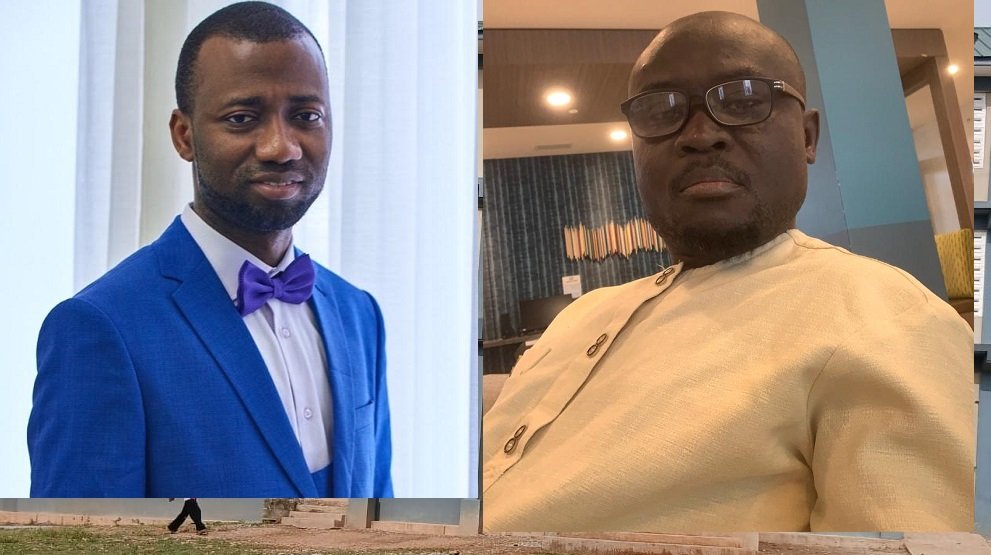
TWO academics at the University for Development Studies (UDS) in the Northern Region, have expressed varying sentiments about Ghana’s Constitutional Day, and efforts towards sustainable development.
The two lecturers noted that though Ghana had made strides in national development, there was the need for Constitutional review to consolidate democratic development.
Dr Abdul-Karim Mohammed, a Lecturer at the School of Public Health and Dr Amobire Akolga, a Lecturer at the Department of Political Science, were sharing their perspectives with The Ghanaian Times last Wednesday in commemoration of Constitutional Day.
“The constitutional review needs to address the phenomenon of removing heads of independent institutions by making harder than it currently is to minimise abuses,” Dr Akolga said.
“Ghana has done creditably well with its Democratic experimentation as dictated by the 1992 constitution. It has held nine elections that are considered to be largely successful over a period of more than three decades,” Dr Akolga added.
“Crucially some of these elections have led to incumbents handing over to opposition parties including the 2024 elections. This remarkable as it is one of the major test to any democracy. Ghana has also been largely free with an active media which has contributed to significant participation in governance generally which adds to checks on the governments,” he added.
“While all of these calls for celebration on this day, the day is also meant for introspection on how to deal with some very serious challenges that threatens the survival of our democracy and discuss as a nation on how to address them immediately.”
Dr Akolga said one of such challenges was electoral violence which had characterised each of Ghana elections and in almost all cases leading to loss of lives.
“This is too much a price to for an exercise that is meant to count heads. This point to the fact that Ghana’s democracy is not of age yet and therefore needs to be consolidated,” he added.
Dr Akolga added that Ghana had also in recent years stagnated or decline on media freedom and corruption based data from world media freedom and the corruption perception index.
“The issue of the perception of corruption and successive governments’ failure to address the economic challenges of the country is arguably the biggest failure of our democratic experiment. The literature generally holds that that democracies do better on economic management than autocracies, especially on addressing corruption given availability of democratic institutions,” he added.
“The irony where there has been economic hardship, specifically, high youth unemployment threatens our democracy. Youth unemployment is also linked to electoral violence as it partly explains why the youth would come out to engage in violence in support of politicians with hope of benefiting if their preferred candidate wins.
With all these, it is worth pointing out that while Ghana has avoided a coup, some of the conditions for coup do exist given the reasons that have accounted for several coups in the West African sub-region. This calls for more efforts from the political class in particular to instill hope once again in democracy.”
The Political Science Lecturer said the first year of the Mahama government seemed to be on tract to instilling this hope, adding that “Surveys show Ghanaians are general happy of the management of the economy as all macro-economic indicators are good. Hopefully they will be able to sustain it and that will certainly consolidate democracy.”
For his part Dr Abdul-Karim Mohammed, said it difficult to appreciate the rationale behind the holiday, given the already significant number of public holidays in the country, many of which were rooted in the country’s political history.
In his view, he said if the country were considering additional holidays, there were other national areas that could be explored, rather than focusing on the Constitution.
Touching on the Constitutional review process and reports, he said that there was widespread agreement that the 1992 Constitution no longer fully reflected the nation’s current governance aspirations.
Dr Mohammed acknowledged that most of the recommendations emerging from the review process appeared reasonable, however, some also generated public concern.
He welcomed plans for further engagement, stressing the need for broader public debate to enable citizens to understand how the recommendations were developed and to assess their relevance.
According to him, granting the public another opportunity to scrutinise and debate the proposals would help build consensus and determine which recommendations should ultimately be accepted, adding that transparency was critical to sustaining public confidence in the process.
By: ALHAJI SALIFU ABDUL-RAHAMAN AND CECILIA LAGBA
Follow Ghanaian Times WhatsApp Channel today. https://whatsapp.com/channel/0029VbAjG7g3gvWajUAEX12Q
🌍 Trusted News. Real Stories. Anytime, Anywhere.
✅ Join our WhatsApp Channel now! https://whatsapp.com/channel/0029VbAjG7g3gvWajUAEX12Q

