


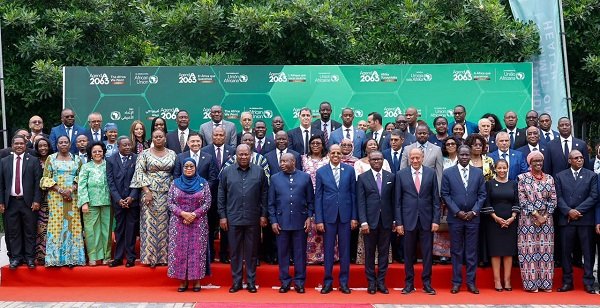
African Heads of State and Government on Wednesday adopted the Accra Declaration, reaffirming their commitment to end AIDS as a public health threat by 2030.
They also seek to reduce preventable maternal and child deaths, tackle both communicable and non-communicable diseases, and build resilient health systems across the continent.
The declaration, adopted at the close of the 20th Extraordinary Session of the African Union (AU) Assembly on Health in Accra, commits member states to strengthening health systems, improving access to quality healthcare and achieving universal health coverage by 2030.
The Assembly pledged to strengthen primary health care as the foundation of resilient health systems, promote integrated service delivery, reinforce community participation, improve epidemic and pandemic preparedness, and invest in research, innovation and sustainable health financing.
It also resolved to remove financial, structural, social and geographical barriers to healthcare, particularly for women, children, adolescents, persons with disabilities, migrants, displaced persons and other vulnerable groups.
To reduce Africa’s dependence on imported medical products, the leaders committed to accelerating implementation of the Pharmaceutical Manufacturing Plan for Africa, expanding regional production of medicines, vaccines and diagnostics, and fully operationalising the African Medicines Agency.
The declaration also reaffirmed the Abuja Declaration, under which African countries committed to allocating at least 15 per cent of their annual national budgets to the health sector to improve healthcare delivery for their populations, while advancing innovative financing mechanisms and reducing dependence on external funding.
Addressing the summit, the AU Commissioner for Health, Humanitarian Affairs and Social Development, Ambassador Amma Twum Amoah, said Africa had made significant progress in expanding access to life saving treatment, reducing AIDS related deaths and strengthening disease surveillance systems.
Despite these gains, she said HIV, tuberculosis, malaria, preventable maternal and child deaths, neglected tropical diseases and the growing burden of non communicable diseases continued to threaten the continent’s development.
The commissioner said the COVID 19 pandemic exposed inequalities in access to vaccines, medicines and diagnostics while underscoring the need for stronger national health systems, regional cooperation and sustainable health financing.
“A roadmap alone cannot save lives. A declaration alone cannot transform health systems. And commitments alone cannot protect our people. Progress requires political leadership, sustainable investment, disciplined implementation and collective accountability,” Ambassador Twum Amoah said.
She urged member states to translate the AU Roadmap and the Accra Declaration into concrete national actions through stronger primary health care, increased domestic investment, local manufacturing of medicines and vaccines, and stronger surveillance systems to ensure healthier communities and that no one was left behind.
BY STEPHANIE BIRIKORANG
ollow our WhatsApp Channel now! https://whatsapp.com/channel/0029VbAjG7g3gvWajUAEX12Q

