


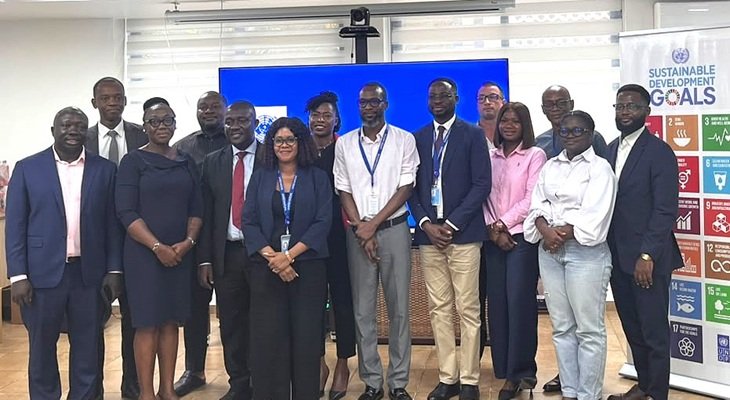
Ghanaian banks and other financial institutions have been urged to consider the environmental impact of businesses before granting loans, as the loss of biodiversity puts the country’s natural assets, valued at US$1.5 billion, at risk.
They have also been encouraged to channel more investments into businesses that protect forests, water bodies and other natural resources to safeguard the economy and minimise financial risks.
The call was made at a Biodiversity Finance Plan workshop in Accra yesterday, organised by the United Nations Development Programme (UNDP) and the Government to mobilise private sector investment for biodiversity conservation.
The workshop brought together stakeholders to explore ways in which financial institutions could support sustainable economic activities while helping the country tackle growing threats to its natural resources.
The Cluster Lead for Environment and Climate at the UNDP Ghana Country Office, Mr Abdul-Razak Saeed, said Ghana’s economic development agenda was not sufficiently aligned with the protection of nature, despite the country’s heavy dependence on natural resources.
“There is a disconnect between our economic pathway and how we fold nature into this,” he said.
He said the UNDP was working with the ministries responsible for environment and finance to develop Ghana’s first Biodiversity Finance Plan under the Biodiversity Finance Initiative, launched in April 2025.
The plan, he explained, would identify funding gaps in biodiversity conservation and explore innovative financing options, including green bonds, biodiversity credits and debt-for-nature swaps, to attract private sector investment.
The Biodiversity Finance Manager, Mr Enoch Appiah, said banks needed to move beyond conventional lending practices by assessing the environmental and social impact of projects before providing financing.
He urged financial institutions to make sustainability a regular feature of board and management meetings and assess their performance not only by the volume of loans disbursed but also by the environmental outcomes of their investments.
A Sustainable Finance Specialist, Mr Nurokinan Chimbar, said more than half of Ghana’s Gross Domestic Product (GDP) depended directly on nature, making environmental protection essential to economic stability.
He said financial assets estimated at GH¢647 billion, representing about 45 per cent of GDP, exposed the financial sector to risks arising from the destruction of natural resources.
Mr Chimbar explained that the degradation of forests, water bodies and marine ecosystems could undermine agricultural production, disrupt businesses and weaken borrowers’ ability to repay loans.
He, therefore, urged banks to scrutinise the environmental practices of businesses, particularly those in the mining, agriculture and manufacturing sectors, before extending credit.
An Environmental Policy Analyst, Ms Pamela Quaye, said Ghana had lost about 80 per cent of its original forest cover, leaving only 21 per cent, largely due to illegal mining, deforestation and pollution.
She said the continued destruction of natural ecosystems called for urgent action by both public and private sector institutions.
BY NELLY QUARCOOPOME
SKIP THE QUEUE, TAP THE NEWS


Read the Ghanaian Times and The Spectator newspapers from the comfort of your device via TimesNewsPlus.
Follow our WhatsApp Channel now! https://whatsapp.com/channel/0029VbAjG7g3gvWajUAEX12Q

