


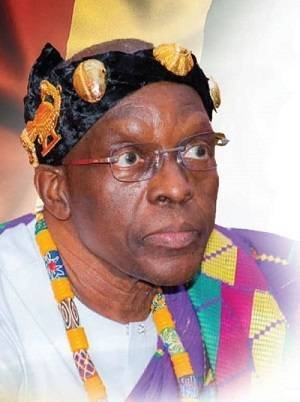
Within the parliamentary environment, a lot more radical cultural changes could be undertaken. How about operationalising Standing Order 47, which allows honourable Members to the use of seven indigenous languages: Akan; Nzema; Ga; Ewe; Hausa; Dagbani and Dagare in their debates? Thirty years into our experiment with parliamentary democracy, there is no reason our honourable Members should be denied this right. Indeed, per standards set by the Inter – Parliamentary Union (IPU), it is a fundamental requirement for deepening representation for parliaments to encourage the use of “minority” languages in deliberations in plenary and in committee. Ghana is not unable to acquire interpretation and translation equipment as stipulated by the Standing Order to facilitate this development. There are so many values that the use of Ghanaian languages in Parliament build for Parliament and the nation. It would give members who find it more comfortable to speak in their local languages the opportunity to do so. Many more citizens would also be encouraged to take interest in the Legislature as a result. It would also be source of national pride. The Parliamentary Service Board (PSB) and the leadership of the House should seriously consider giving our Parliament the multilingual character envisaged by Standing Order 47.
Beyond Parliament
Mr Bagbin’s black revolution should certainly resonate in other state institutions that have prescribed uniforms and other colonial norms and practices. It would be very Ghanaian and welcomed if our new Chief Justice follows Mr Speaker by also dropping the colonial gown worn by the Judiciary. Members of the Superior courts would follow, showing the way for the entire corps of barristers. The Military and the Police could also follow by replacing their rank insignia, badges and words of command with local materials and local languages. India and South Africa are examples worth emulating.
At the greater national level, a lot of radical Afro-centric changes are necessary. How about formulating a national language policy for this country as article 18 of the AU Charter for African Cultural Renaissance? Can the policy name the seven dominant Ghanaian languages cited in Standing Order 47 of the Parliament of Ghana as alternative national languages? How about His Excellency and his Ministers addressing communities in these languages depending on which part of the country they find themselves at any particular time?
How about revisiting the proposal of the Anamuah-Mensah Committee on Educational Reforms (2002) that our teachers at Basics I and Basic II levels teach our children as much as possible in Ghanaian languages to give our children good grounding in their local languages? Indeed, article 19 of the AU Charter encourages African States to prepare and implement reforms for the introduction of African languages into their education curriculum. The African need people to fight off this “linguistic encirclement”, to quote Ngugi.
How about gradually replacing our national anthem with the local alternative such as Yen Ara Assase Ni? How about giving some of our important state institutions Ghanaian names? Can we name our Parliament for instance as Badwam or Nhyiaye or Takpekpe? How about having a national dress or dresses? Beyond institutions and affairs of state, our pastors and bishops could join the black revolution. How about dropping the suits that they jealously wear even under the scorching sun? God’s glory can be made radiant in typical African wear such as the fugus, the batakaris, the kabas and the joromis. Black is indeed beautiful!
Continental Level
At the continental level, member states of the AU should take affirmative action to endure the implementation of the AU Charter. Among the numerous ones, the proposal on the promotion of African languages stands tall(articles 18 and 19). Language conveys identity. What has happened to the proposals of scholars such as Wole Soyinka for languages such as Kiswahili and Hausa to be developed into the official languages in Africa? The use of African languages even at the international level definitely identifies Africans as unique people. The Chinese are identified as Japanese by their languages. The Dutch, the Koreans and the Italians, by the same.
Among the numerous proposals in the Charter, another one that should be seriously considered is article 33, which calls on the AU to take steps to establish institutions or “Africa Houses” in countries where there is a significant African Diaspora, to promote positive awareness about Africa, and to promote African positions and perspectives. Ghana in particular stands to gain a lot from such ventures. In line with this proposal, the establishment of Ghanaian language and cultural centres in the Caribbean for instance stands to yield a lot of dividend. The people in countries such as Surinam and Jamaica where a form of the Akan language is spoken may be excited by the opportunity to learn the mother tongue. These centres may strengthen the existing bonds between African people in the diaspora and even boost tourism.
Black is beautiful, and between the philosophical perspectives of Blyden and Bagbin’s latter-day acts of defiance, it is hoped that this latter-day call for a concrete demonstration of our culture will provoke the African spirit.
BY HAROLD WILSON HUBERT