


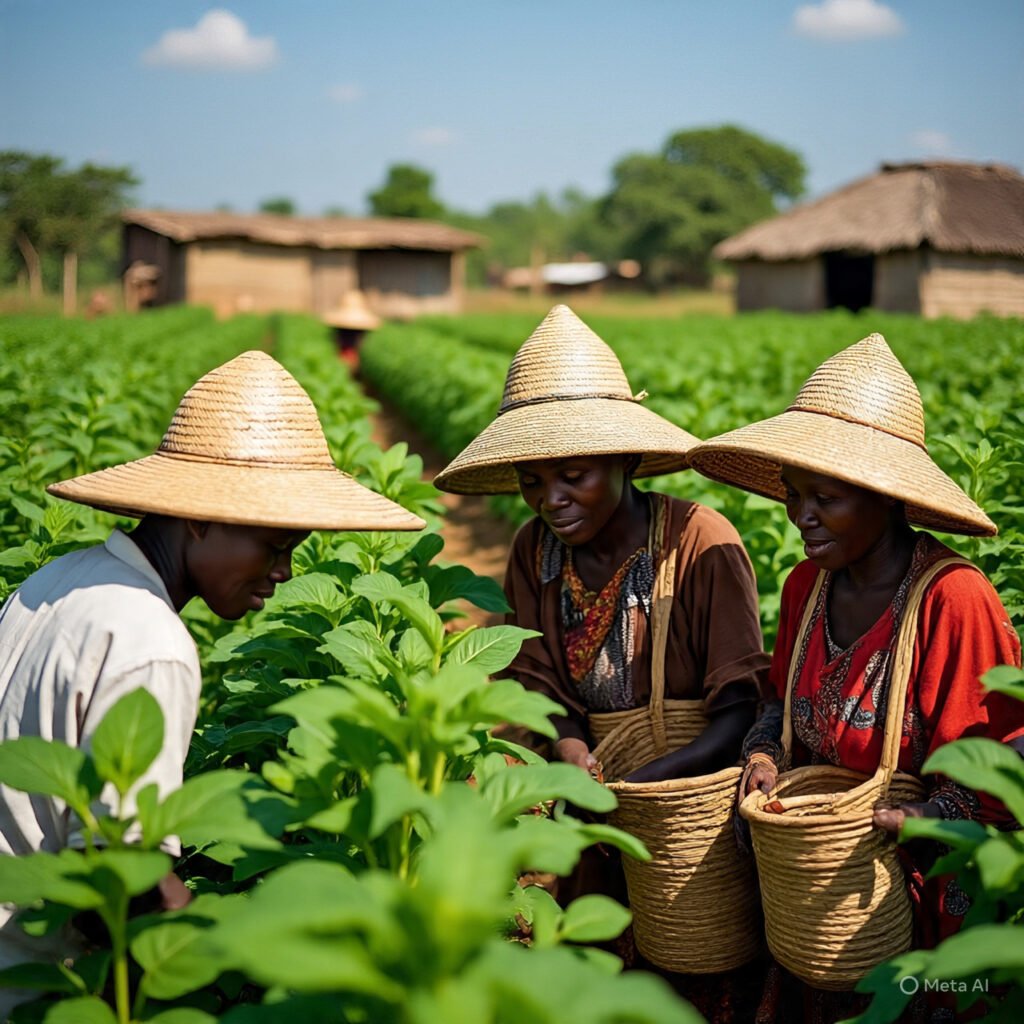
When the rains failed to come as expected Appiah braced himself for the worst—another
disappointing harvest.
It was a minor planting season (September-October) for beans growers in his area but a good
rainfall would usually increase the chance of a decent harvest.
After more than a decade of farming maize and beans in the Atebubu area of Ghana’s Bono East
Region, he was no stranger to the vagaries of the weather.
“You will plant and wait and wait for the rains. The sun scorches the little that sprouts, and you
feel helpless,” he lamented.
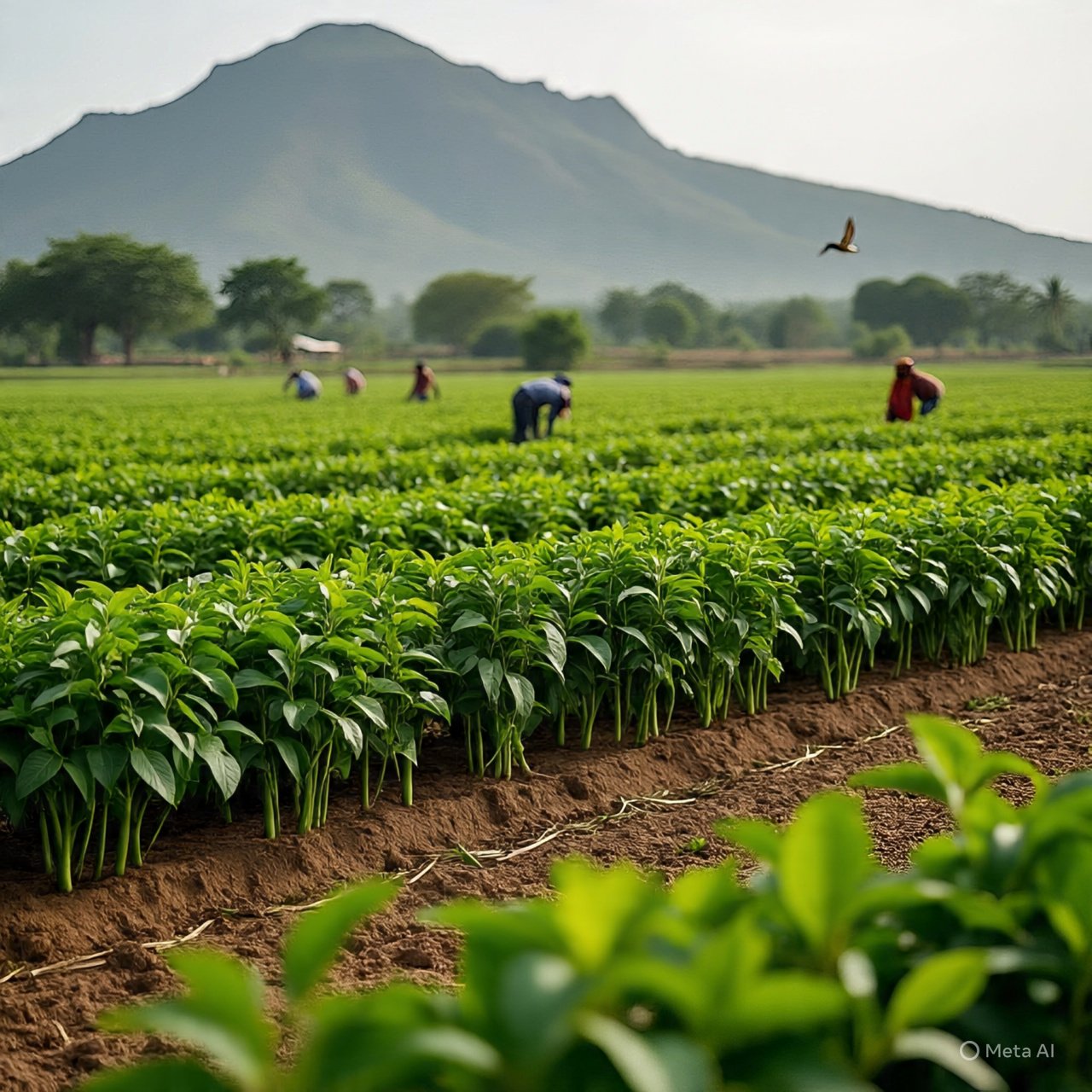
But last year was different.
Appiah, a 53-year-old farmer and professional teacher, had tried something new—Bt Cowpea,
Ghana’s first biotech crop, officially released in July 2024.
“When other farmers had little to no yield, I recorded a bumper harvest. I harvested more than
ever before using the Bt Cowpea seed. Now, many are asking me how to get it,” he shared with
pride.
For Appiah, the crop’s resistance to pests, especially the notorious pod borer (Maruca vitrata),
and its ability to withstand erratic rainfall makes it a game changer.
“It’s shorter maturity period and lower pesticide requirement also make it more cost-effective
than traditional varieties,” he added.
Twenty-five-year-old Rahinatu, a vegetable farmer in the Northern Region, echoed similar
sentiments after planting an acre of Bt Cowpea earlier this year.
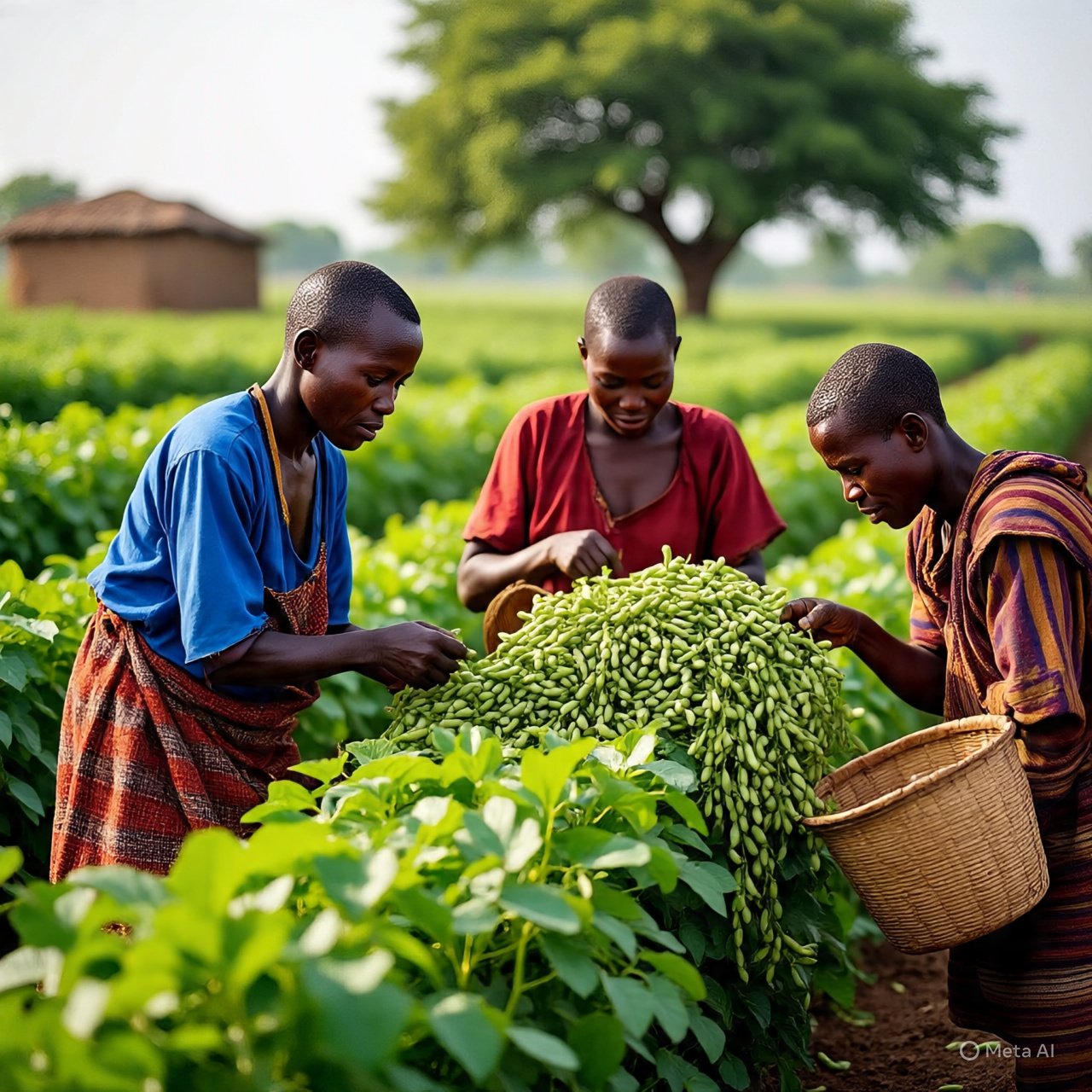
“The yields are good and there is less work farming it,” she said. “You only spray twice, and in
about two and a half months, it’s ready for harvest. I’ll keep planting it and even expecting to
buy more seeds for my parents to plant.”
A Groundbreaking Milestone
In July 2024, Ghana became the second African country after Nigeria to approve the commercial
release of Pod Borer Resistant (PBR) cowpea, commonly referred to as Bt Cowpea, after years
of laboratory research, field trials, and regulatory approvals.
This pioneering crop was developed to resist the “Maruca vitrata”, a pest capable of causing up
to 80% crop losses, threatening food security and discouraging farmers from cultivating cowpea
despite its market demand.
Cowpea, popularly known as beans in Ghana, is a dietary staple. From koose (bean cakes) to the
beloved Gobe or yo ke gari, it features prominently on Ghanaian tables.
However, while national demand stands at about 169,000 tonnes, the country produces only
57,000 tonnes annually, with the shortfall made up by imports from countries like Nigeria,
Burkina Faso, and Niger.
A major threat to cowpea production is the “Maruca vitrata” pest which is capable of destructing
the crop at evert stage of its development thereby discouraging many farmers from farming the
crop irrespective of its huge market on the West African sub-region.
The development and adoption of Pod Borer-Resistant (PBR) cowpea varieties offer a promising
solution for smallholder farmers across West Africa.
This is because agriculture remains the backbone of West Africa’s economy with over 70 percent
of the population engaged in farming; many of which farm cowpea, which plays a vital role in
food security and livelihoods.
Nigeria led the way in 2019 by releasing the first PBR cowpea variety. Ghana followed suit in
2024, and Burkina Faso is set to be the next country to adopt this transformative agricultural
innovation.
Agricultural biotechnology products such as the PBR or Bt Cowpea is one of the measures that
can be adopted to mitigate the challenges of food insecurity, farming costs, environmental harm,
climate-related pressures and post-harvest losses.
Biotech Boost for Food Security
Ghana’s Bt Cowpea project was spearheaded by the Council for Scientific and Industrial
Research–Savannah Agricultural Research Institute (CSIR–SARI).
According to Dr. Jerry Nboyine, the Principal Research Scientist and Lead Investigator on the Bt
Cowpea project, the crop has lived up to its potential.
He said due to the impacts of the pod borer infestation, many cowpea farmers stopped growing
the crop, expressing excitement that with the release of the Bt Cowpea to farmers, many of them
who abandoned the crop could now go back to it.
For him, biotechnology was not new, citing everyday examples such as insulin in medicine and
the fermentation of “pito”, a traditional Ghanaian beverage, as forms of biological technologies
hence its widespread acceptance among farmers was only a matter of time.
“From the onset, we said the Bt Cowpea was tailored to solve a major pest issue in cowpea
which is the Maruca vitrata and so far as we are aware, since the release of the seeds, there hasn’t
been any single situation where someone has complained that it has not done what we said it will
do.”
Dr. Nboyine explained that since the launch, 10 seed companies have registered with
CSIR–SARI to distribute the seeds across the country.
In 2024, about seven tonnes of early generation seeds were produced for planting. This year, that
figure has increased to 12 tonnes, signaling growing demand and capacity.
“We are committed to producing enough seeds every year to ensure that any farmer, no matter
the size of land, has access,” he affirmed.
Beyond Cowpea: A Pathway for Biotech Adoption
For former CSIR Director-General, Professor Walter Sandow Alhassan, the successful release
and adoption of Bt Cowpea mark a turning point in Ghana’s agriculture sector.
“This technology took over 12 years of research and approval,” he noted. “Initially, we were
advocating in a vacuum. Now that farmers see the results, we must build on this success to apply
biotechnology to other crops to solve Ghana’s food security challenges.”
Biotech crops like Bt Cowpea, he said, offered benefits beyond yield: “they reduce the need for
pesticides, minimize environmental harm, withstand climate shocks, and cut down on post-
harvest losses.”
Given that agriculture employs over 70% of West Africa’s population, with cowpea being a
major crop, the impact could be far-reaching.
With Ghana joining Nigeria and soon Burkina Faso in adopting Bt Cowpea, the region is steadily
embracing science-led agricultural transformation for food security.
A Seed of Hope
Back in Atebubu, Appiah recalls planting just 500 grams—a single milk tin of Bt Cowpea—last
year and harvesting almost three full bags.
“Those who planted the traditional seeds on the same day couldn’t even fill a bowl due to the
drought and now many are asking me to get them the BT Cowpea seeds,” he said.
As Ghana continues to grapple with climate variability, high food import bills, and pest-related
losses, the Bt Cowpea offers a glimmer of hope.
Its full potential however, will only be realized if research institutions, policymakers, seed
distributors, and farmers work hand in hand to ensure sustainability, seed availability, and public
awareness.
The success of the Bt Cowpea shows that when science meets need, farming in Ghana can be not
just a struggle but a success story.
BY ABIGAIL ANNOH