


Leading academics have called for a major overhaul of postgraduate training in Ghana, urging universities to move away from traditional thesis writing towards research that delivers practical solutions to the country’s socio-economic challenges.
Speaking at the opening of the third Postgraduate Research Conference of the University of Skills Training and Entrepreneurial Development (USTED) on Friday, the keynote speaker, Professor Ellis Owusu-Dabo, and the Vice-Chancellor, Professor Frederick Kwaku Sarfo, underscored the need for higher education to break out of disciplinary silos.
They mentioned that such a shift was critical to tackling pressing issues such as youth unemployment, climate change and economic pressures.
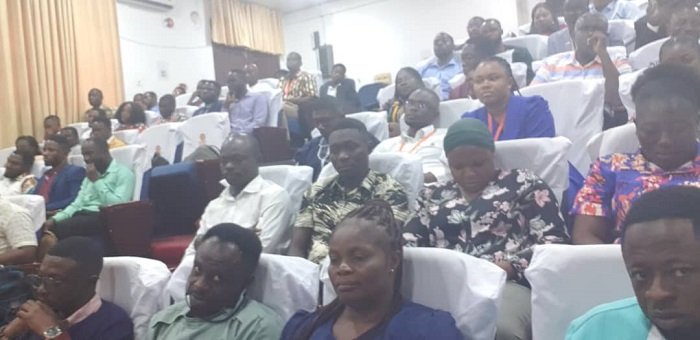
The conference, on the theme: ‘Interdisciplinary Research for a Resilient Future: The Contribution of Postgraduate Studies,’ brought together graduate students, lecturers and industry players to explore how academic research could be translated into practical solutions for business, policy and communities.
Delivering the keynote address, Prof. Owusu-Dabo, a former Pro Vice-Chancellor of the Kwame Nkrumah University of Science and Technology (KNUST), observed that although universities continued to produce highly specialised graduates, sub-Saharan Africa still lacked researchers capable of designing and implementing solutions to national challenges.
He noted that postgraduate training remained largely centred on thesis writing, with limited links to industry and community needs.
To bridge the gap between academia and national development, he proposed a series of structural reforms.
These include the introduction of hybrid postgraduate programmes that combine technical knowledge with research, teaching and entrepreneurial skills.
He further suggested that assessment methods should go beyond traditional theses to include practical outputs such as prototypes, policy briefs, business models and measurable community impact.
Prof. Owusu-Dabo also called for stronger collaboration between academia, industry and communities through co-supervision of research, supported by formal cross-disciplinary arrangements and capacity building for supervisors.
He urged universities to establish interdisciplinary research clusters focused on national priority areas, including climate resilience, green skills, digital transformation of the informal sector, technical and vocational education for industrialisation, and inclusive entrepreneurship.
In addition, he recommended making research communication and knowledge translation a core part of postgraduate training to enable graduates to present their findings clearly to non-specialist audiences.
At the institutional level, he advised universities to define priority research areas to enhance their competitiveness for funding and pilot portfolio-based assessment systems. Nationally, he called for dedicated government funding for applied research, recognition of practice-based doctoral programmes and stronger collaboration between regulators and universities to develop a coordinated research agenda.
Reinforcing the call, the Vice-Chancellor of USTED, Prof. Frederick Kwaku Sarfo, said complex global and national challenges could no longer be addressed through isolated academic disciplines.
In a speech read on his behalf by Professor Ebenezer Bonyah, Director of the Directorate of Research, International Programmes and Institutional Advancement, Prof. Sarfo noted that dismantling academic silos aligned with USTED’s mandate as a socially responsive technical and entrepreneurial institution.
He cited global frameworks by UNESCO, the OECD and the National Science Foundation as evidence that interdisciplinary research was essential for building sustainable, knowledge-based economies.
Prof. Sarfo described postgraduate students as key drivers of innovation and reaffirmed the university’s commitment to strengthening research supervision, building capacity and forging strategic partnerships in line with the Sustainable Development Goals (SDGs).
He commended the organising committee of the School of Graduate Studies for hosting the conference and urged participants to ensure that their research translated into tangible benefits for national development.
From Kingsley E. Hope, Kumasi