


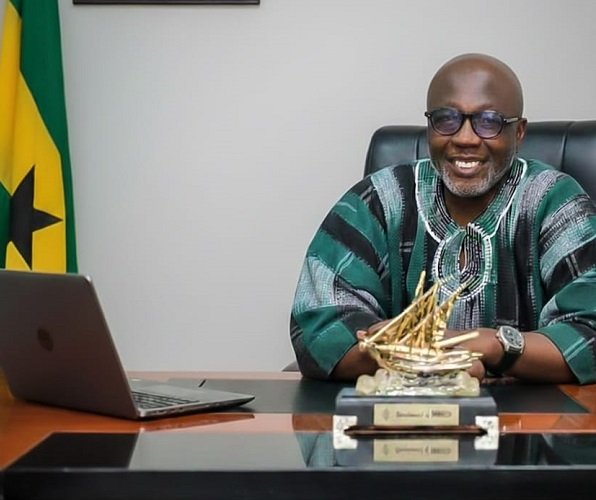
In the high-stakes world of maritime governance, a year can pass like a quiet tide or hit like a powerful wave of reform. For the Ghana Maritime Authority (GMA), the past 12 months under new management have been less about settling in and more about optimising the authority’s structural framework to accelerate Ghana’s maritime growth.
This “Reset Agenda” was launched not merely to maintain course, but to modernise the authority’s identity and align it with the evolving demands of the global blue economy. While 12 months is a brief moment in the life of a state institution, it has been a period of profound structural realignment and strategic expansion with clear results, according to the Director-General, Dr Kamal-Deen Ali (Naval Capt Rtd).
Coastline and inland expansion
Beyond internal reforms, the authority has aggressively expanded its presence into Ghana’s inland waterways. This strategic shift led to the establishment of a dedicated office in Akosombo, where staff have been deployed to provide safety oversight and regulatory enforcement.
The new arrangement serves as a hub for infrastructure development and the formalisation of water transport, supporting the government’s vision for a national multimodal transport network. The expansion has continued with the identification of Kpando-Torkor and Kete-Krachi as strategic hubs for office space and accommodation.
In 2025, the authority procured 7,000 life jackets, but the real innovation lies in the delivery model. Recognising that boat owners often lack storage facilities, the GMA is rolling out a subsidised rental model to make safety equipment affordable and practical.
In addition, the authority is launching a community-based Safety Guard Programme, recruiting and training young people from communities with frequent water crossings. This approach simultaneously creates jobs and ensures that those who know the waters best are the ones protecting them.
The deployment of the search and rescue vessel Martey Korley at Kpando-Torkor has transformed the area into a critical centre for the GMA’s monitoring and rescue operations.
Hydrography
A central pillar of the Reset Agenda is the renewed focus on hydrography—the science of mapping the seas. Recognising that the blue economy depends on understanding what lies beneath the surface, the GMA has prioritised the mapping and charting of Ghana’s waters.
“You cannot manage what you cannot see,” Dr Ali noted, stressing that accurate hydrographic data is essential for vessel safety and the opening of new maritime routes. To this end, the authority is committed to investing in modern charting capabilities to ensure precision navigation across Ghana’s waters.
Realignment
The reset began from within. Upon assuming office, the Director-General identified human resources as the authority’s most critical engine in need of a complete overhaul.
Some divisions were overstaffed, while others—such as the human resource unit itself—lacked sufficient personnel to carry out their mandates. A comprehensive staff reorganisation followed, including a database review to ensure every employee was aligned with the right role based on skills and competence.
This restructuring extended to key divisions. The Technical Services Division saw over 100 per cent staff realignment, while the Public Relations Department was strengthened with new sub-units to meet modern communication demands.
To manage costs and improve local synergy, the authority launched a district integration programme, negotiating with District Assemblies in Ellembelle, Jomoro and Shama to embed maritime staff within local structures.
Plans are also underway to establish a coordinating office in Wa to oversee safety along the White and Black Volta crossings, which serve as vital links between Ghana and its neighbouring countries.
Meanwhile, the GMA is working closely with the Ministry of Transport to revive the Volta Lake Transport Company (VLTC), positioning inland water transport as a reliable driver of economic connectivity.
Safety as a community based approach
Safety on inland waterways remains the GMA’s primary mandate, and the authority continues to adopt community-centred solutions to reduce accidents and enhance compliance.
Seafarer export
Historically, Ghana produced some of the world’s finest seafarers, but in recent years the country lost ground to competitors such as Ethiopia, South Africa and Nigeria.
Dr Ali is determined to reverse this trend by transforming the GMA from a passive regulator into a strategic job creator. Through high-level engagements with international shipping firms such as the Kuwait Oil Tanker Company (KOTC), Hafnia and the International Maritime Employers Council (IMEC), Ghanaian cadets and ratings are now securing international sea-time and employment.
A landmark partnership with Hafnia alone includes a commitment to employ about 600 ratings over three years, with training at the Regional Maritime University extended to meet global standards.
These efforts are anchored by the National Seafarer Development and Promotion Policy (NSDPP), which aims to transform Ghana into a competitive source of global maritime labour.
Technology, security, and trade
Beyond physical safety, the GMA is advancing the government’s objective of strengthening coastal and inland transportation. Under presidential direction, the authority has engaged marine cargo handling companies to explore the feasibility of coastal shipping operations.
Collaboration with the Ghana Ports and Harbours Authority (GPHA) is also well advanced, with efforts focused on streamlining the movement of goods and people.
Security remains a critical requirement. In 2025, the GMA procured a state-of-the-art Vessel Traffic Management and Information System (VTMIS) to replace the obsolete 2012 system.
Once installed at the new head office, the system will power the Maritime Fusion Centre, a coordination hub for collecting, analysing and sharing real-time maritime data. The centre will act as a frontline defence against piracy, illegal fishing and smuggling, while enabling real-time monitoring of Ghana’s Exclusive Economic Zone (EEZ).
Challenges and lessons
The journey has not been without turbulence. Dr Ali candidly points to the challenges of restructuring, addressing years of unfulfilled promotions and managing high workforce costs.
Economic fluctuations have also posed difficulties. With GMA charges indexed in US dollars but collected in a strengthening Ghanaian cedi, revenue inflows have been affected. “Our budget was indexed at GH¢15 to the dollar, so the cedi’s appreciation actually reduces inflows for our projects,” the Director-General explained.
2026 and beyond
As the authority enters its second year under the Reset Agenda, momentum continues to build. The election of Dr Ali as Vice President of the International Seabed Authority in July 2025 has further elevated Ghana’s standing on the global maritime stage.
Looking ahead, he remains optimistic about completing the internal restructuring while strengthening the skills pipeline to serve the global maritime industry and ensure Ghana’s waters remain safer than ever.
From the Public Relations Unit, GMA
By Dr Kamal-Deen Ali (Navy Capt Retd)
Follow Ghanaian Times WhatsApp Channel today. https://whatsapp.com/channel/0029VbAjG7g3gvWajUAEX12Q
Trusted News. Real Stories. Anytime, Anywhere.
Join our WhatsApp Channel now! https://whatsapp.com/channel/0029VbAjG7g3gvWajUAEX12Q

