


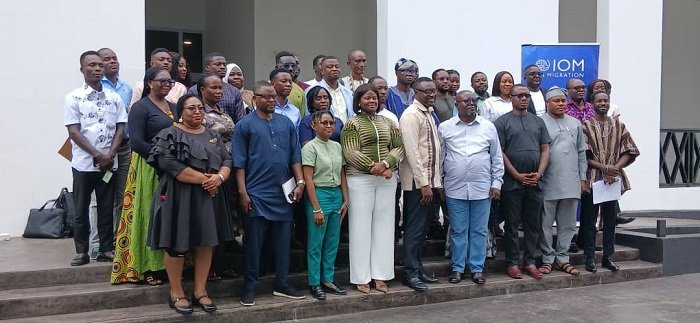
City authorities must prioritise human mobility and gender considerations in urban planning to enable cities better respond to the growing impacts of climate change, participants at a Human Mobility conference have suggested.
They also called for increased investment in community resilience and protection systems, alongside stronger institutional capacity and partnerships to address climate-induced displacement and migration.
The call was made at the close of a two-year project on Human Mobility in the Context of Climate Change within the Accra Metropolitan Assembly (AMA), implemented by the International Organisation for Migration (IOM) with technical support from the Accra Metropolitan Assembly.
The project, which run from September 2024 to June 2026, focused on deepening understanding of the links between climate change and human mobility while supporting local authorities to integrate migration considerations into urban planning and development.
In a speech read on behalf of the Minister of State in charge of Climate Change and Sustainability, Mr Seidu Issifu, said climate change was already influencing population movements and placing additional strain on urban infrastructure and governance systems.
“Climate change is no longer a distant environmental concern; it is already reshaping where and how people live, and our urban planning systems must reflect that reality,” he said.
He further added that integrating mobility and gender considerations into development planning remained essential for protecting vulnerable groups.
“The impacts of climate change are not evenly distributed. Women, children and persons with disabilities are often the most affected, and planning must intentionally reflect their needs,” Mr Issifu stated.
He further called for sustained investment in community resilience, noting that disaster preparedness systems, social protection programmes and sustainable livelihood interventions were critical to reducing displacement and safeguarding livelihoods.
Mr Issifu said building resilient communities remained central to Ghana’s broader climate adaptation agenda, as it reduces vulnerability and strengthens the capacity of populations to withstand environmental shocks.
The Chief of Mission of the International Organisation for Migration (IOM) Fatou Diallo Ndiaye in a speech read on her behalf said climate change had become one of the major drivers of human mobility globally, requiring coordinated and evidence-based responses.
“The reality is that climate change is already influencing mobility patterns across Ghana and beyond. What is required now is stronger coordination and evidence-based planning to manage these movements effectively,” she said.
Ms Ndiaye noted that the project had generated valuable data and strengthened local capacity to better understand the relationship between climate change and migration within the Accra Metropolitan area.
The Metro Coordinating Director of the Accra Metropolitan Assembly, Mr Douglas N.K. Annorful, said the project had provided the Assembly with practical tools and evidence to improve responses to climate-related mobility challenges.
“We now have better evidence and practical tools to guide how we integrate human mobility into our planning systems. This is critical for building a resilient metropolis,” he said.
He noted that rapid urbanisation, combined with the increasing impacts of climate change, was creating new and complex pressures on cities, making coordinated planning more urgent.
Mr Annorful said the Assembly remained committed to mainstreaming human mobility into its development planning processes to ensure that climate adaptation measures reflected the realities of affected communities.
BY BENEDICTA GYIMAAH FOLLEY
Follow our WhatsApp Channel now! https://whatsapp.com/channel/0029VbAjG7g3gvWajUAEX12Q

