


There seem to be divided opinion among farmers in the country in relation with the passage of the new Ghana Cocoa Board (COCOBOD) Bill, 2026 with a section of cocoa farmers in parts of the Ashanti Region welcoming it while their counterparts in the Western Region kick against it.
The sharp division centres largely on a provision in the legislation that requires farmers to obtain approval before destroying or uprooting cocoa trees, a measure intended to protect cocoa farms from conversion to other uses.
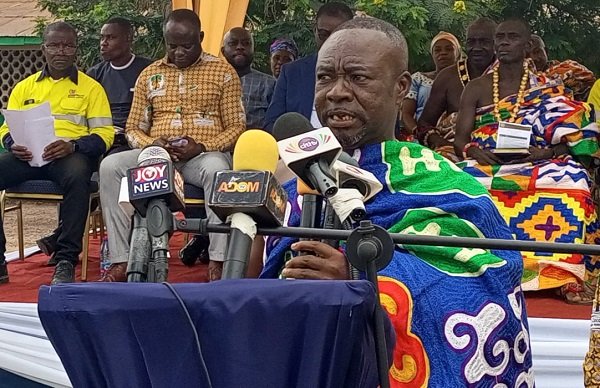
Farmers from Juaben, Asiwa, Juaso and Konongo in the Ashanti Region expressed their support for the Bill at a stakeholder sensitisation rally organised by COCOBOD at Konongo.
The engagement, which attracted more than 400 participants, formed part of COCOBOD’s efforts to educate farmers and other stakeholders on the provisions of the new law.
The Executive Director of the Cocoa Health and Extension Division (CHED), Dr Richard Adu Acheampong, and the Deputy Head of Public Affairs, Mr Benjamin Teye Larweh, explained provisions covering farmer welfare, producer pricing, protection of cocoa farms, anti-smuggling measures, sector financing and the Cocoa Farmers Pension Scheme.
They also dispelled concerns that the Bill would prevent farmers from cultivating food crops on their cocoa farms or transfer ownership of cocoa lands to COCOBOD.
They explained that farmers could continue cultivating compatible food crops alongside cocoa, particularly on young farms, while the protective provisions were aimed at preventing the unlawful destruction and conversion of cocoa farms.
However, farmers in parts of the Western Region, particularly Prestea-Huni Valley and Wassa Amenfi West, have kicked against the legislation, describing some of its provisions as restrictive.
The Chief Cocoa Farmer for Prestea-Huni Valley, Nana Thomas Boakye, said requiring farmers to seek prior approval before removing trees could create difficulties for those seeking to cut down diseased, old or unproductive cocoa trees.
He also argued that farmers should have the freedom to decide when to replace cocoa with other crops where such a decision would improve their livelihoods.
Nana Boakye urged President Mahama not to assent to the Bill, saying farmers needed incentives, improved producer prices and better welfare, including housing, rather than legislation that could impose additional restrictions on them.
He estimated that about 70 per cent of cocoa farmers were ageing, while many young people were losing interest in cocoa farming, partly because illegal mining had become more attractive to them.
“The passion for cocoa farming is gone,” he said, stressing the need for measures to make cocoa farming attractive to the youth.
The Chief of Pieso, Nana Kwamina Badu II, also criticised what he described as inadequate consultation with farmers before the passage of the Bill.
He said although the legislation sought to prevent the conversion of cocoa farms for mining and other purposes, it should be supported by incentives and compensation to improve farmers’ livelihoods.
Another farmer from Ohiampeanika cocoa cottage in Wassa Amenfi West, Samuel Nartey, urged government to intensify the fight against illegal mining, which he said was already destroying the cocoa sector.
He said issues such as security for cocoa farms, remunerative producer prices and farmer welfare should receive priority.
Parliament passed the Ghana Cocoa Board Bill on July 30, 2026, as part of reforms aimed at strengthening governance and ensuring the long-term sustainability of the cocoa sector.
The Bill gives cocoa farms protected status and restricts their conversion to other uses without approval from COCOBOD, except for board-sanctioned rehabilitation. Violators could face fines and imprisonment of up to 20 years.
FROM: CLEMENT ADZEI BOYE and JULIUS YAO PETETSI
Follow our WhatsApp Channel now! https://whatsapp.com/channel/0029VbAjG7g3gvWajUAEX12Q

