


The National Democratic Congress (NDC)’s flagship 24-Hour Economy policy is taking concrete shape in the Upper West Region with the commencement of construction of dedicated 24-hour economy markets across all 11 municipalities and districts.
The development marks a shift from campaign rhetoric to visible infrastructure delivery, with five municipal markets and six district-level markets currently under construction as the first phase of the policy’s rollout in the region.
The initiative, which was a key pillar of the NDC’s 2024 election campaign, is intended to stimulate continuous economic activity by providing purpose-built market infrastructure that supports trading beyond traditional daytime hours, expands employment opportunities, and strengthens local economies.
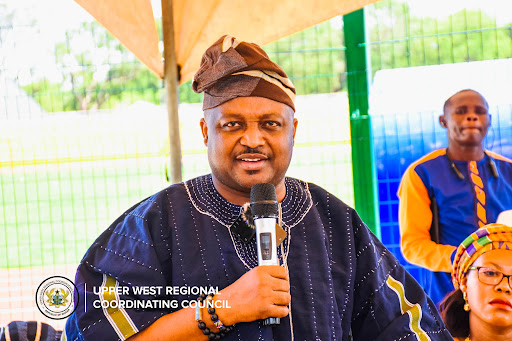
In an exclusive interview with The Ghanaian Times, the Upper West Regional Minister, Mr Charles Lwanga Puosuing, described the construction of the markets as a long-term structural intervention rather than a temporary measure.
He explained that the markets would form the foundation of the broader 24-hour economy architecture, with subsequent phases expected to introduce logistics hubs and other complementary economic infrastructure across the region.
According to the Regional Minister, each market is being designed as a one-stop economic enclave, incorporating health centres, police posts, fire stations, lorry and cargo terminals, abattoirs, as well as a combination of enclosed shops and open stalls.
He said district-level markets would cover between two and three acres, while municipal markets would span three to four acres, in line with population size and levels of commercial activity.
Beyond the construction works, Mr Puosuing noted that the markets were expected to generate significant employment opportunities. He explained that the round-the-clock operational model would require additional health workers, police officers and fire service personnel, alongside traders, transport operators and auxiliary service providers.
He emphasised that the policy prioritised decent and sustainable jobs capable of improving household incomes across the region.
A cement dealer welcomed the construction of the new markets, noting that limited trading hours often disrupted construction schedules. He added that extended market operations could boost sales and provide more stable incomes for families.
A pharmacy operator, however, raised concerns about access to essential services at night, pointing out that only one pharmacy currently operates on a 24-hour basis in the region.
She said the establishment of fully serviced markets could help bridge the gap between 24-hour hospital services and limited access to medicines, stressing that rapid implementation could save lives while supporting the growth of night-time businesses.
Some transport operators also see economic potential in the new market infrastructure, although others remain cautious.
One operator described the initiative as promising but questioned the level of political commitment to full implementation, adding that a functional 24-hour transport system linked to the markets would reduce delays and losses associated with waiting until daylight.
Mr Puosuing, however, assured that security and power supply considerations had been integrated into the market designs, with on-site security services and reliable utilities intended to protect traders and their assets.
He added that women were expected to dominate market stalls, in line with existing trading patterns in the region, while the youth would benefit from new opportunities in commerce, logistics and service provision.
From Naziru Alhassan, Wa
Follow Ghanaian Times WhatsApp Channel today. https://whatsapp.com/channel/0029VbAjG7g3gvWajUAEX12Q

