


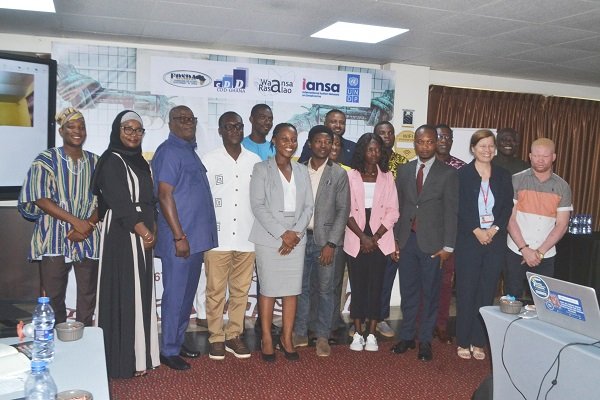
Civil Society Organisations (CSOs) have expressed disappointment over the last-minute withdrawal of the National Commission on Small Arms and Light Weapons (NACSA) from a stakeholder dialogue held in Accra on Tuesday.
The dialogue, organised to discuss Ghana’s implementation of the United Nations Programme of Action (UNPoA) on small arms and light weapons, was expected to provide updates on the country’s progress in arms control ahead of the upcoming UN conference in New York from June 1 to 5.
The meeting was organised by the Foundation for Security and Development in Africa (FOSDA) in collaboration with the United Nations Development Programme (UNDP), the International Action Network on Small Arms (IANSA) and the Centre for Democratic Development (CDD-Ghana).
CSOs said the commission had earlier confirmed its readiness to participate and make presentations on efforts to combat the proliferation of illegal weapons in the country. Its absence, therefore, came as a surprise and drew criticism from participants.
Managing Director of IANSA, Mr Johnson Asante-Twum, described the commission’s absence as unfortunate, stressing that stakeholders needed to be briefed on Ghana’s implementation of the UNPoA and preparations for the UN meeting.
He explained that the upcoming conference would assess the progress countries have made, the challenges they face and opportunities for international cooperation in addressing illegal arms.
“It was important to bring together duty bearers and civil society organisations to discuss Ghana’s implementation efforts,” he said.
Mr Asante-Twum noted that CSOs would seek alternative ways to engage the commission because issues concerning arms control were of national interest.
“I say this with a heavy heart. Civil society has gathered here, but the national authority decided not to show up. That is concerning because they are representing the people and must first engage us before speaking at the UN,” he stated.
Executive Director of FOSDA, Ms Theodora W. Anti, said the dialogue served as an important platform for reflection, accountability and action ahead of the Biennial Meeting of States under the UNPoA process.
She indicated that the meeting offered stakeholders the opportunity to assess Ghana’s progress, identify gaps and discuss urgent measures needed to improve arms control.
Ms Anti stressed that the UNPoA was not merely a reporting framework but a mechanism for accountability.
She noted that Ghana’s national reports explained that more than 2,000 firearms had recently been collected through national operations and amnesty programmes, a development she said should concern all stakeholders.
According to her, the engagement was necessary to examine whether existing laws, institutions, border controls and stockpile management systems were effective in ensuring public safety.
BY BERNARD BENGHAN
Follow our WhatsApp Channel now! https://whatsapp.com/channel/0029VbAjG7g3gvWajUAEX12Q

