


In an era where public faith in science is growing—and misinformation spreads even faster—DNA testing has become the modern gold standard for truth. Courtrooms treat it as the ultimate “silent witness,” families rely on it for identity and inheritance disputes, and investigators use it to unlock mysteries decades old.
Yet beneath the aura of absolute certainty lies a critical reminder: DNA is powerful, but it does not speak for itself. It must be interpreted, contextualised, and examined with the cautious clarity of forensic science. As global trends show a rising dependence on DNA to settle legal conflicts—from paternity and estate disputes to violent-crime prosecutions—there is an urgent need to understand what DNA can prove, what it cannot, and why structured, care-informed forensic interpretation is essential for justice.
DNA is probabilistic, not absolute
Contrary to public belief, DNA analysis does not produce a single statement of “truth.” It produces probabilities. A DNA match report may state: “There is a one in 12 million chance that another unrelated person might possess the same profile.”
This is compelling, but still a probability. The scientific truth is that DNA does not identify someone; forensic scientists do, through interpretation based on population genetics, statistics, and laboratory quality controls. DNA evidence is “highly discriminating but not infallible.” A match increases likelihood but never equals 100 percent certainty.
Context determines meaning
DNA on an object only proves presence, not purpose, timeline, or intent. A man’s DNA on a victim does not automatically mean he caused harm. A person’s DNA on a weapon does not prove they fired it. A husband’s DNA absence on a child does not always equal infidelity. Forensic context matters in the following ways:
- Transfer dynamics: DNA can be transferred through secondary contact, shared surfaces, or even airborne particles in confined spaces.
- Persistence: DNA may remain for days, weeks, or months depending on environment.
- Contamination: DNA can be introduced accidentally during collection, packaging, or lab handling.
- Mixture interpretation: Recent research by GHEP-ISFG showed mixture interpretation remains one of the biggest sources of variability and error in DNA evidence.
As the Forensic Science Regulator (UK, 2021) highlights, “DNA without context can be profoundly misleading.” This is why forensic experts insist that DNA should be part of the story, but not the entire story.
The assumptions behind DNA testing
Every DNA test relies on assumptions that must be acknowledged:
a) Correct sample collection: A single swab error, mislabeled envelope, or contaminated cotton tip can alter an entire case.
b) Chain of custody integrity: If the tracking, sealing, and documentation of evidence are compromised, the scientific value collapses.
c) Accurate population statistics: DNA frequency calculations depend on population databases. Many African countries lack large, ethnically diverse datasets, creating the risk of inaccurate probability values.
d) Correct laboratory conditions: DNA analysis is sensitive to reagent quality, machine calibration, analyst competence, method validation, etc. No test is fully insulated from human error.
e) Biological assumptions: Rare phenomena can mislead results—chimerism (two DNA profiles in one person), somatic mosaicism, and mutation of markers.
Without expert interpretation, these can lead to false exclusions or false inclusions.
When DNA misleads: Lessons from real cases
Worldwide, several miscarriages of justice have occurred due to DNA misinterpretation.
- Lydia Fairchild (2002): She was denied government assistance after DNA tests showed she was not genetically related to her two children. Scientists later discovered she was a human chimera, possessing two genetically distinct cell lines—one of which matched her children, but only in her cervical cells. Her case challenged assumptions about DNA’s infallibility.
- The Phantom of Heilbronn (2000–2009): Dozens of crime scenes across Europe had identical female DNA—only for investigators to discover it came from contaminated factory-made cotton swabs. Contamination can manufacture the illusion of a serial criminal.
- Artificial insemination (1884 onward): Dr. William Pancoast performed donor insemination on an anaesthetised woman without her consent. It was not until the 1960s—and later the 1973 Uniform Parentage Act—that donor-conceived children were legally recognised and consenting husbands protected.
African inheritance and disputes
Courts increasingly encounter husbands rejecting children based on DNA—only to later discover: sample contamination, hospital mix-ups, unreported sexual assault, or mismatched tissues in assisted reproduction. Even in proven infidelity or confirmed extramarital relations, DNA must be interpreted within both medical and social reality, with both maternal and paternal testing.
Social implications: DNA can heal or destroy families
The expanding use of DNA in inheritance claims, immigration cases, marital disputes, refugee verification, and custody battles means DNA evidence is no longer just scientific; it is social, emotional, and cultural. In African settings, DNA mismatch can trigger stigma, violence, family dissolution, and mental health consequences.
Thus, scientific truth must be delivered through a multidisciplinary forensic care approach with human sensitivity. Forensic experts must ensure confidentiality, trauma-informed communication, psychological/counselling support, and clarity about probabilities and limitations. Justice is not only about accuracy—it is about humanity.
DNA interpretation is not public opinion
Modern forensic DNA analysis requires multidisciplinary expertise to provide such care. This underscores the need for a National Forensic Commission/Authority—it is a justice, security, and human rights imperative.
Through policy frameworks such as licensing professionals, accrediting laboratories (especially private and fertility centers), validating techniques, and enforcing international standards, such an authority elevates forensic science from fragmented practice to a structured national system.
Current research demonstrates that when independent and transparent, it becomes a cornerstone of trust in the criminal justice system and a safeguard against wrongful convictions. In a modern justice system, forensic science must not only be powerful—it must be regulated, credible, and accountable.
“DNA results without expert interpretation risk serious miscarriages of justice.” In courts, DNA should be presented with clear explanations, statistical reasoning, limitations, and contextual relevance. Experts must bridge the gap between complex science and judicial understanding. Without investing in the training needed to interpret DNA results accurately, we risk allowing a powerful technology to outpace the expertise required to use it responsibly.
Conclusion: DNA needs a voice
DNA is an extraordinary tool. It identifies, excludes, confirms, and reveals. But DNA does not interpret itself, explain itself, or testify on its own. It is proper forensic scrutiny that gives DNA its voice—grounded in data quality, context, assumptions, statistical models, limitations, and transparency.
As societies increasingly turn to DNA to resolve conflict, it is essential to remember: truth in science is not the result of technology alone. It is the product of expertise. DNA can open the door to justice, but only forensic interpretation ensures we walk through it safely.
The writers are forensic experts.
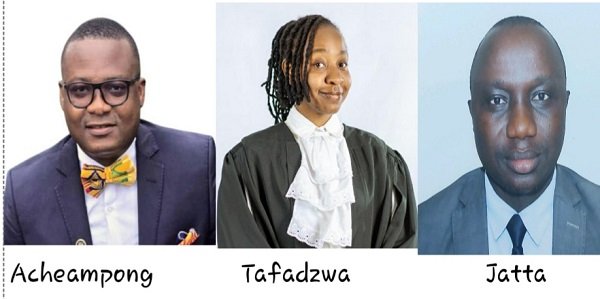
By Dr. Lawrence Kofi Acheampong (Ghana), Tafadzwa Ngomah (Zimbabwe), and Francis Jatta (Gambia)
🔗 Follow Ghanaian Times WhatsApp Channel today. https://whatsapp.com/channel/0029VbAjG7g3gvWajUAEX12Q
🌍 Trusted News. Real Stories. Anytime, Anywhere.
✅ Join our WhatsApp Channel now! https://whatsapp.com/channel/0029VbAjG7g3gvWajUAEX12Q

