


Member states of the Economic Community of West African States (ECOWAS) have been urged to implement policies aimed at removing barriers that prevent women entrepreneurs from actively participating in global trade.
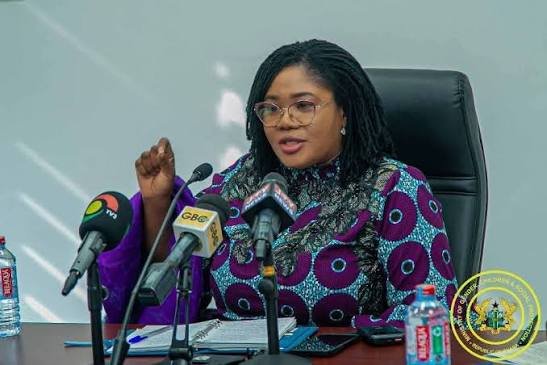
The Minister of Gender, Children and Social Protection, Dr Agnes Naa Momo Lartey, said the barriers included limited access to finance and digital technologies, which continued to constrain the growth of women-owned businesses.
She said creating an enabling environment for women entrepreneurs would help them thrive in the region and compete effectively in international markets.
Dr Lartey made the call at the ECOWAS Female Parliamentarians Association (ECOFEPA) Executive Masterclass held in Accra on Friday, on the theme: “Advancing Women’s Participation in Global Trade for Political Readiness and Export Opportunities in the ECOWAS Region.”
The programme formed part of activities marking the Second ECOWAS Parliamentary Seminar and Extraordinary Session, which began on Monday and ended on Saturday.
In a speech read on her behalf by her Legal Adviser, Ms Nelly Bernice Wallace, Dr Lartey said although women across the sub-region contributed significantly to economic development, they continued to face persistent barriers that limited their growth.
“We must move beyond seeing women primarily as beneficiaries of economic programmes to deliberately positioning them as producers, exporters, investors, innovators and decision-makers,” she said.
She called for creative and enabling environments that would allow women-owned businesses to formalise, scale up, compete effectively and fully participate in regional and global value chains.
Dr Lartey said the Ministry of Gender, Children and Social Protection was working with relevant stakeholders to strengthen economic opportunities for women and girls through the National Gender Policy 2025–2030 framework.
She said translating economic policy commitments into tangible and sustainable improvements in the livelihoods and businesses of women required stronger collaboration among institutions.
She proposed strengthening the capacity of women entrepreneurs, expanding their access to finance and creating sustainable initiatives to mitigate the impact of the COVID-19 pandemic on women entrepreneurs.
She also stressed the need to adequately prepare women to participate effectively in trade and ensure equal access to digital tools and technologies.
The Second Deputy Speaker of the ECOWAS Parliament, Mrs Adjaratou Traore Coulibaly, who represented the Speaker, Mrs Memounatou Ibrahima, said promoting women’s participation in trade would enable them to become economically autonomous and contribute significantly to development.
The First Vice-President of ECOFEPA, Mrs Zainab Gimba, urged women across West Africa to transform growing trade opportunities into sustainable businesses, jobs and greater economic influence.
The Head of the African Continental Free Trade Area (AfCFTA) Secretariat Liaison Office, Mrs Hamadou Karidio, urged ECOWAS member states to ratify the Protocol on Women and Youth in Trade to enable them to benefit fully from the AfCFTA agreement.
She identified non-tariff barriers, limited access to finance, inadequate aggregated data, complex customs procedures and high transportation costs as some of the challenges confronting women engaged in trade.
The chairperson of the Women’s Caucus of the Parliament of Ghana and MP for Ada, Mrs Comfort Doyoe, urged women legislators to advocate policies that removed barriers to women’s participation in trade.
BY BENJAMIN ARCTON-TETTEY
You can now read the *Ghanaian Times* and *The Spectator* newspapers digitally on [TimesNewsPlus](https://timesnewsplus.com/newspapers).
Follow our WhatsApp Channel now! https://whatsapp.com/channel/0029VbAjG7g3gvWajUAEX12Q

