


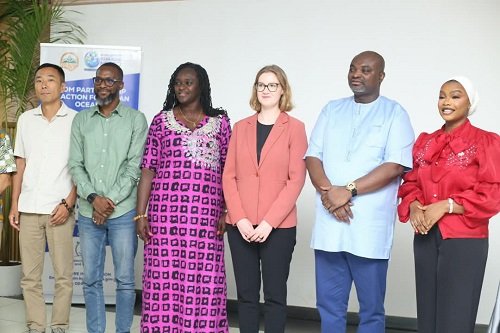
The Chief Executive Officer (CEO) of the Environmental Protection Authority (EPA), Professor Nana Ama Browne Klutse, has called for urgent and coordinated action to curb plastic pollution and ensure effective implementation of existing policies and regulations.
She said Ghana had made progress in developing measures to address plastic pollution, but significant gaps remained between policy development and practical enforcement.
According to Prof. Klutse, the country needed stronger institutions, better coordination, adequate resources and sustained public participation to translate environmental commitments into measurable improvements.
She made the call at a Policy Dialogue on Plastic Pollution in Accra on Friday, where stakeholders examined Ghana’s response to the growing challenge and explored practical ways to strengthen implementation.
The dialogue was organised by the EPA in partnership with the Embassy of the Federal Republic of Germany under its Environmental Diplomacy Project.
Prof. Klutse said plastic waste was increasingly blocking drains and polluting rivers, beaches and coastal areas, with serious consequences for flooding, livelihoods, biodiversity and public health.
She stressed that plastic pollution was not only an environmental concern but also a development challenge affecting communities, businesses and future generations.
The CEO of EPA said addressing the problem required government institutions, local authorities, businesses, producers, researchers, civil society organisations, development partners and communities to work together.
Prof. Klutse said local authorities needed adequate resources, equipment and technical capacity to manage waste effectively and enforce environmental regulations.
Without adequate support, she explained, local assemblies would continue to face difficulties in collecting waste, maintaining disposal systems and preventing illegal dumping.
“Producers need to take greater responsibility for the plastic products and packaging they introduce into the market,” she said.
She encouraged businesses to consider the full life cycle of their products and support systems that promoted collection, reuse, recycling and responsible disposal.
The private sector, she added, could play a greater role by investing in recycling facilities, alternative materials, reuse systems and other approaches that reduced plastic waste.
“Such investments can create employment while supporting a cleaner and more sustainable economy,” she added.
The EPA CEO also called for the strengthening of the National Partnership for Clean Oceans (NPFCO) to bring stakeholders together and coordinate national efforts against plastic pollution.
She said the Partnership could help government, businesses, communities, researchers and development partners share information, mobilise resources, improve public education and develop practical solutions suited to local conditions.
Prof. Klutse explained that plastic waste discarded on land could enter drains, streams and rivers before eventually reaching the ocean. She therefore called for preventive action to begin in homes, markets, communities, institutions and industries.
She encouraged Ghana to reduce unnecessary plastic use, promote affordable alternatives, increase reuse and recycling, and develop systems to recover value from plastic waste.
She said such efforts could create jobs and business opportunities, particularly for young people and entrepreneurs in recycling, waste collection, product redesign and other green enterprises.
The Deputy Ambassador of the Federal Republic of Germany to Ghana, Leonie Reese, said Germany remained committed to supporting Ghana’s efforts to address environmental challenges, including plastic pollution.
Ms Reese said tackling the problem required collaboration among government institutions, businesses, civil society organisations, communities, academia and development partners.
She said the Environmental Diplomacy Project provided an important platform for stakeholders to share knowledge and discuss practical responses to plastic pollution.
Ms Reese stressed that stronger partnerships were needed to turn policies and discussions into action, improve accountability and support Ghana’s efforts to protect its environment, waterways and marine resources.
BY BENEDICTA GYIMAH FOLLEY & ABIGAIL ANNOH
You can now read the *Ghanaian Times* and *The Spectator* newspapers digitally on [TimesNewsPlus](https://timesnewsplus.com/newspapers).
Follow our WhatsApp Channel now! https://whatsapp.com/channel/0029VbAjG7g3gvWajUAEX12Q

