


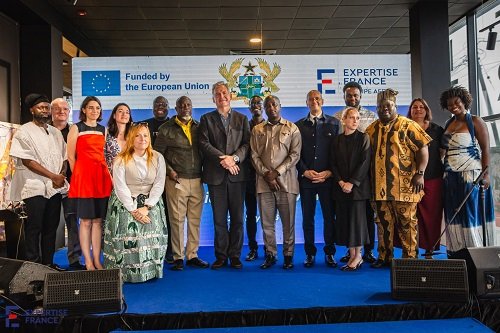
The European Union (EU) has launched the second phase of the Sankofa project, known as Sankofa II, aimed at preserving Ghana’s historic forts and castles while strengthening the country’s cultural and creative sector.
The initiative, funded by the EU and implemented by Expertise France in partnership with the Government of Ghana, is designed to address growing concerns about the condition of the country’s World Heritage sites and prevent them from being placed on UNESCO’s World Heritage in Danger list.
Launching the project at the La Foundation for Contemporary Art in Accra, the EU Ambassador to Ghana, Mr Rune Skinnebach, said the programme demonstrated the EU’s commitment to promoting culture as a driver of sustainable development.
He noted that cultural heritage should not be seen as a luxury but as a vital resource capable of driving economic growth, fostering social cohesion and preserving identity in a rapidly changing world.
Mr Skinnebach explained that culture and heritage served as catalysts for development, creating jobs, supporting tourism and bringing communities together.
He said Sankofa II would focus on conserving Ghana’s historic forts and castles, which remain important symbols of global history and memory, while also building local capacity to manage and preserve such sites.
According to him, the initiative was a direct response to concerns raised by international heritage bodies about the condition and “Outstanding Universal Value” of Ghana’s heritage assets.
He added that beyond restoration works, the project would empower local communities and institutions to take ownership of their heritage through training, technical support and improved access to funding.
Mr Skinnebach further indicated that the EU’s support extended beyond Sankofa II, noting that several regional programmes under the Africa-Europe cultural partnership were being implemented to boost the growth of the creative industry in Ghana and across the continent.
He said these programmes offered opportunities for networking, increased visibility and cross-cultural exchange between Africa and Europe.
Touching on global cultural issues, the Ambassador highlighted Ghana’s leadership in the passage of a United Nations resolution on reparatory justice, adding that the EU’s engagement in the country’s cultural sector reflected recognition of historical injustices while supporting preservation efforts.
The Minister for Tourism, Culture and Creative Arts, speaking through her representatives, called for stronger collaboration among stakeholders to ensure the successful implementation of the project.
She urged implementing partners to uphold transparency and work closely with the Ghana Museums and Monuments Board and other relevant institutions.
The Minister stressed that preserving Ghana’s cultural heritage was essential for safeguarding national identity and dignity, particularly for future generations.
She added that the project would also contribute to sustainable tourism development and create employment opportunities for communities living around heritage sites.
The Sankofa II project is expected to make arts, culture and heritage more accessible to the public, especially the youth, while strengthening partnerships between Ghana and Europe.
Stakeholders at the event expressed optimism that the initiative would play a significant role in safeguarding Ghana’s cultural legacy and promoting inclusive development through the creative arts sector.
BY ENOCH NTIAMOAH SIAW
Follow our WhatsApp Channel now! https://whatsapp.com/channel/0029VbAjG7g3gvWajUAEX12Q

