


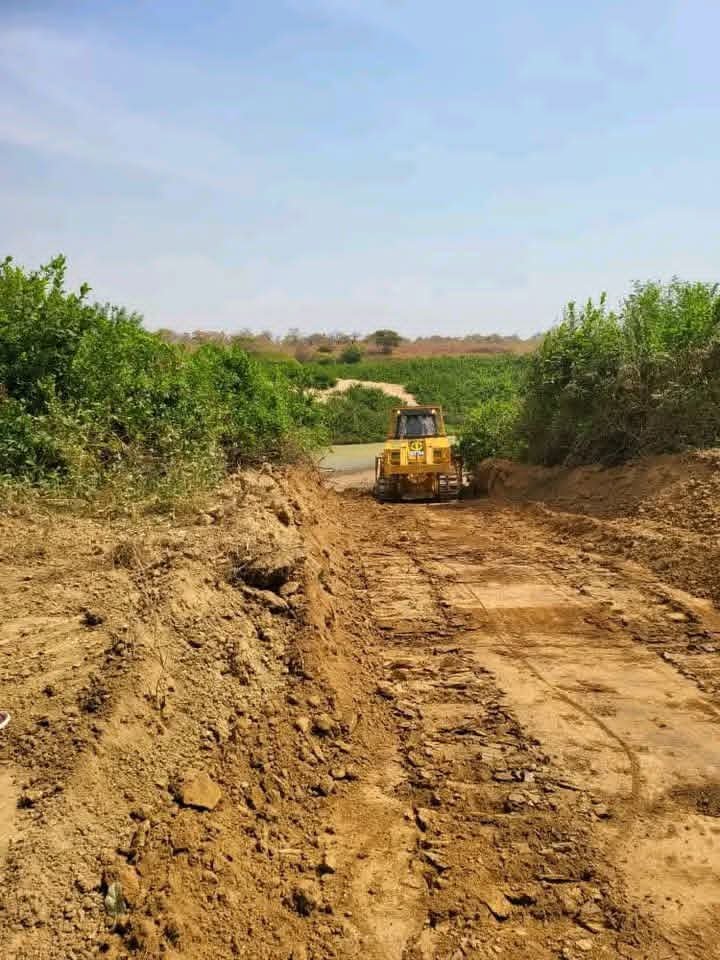
The construction of a bridge over the Oti River in the Saboba District is more than an engineering feat; it represents a major gateway to economic connection, improved healthcare access, and continuous schooling for thousands of residents within the district and across the river.
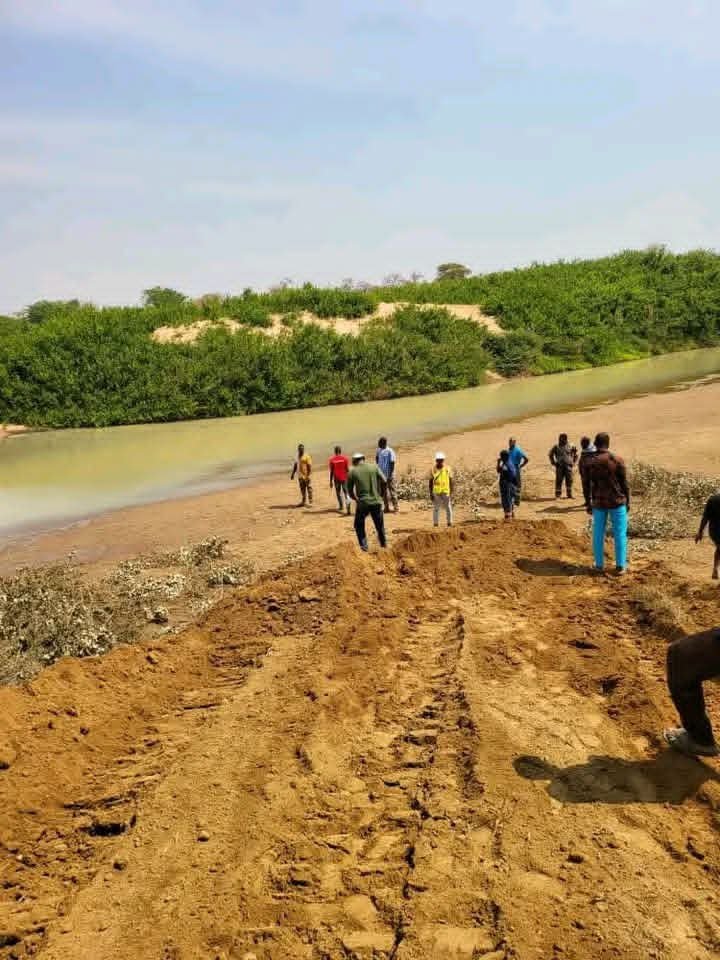
For decades, the Oti River, fed by the Bagre Dam in Burkina Faso, has been both a blessing and a burden to the people of Saboba. Each rainy season, the river overflows its banks, destroying farm produce and cutting off communities from vital services such as markets, healthcare facilities, and schools.
The dangers associated with crossing the river have claimed several lives over the years. In the first quarter of 2025, a student nurse drowned when a canoe capsized while attempting to cross the river. A few years earlier, seven schoolchildren lost their lives while crossing from a farm. These incidents remain painful reminders of the daily risks residents endure in their pursuit of economic activities, education, and healthcare.
Today, however, hope is rising across Saboba as the government, through the Member of Parliament and Minister for Transport, Joseph Bukari Nikpe, has commenced construction of a permanent bridge over the Oti River. The project is expected to transform lives by ensuring safe passage, boosting trade, and reconnecting communities long divided by the river.
Residents have described the development as a lifesaver and a catalyst for agricultural and economic growth. Speaking in an interview, a farmer and businessman, Gawu Npuankpe, expressed his satisfaction with the project, noting that it would ease the transportation of farm produce to the Saboba market.
“We have lost countless harvests to floods. This bridge means our crops will finally reach the market without fear, and business will subsequently boom,” he said.
The bridge is also expected to significantly improve access to healthcare. It will reduce mortality rates in the district by facilitating quick access to medical facilities, particularly for residents on the eastern side of the river. A surgical specialist and former Medical Superintendent of the Saboba Medical Centre, now the Assemblies of God Hospital, Dr Jean Anne Young, highlighted the importance of the project to healthcare delivery.
Dr Young noted that many residents east of the river delay seeking medical attention, especially for children and pregnant women, due to fear of crossing the river. She recalled several instances where canoe capsizing resulted in deaths, adding pressure on health workers when patients arrive at health facilities in critical condition.
“We have witnessed several cases of prolonged obstructed labour among women from across the river, necessitating caesarean sections where infants often do not survive, although the mothers’ lives are saved. When the bridge is completed, more pregnant women will be able to access antenatal care in Saboba, and referrals for blood transfusions and medications will be easier,” she explained.
She added that many Konkombas and other ethnic groups living east of Saboba prefer to seek healthcare in Saboba due to limited access to curative medical services in northern Togo, despite the presence of a new hospital at Mango. The bridge, she said, will provide a quicker and safer route for patients to reach health facilities.
Dr Young, who is also a former adjunct professor at the School of Public Health and Tropical Medicine at Tulane University in the United States, a Fellow of the West African College of Surgeons, and a Founding Fellow of the Surgical Section of the Ghana College of Physicians and Surgeons, stressed that while the bridge will ease transportation challenges, it may also increase pressure on existing social amenities.
She therefore appealed to stakeholders, government, non-governmental organisations, and philanthropists to support health facilities in the district with additional infrastructure, personnel, and medical supplies to meet the anticipated increase in patient numbers.
“Due to the bridge, the hospital will receive more patients, which means more facilities, health staff, medications, and supplies will be required. Another concern is the likely increase in road traffic accidents due to careless riding by some tricycle and motorcycle operators. We are calling on stakeholders and government to support us,” she said.
The bridge project is not just another government initiative in the district; it is a lifeline. Residents have expressed deep gratitude to the government and the Member of Parliament for prioritising Saboba. They eagerly anticipate the project’s completion, viewing it as the end of years of tragedy and the beginning of transformation for the district.
The writer is a journalist resident at Saboba.
BY ABRAHAM NAKPANA
Follow Ghanaian Times WhatsApp Channel today. https://whatsapp.com/channel/0029VbAjG7g3gvWajUAEX12Q
Trusted News. Real Stories. Anytime, Anywhere.
Join our WhatsApp Channel now! https://whatsapp.com/channel/0029VbAjG7g3gvWajUAEX12Q

