


AT least 4,085 school desks are needed to address a furniture shortage in basic schools in the Karaga Municipality of the Northern Region, a study has revealed.
The shortage, as a result, compels kindergarten and primary school pupils to sit on bare floors during lessons.
It has been identified as a major threat to quality education in the municipality, with desk adequacy scoring just 31.4 per cent in a study conducted by Simba Ghana, a non-governmental organisation.
The study assessed four indicators of education service delivery: teacher presence, pupil-teacher ratio, building soundness and desk adequacy.
Teacher presence emerged as the strongest indicator, scoring 80.9 per cent, followed by pupil-teacher ratio at 58.5 per cent. Building soundness scored 47.3 per cent, while desk adequacy recorded the lowest score of 31.4 per cent.
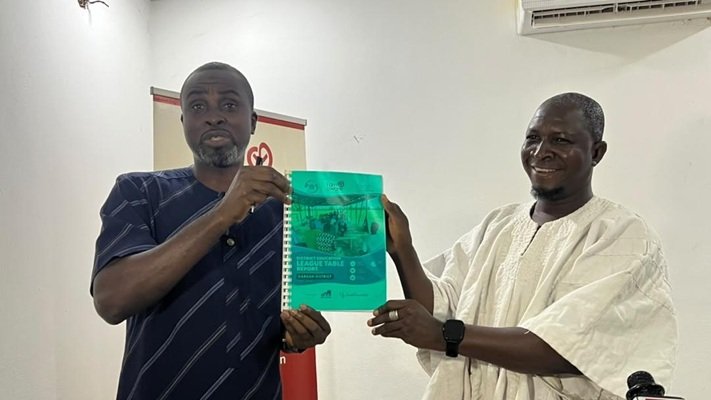
The findings were made public at the launch of the Karaga Municipal Education League Table (DELT), a pilot social accountability tool developed under the I Am Aware (IAA) project.
The project is a non-partisan citizen empowerment initiative implemented by Simba Ghana in partnership with the Ghana Centre for Democratic Development (CDD-Ghana), with funding from the William and Flora Hewlett Foundation.
The report indicated that the Karaga Municipal Assembly had budgeted to provide about 2,000 desks in 2027 to help reduce the shortage.
The Executive Director of Simba Ghana, Mr Abdul-Rahaman Abdul-Mumin, said the furniture deficit was affecting teaching and learning, and could contribute to school dropout.
He noted that in a school with 100 pupils, only about 30 might have access to desks, leaving the remaining 70 to sit on the floor.
He said the situation, coupled with inadequate infrastructure, was undermining efforts to improve educational outcomes in the municipality.
Mr Abdul-Mumin disclosed that the organisation had engaged the Member of Parliament for the area through his aide, who had highlighted a commitment to providing additional furniture and infrastructure support alongside the Assembly’s intervention.
He said addressing the shortages would help create a more conducive learning environment and improve the quality of education.
The Social Accountability Lead at CDD-Ghana, Mr Mohammed Awal, mentioned that reliable evidence was necessary to influence public policy and ensure that authorities understood the challenges confronting service delivery.
He said the assessment of government policies and programmes would help identify gaps, guide policy adjustments and ensure that resources were directed to areas of greatest need.
Mr Awal also emphasised that education remained a major priority for people in northern Ghana and called on government and its education-sector partners to extend infrastructure development to underserved communities.
FROM YAHAYA NUHU NADAA, TAMALE
SKIP THE QUEUE, TAP THE NEWS


Read the Ghanaian Times and The Spectator newspapers from the comfort of your device via TimesNewsPlus.
Follow our WhatsApp Channel now! https://whatsapp.com/channel/0029VbAjG7g3gvWajUAEX12Q

