


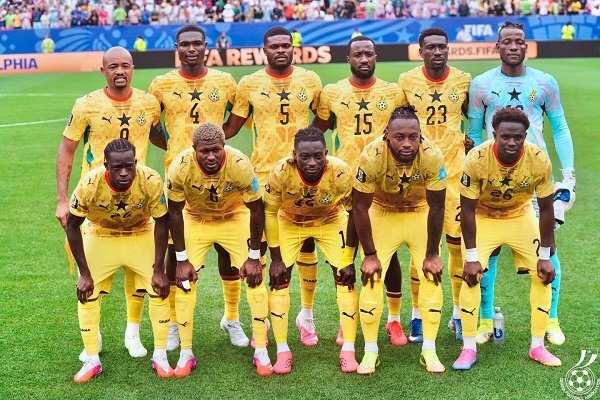
THE 23rd FIFA World Cup is now in full swing. Across the packed stadiums of the United States, Canada and Mexico, reputations are being tested, giants are being humbled and unlikely heroes are writing the tournament’s most compelling stories.
But in Ghana, another World Cup has been unfolding beyond the touchlines.
It is a tournament of visions and prophecies, live-streams and sermons, where pastors, prophets and self-styled seers have competed to predict the destiny of Ghana’s Black Stars with remarkable confidence.
Then football did what football has always done – it gingerly refused to obey prophecy.
These divine predictors emerged from all places – each carrying what appeared to be an exclusive dispatch from heaven.
For decades, Ghanaian football has maintained an uneasy relationship with the supernatural. In years gone by, football clubs and national teams were rumoured to seek the services of traditional spiritualists, fetish priests and practitioners of juju in the hope of gaining an invisible advantage over opponents.
Whether it was for protection, good fortune or psychological warfare, tales of metaphysical intervention became woven into the fabric of the country’s football folklore.
But times have changed.
The age of secluded shrines and secret consultations appears to be giving way to a new era dominated by social media prophets. Armed not with talismans and charms but smartphones, cameras and live streams, a growing number of self-proclaimed men of God have transformed football prediction into a public spectacle.
Ahead of every major international tournament, Ghanaians are bombarded with a flood of prophecies on TVs, radios and all kinds of social media platforms which become virtual pulpits where prophets confidently declare the fortunes – or misfortunes – awaiting the national team.
Some say the World Cup provides the biggest platform for the supposed prophets to command the spotlight and also win hundreds of members to their church, should their prophecies or predictions hit a jackpot.
This World Cup has proven no different.
Long before Ghana hit the ground running, a disturbing chorus of prophetic voices already delivered their verdict. The overwhelming majority predicted doom for the Black Stars, forecasting a group-stage exit and warning supporters not to raise their hopes too high.
Among the most vocal was Prophet Clement Testimony, who boldly declared on Metro TV that Ghana would lose its opening Group L encounter against Panama. According to him, the outcome had already been revealed spiritually, especially because “they failed to invite Andre Ayew into the team.”
The only way to avert the impending disaster, he claimed, was for football authorities to contact him so that divine intervention could reverse the decree.
The call never came.
As match day approached, Prophet Clement doubled down on his prediction, insisting that the Black Stars were destined for defeat. He further suggested that similar disappointments awaited Ghana against England as well as Croatia.
He was not in this alone. Two other self-acclaimed Ghanaian seers – Prophets Olam and Eric Boahen Uche were blunt in their prediction – insisting the Stars were going to lose all three group games.
Of course, Ghana performed abysmally during their pre-tournament build-up, crashing 1-5 to Austria, 1-2 to Germany, 0-2 to Mexico, 0-1 to South Korea before holding off Wales in a 1-1 draw. Thus, having a sense of catastrophe for the Stars might not be any difficult undertaking.
Many supporters listened. Some worried. Others shared the prophecy widely, adding fuel to the already intense atmosphere surrounding the national team.
Yet – football, much like life itself, often refuses to follow scripts written in advance.
Indeed, when the final whistle sounded, it was not Panama celebrating, but Ghana.
In a dramatic contest that kept fans on the edge of their seats, the Black Stars produced a spirited performance to secure victory.
The decisive moment arrived deep into stoppage time when Brandon Thomas Asante embarked on a dazzling run down the left – benefiting from an Antoine Semenyo dream pass – before setting up Caleb Yirenkyi, whose 95th-minute goal-mouth poker sparked wild celebrations among Ghanaian supporters.
For once, the prophets of doom were frustratingly left scratching their heads for explanations.
Across online platforms, videos predicting Ghana’s defeat resurfaced – not as proof of prophetic insight, but as exhibits in an unexpected public trial.
Screenshots circulated. Comment sections erupted.
Supporters who had spent days lamenting impending disaster suddenly became amateur theologians, asking one uncomfortable question: If the prophecy came from God, what happened?
Then, as if to expose them further, Ghana once again staged a stirring performance to battle the Three Lions of England to a pulsating barren result in their second game, gallantly qualifying for the Round of 32 stage – even before their final engagement with Croatia.
Perhaps, football is the only game where ninety minutes can dismantle prophecies made over ninety days.
As a matter of fact, not all prophetic voices had predicted failure.
A small minority stood firmly behind the Black Stars. Typical among them was Prophet Telvin Sowah Adjei, who confidently prophesised a 1-0 victory over Panama – and a goalless result in their second game by ‘colonising” England – despite the prevailing pessimism.
His prophetic prediction, unlike many others, appeared to align perfectly with events on the field.
Now popularly known as the ‘Catalyst man’, Prophet Sowah Adjei had weeks earlier predicted a first round exit for Ghana, but returned after a 21-day ‘spiritual exercise’ – according to him – to make a U-turn. This reversal meant he was going to tamper with the results in favour of the Stars.

He had warned the Ghana Football Association (GFA) during an interview on Accra-based radio station, Accra FM, not to touch former coach Otto Addo – and the entire team that qualified the country to its fifth World Cup. And, when that was not heeded to with the sacking of the coach, he said Ghana would face the consequences in a fatal manner by losing two games, drawing the other and crashing out.
Experienced Portuguese coach Carlos Queiroz was appointed to replace Addo, whilst a couple of new faces were offered a dream debut – decisions against the prophet’s direction.
This was how he put it: “Ghana will play only three games at the World Cup and return home. I have written the results already on the walls of my washroom and they are 1-0, 0-0 and 1-0.”
Describing the earlier scenario as the ‘Phoenix Principle, Prophet Sowah Adjei told Accra FM that “Ghana will go to the World Cup unappreciated, but out of the ashes, we would rise against all odds.”
However, he said because his catalyst, which was also to include former skipper Andre Dede Ayew in the team, was breached, the repercussion was going to be very dire.
Alarmed by the looming prospect of an embarrassing first-round exit, senior officials from the Ghana Football Association and the Sports Ministry were alleged to have quietly sought an audience with the prophet in a desperate attempt to reverse what many feared was an impending national embarrassment.
The outspoken cleric would later publicly confirm that he had held talks with some of the country’s most influential decision-makers in the game, insisting the discussions were aimed at rescuing the Black Stars from global humiliation.
To a sizeable number of Ghanaians on social media, the sequence of events was too striking to dismiss. They remain convinced that it was only after the meeting that the Stars’ fortunes took a dramatic turn for the better.
While prophets such as Telvin Sowah Adjei have earned public attention through a number of remarkably accurate football predictions, football has also become fertile ground for a growing industry of public predictions.
With every major tournament, new prophetic voices emerge, each claiming exclusive insight into results that millions of supporters desperately want to know in advance. Some predictions prove strikingly accurate.
Many failed prophecies quietly fade into obscurity. Yet, each correct call is enough to reinforce the belief that somewhere, someone possesses a privileged glimpse into football’s uncertain future.
Such moments inevitably reignite the debate about prophecy and football in Ghana.
Are some of these predictions genuine revelations? Mere coincidence? Educated guesses wrapped in spiritual language – or simply calculated attempts to gain relevance and attract followers?
But what does one football-crazy Ghanaian fan say about this.
“I believe in football prophecies because some of them get it right, but a higher percentage of them are mere conjectures,” says 32-year-old James Opoku, a dyed-in-the-wool disciple of the Black Stars.
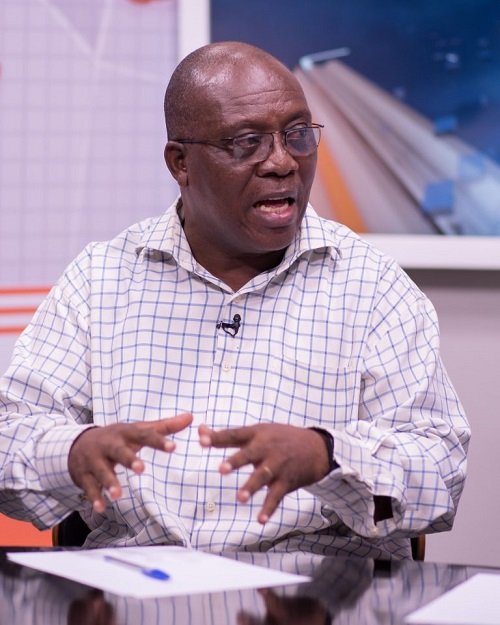
For Kudjoe Fianoo, one of Ghana’s most respected football administrators with more than four decades of experience in the game, the phenomenon of football prophecies is as fascinating as it is complex.
“I would honestly be reluctant to consult a prophet about the future of my team, unless that man of God has a proven track record,” he intimated.
“As much as I would always urge players to prepare thoroughly and work hard for results, I also believe you cannot completely dismiss the spiritual dimension of the game.”
Mr Fianoo’s measured position reflects the dilemma confronting many Ghanaians.
Regrettably, much like lotto forecasters who promise winning numbers to desperate hopefuls, many football prophets seem eager to exploit the emotional investment of passionate supporters.
For Prophet Isaac Nahum, founder of the Trust International Church in Nungua, an Accra suburb, some of these prophecies are mere speculations.

“Of course, there are true prophets who can see events before they happen. But many others exploit people’s intelligence and emotions. When their so-called prophecies fail to materialise, they often blame it on the failure of those concerned to seek the necessary spiritual direction,” he said.
In a football-loving nation where every victory is celebrated as a national achievement and every defeat mourned collectively, there will always be an audience willing to listen.
Yet, amid the noise, one truth remains constant: football is won on grass, not on Facebook live-streams; in training grounds, not in prophetic declarations.
As Ghana continues its World Cup journey, supporters may hear countless predictions about what lies ahead. More prophecies will undoubtedly flood social media feeds. More visions will be announced. More spiritual verdicts will be delivered with unwavering certainty.
But if the victory over Panama and a pulse-pounding draw with the highly-favoured England have taught Ghanaians anything, it is that football remains gloriously unpredictable.
And, perhaps, that unpredictability – not prophecy – is what makes the beautiful game so captivating.
In Ghana, the Black Stars may have become a national obsession. But increasingly, so too have the prophets who claim to know their future.
Whether they are seers, opportunists or simply football fans with a microphone is a debate that will continue long after the World Cup ends.
The Stars are campaigning in their fifth World Cup tournament – after marking an imposing debut in Germany 2006 where they finished at the Round of 16. Four years later, the team exited at the quarter final stage – missing the semis by a hair’s breadth after Asamoah Gyan’s blood-clotting stoppage time penalty miss.
Lamentably, the previous two – Brazil 2014 and Qatar 2022 have produced calamitous first round eliminations for the Stars. But the good news is that there would be no early shower, this time.
The former quarter-finalists have already done enough to book their ticket into the Round of 32 stage of a tournament that is featuring 48 teams for the first time.
Now, across social media, some supporters are pleading with Prophet Telvin to issue one more favourable prophecy. Some jokingly suggested the Black Stars should not leave their hotel until the prophet had spoken. Others pleaded only half in jest, convinced that another positive declaration might once again tilt destiny in Ghana’s favour.
But it appears there might be no more football prophecies from him.
Addressing a live service at his church – the Prophetic Life Embassy just three hours before Ghana’s showdown with Croatia, the Ghanaian prophet announced that he was revising his earlier prophecy of a 1-0 scoreline.
His explanation raised eyebrows. He claimed his prophecies were increasingly being used by sports bettors, some of whom had allegedly forwarded copies of their winning betting slips while thanking him for helping them beat the bookmakers.
“Some of them even wanted to send me money and I was wondering why they wanted to do so.
“I do not promote betting, so I am out of these football prophecies. If anything at all, I will deal directly with the authorities concerned,” he added.
When the dust finally settled, Croatia’s 2-1 victory earned them second place in the group. Ghana advanced in third with four points, while England topped the group after ditching Panama 2-0.
But whatever the case may be, there would still be scores of prophecies ahead of Saturday’s Ghana-Colombia blockbuster. It is a now a booming new order which the football-mad nation of Ghana have accepted – even if begrudgingly.
Perhaps, that is Ghana’s newest football tradition. Before the coaches unveil their starting eleven, the prophets unveil heaven’s supposed scoreline. Before the first whistle comes the first vision. Before every tournament comes another battle for spiritual credibility.
Yet, the beautiful game has a stubborn habit of embarrassing certainty. It rewards preparation, punishes complacency and occasionally laughs at those who claim to know tomorrow.
In a nation where football inspires almost religious devotion, perhaps it was inevitable that prophets would become part of the spectacle. Whether they are genuine seers, gifted communicators or simply astute readers of public sentiment, is a debate that will continue long after the tournament’s final whistle.
On July 11, the World Cup will end. One team will lift the trophy. The stadium lights will go out.
The prophets will move on to another tournament, another election, another national event. Some will remember the predictions that came true. Most will forget the ones that failed.
But perhaps, the greatest lesson of Ghana’s World Cup is this: football remains gloriously resistant to certainty.
And, maybe that is exactly why millions continue to love it.
In a country overflowing with people who claim to know tomorrow, the beautiful game stubbornly insists on surprising everyone.
BY JOHN VIGAH