


The Ghana Investment Promotion Centre (GIPC) has last year recorded Foreign Direct investments of $152.1 million.
The FDI covering 26 projects cut across multiple sectors of the economy such as oil and gas, petroleum, agriculture and road.
The Chief Executive Officer of GIPC, Simon Madjie, stated this in a press statement issued after the Japanese business forum and copied to The Ghanaian Times.
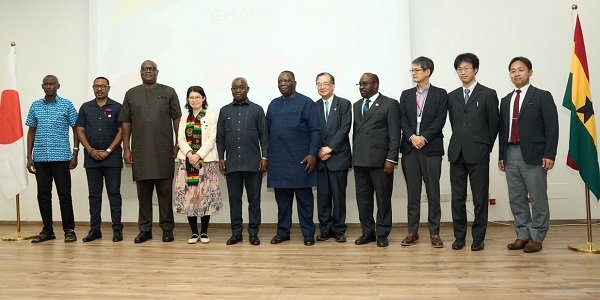
The forum which was attended by a 54-member Japanese business delegation is a sequel to President John Dramani Mahama’s official visit to Japan in August 2025, highlighted Ghana’s commitment to attracting foreign direct investment (FDI) and strengthening bilateral economic ties with Japan.
It was organised in partnership with Japan’s Ministry of Economy, Trade and Industry (METI), the Ghanaian Ministry of Foreign Affairs (MFA), the Japan External Trade Organisation (JETRO), and the Japan International Cooperation Agency (JICA).
The forum brought together high-level dignitaries, including the Japanese Ambassador to Ghana, Hiroshi Yoshimoto, Ghana’s Deputy Ambassador to Japan, Ambassador Francis Doe, the Deputy Minister for Trade, Agribusiness and Industry (MOTAI), Mr Sampson Ahi, and Mr Livramento Rui, Chief of Staff of the African Continental Free Trade Area (AfCFTA) Secretariat.
Doing a presentation on the topic “Doing Business in Ghana, reported that the Centre,” Mr Madjie, disclosed that that the FDI recorded last year, covered areas including the Takoradi-Tema and Takoradi-Ivory Coast pipeline projects, the Petroleum Hub Development project, Mooring Systems, farm-in and onshore opportunities, as well as gas infrastructure, plant upgrades, and capacity expansions.
“We believe that Ghana is a country that Japanese companies participating in this mission should take an even greater interest in and consider the possibility of investment,” he said.
The Japan’s State Minister for Foreign Affairs, Ms Atano Kunimitsu, who led the delegation, underscored opportunities for collaboration in manufacturing, technology, and infrastructure.
She praised efforts by the Japanese government to encourage companies to expand into Africa through joint public-private missions.
In his keynote address, the Deputy Minister for Trade, Agribusiness and Industry, Mr Sampson Ahi, identified industrial platforms and export-oriented manufacturing, value chains and industrial inputs, as well as logistics, trade facilitation, and standards, as priority areas for collaboration.
He reaffirmed the government’s commitment to improving Ghana’s business environment.
“We will support predictable regulation, improve coordination for investor facilitation, and strengthen aftercare so that firms already operating in Ghana can expand with confidence. When issues arise, we want them raised early and resolved quickly because delays cost jobs and confidence,” he said.
The Deputy CEO of the Ghana Free Zones Authority, Mr Lateef Apau Wiredu, provided insights into the Ghana Free Zones Scheme, explaining that investors could choose to operate in a special economic zone or a single factory.
A representative from Ghana Export Promotion Authority, Mr Emmanuel Quao outlined the authority’s mandate and detailed export and import opportunities available for investors.
BY STEPHANIE BIRIKORANG
Follow Ghanaian Times WhatsApp Channel today. https://whatsapp.com/channel/0029VbAjG7g3gvWajUAEX12Q
🌍 Trusted News. Real Stories. Anytime, Anywhere.
✅ Join our WhatsApp Channel now! https://whatsapp.com/channel/0029VbAjG7g3gvWajUAEX12Q

