


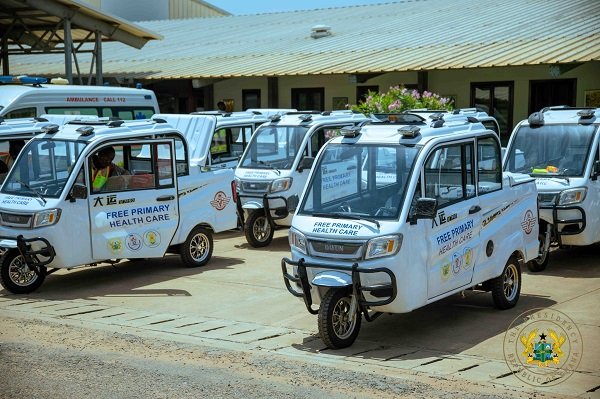
The Ghana Health Service (GHS) has begun deploying tricycles and motorbikes across the country to enhance the delivery of essential health services at the community level under the government’s Free Primary Health Care (FPHC) initiative.
In a press statement issued and signed by the Director-General of the GHS, Dr Samuel Kaba Akoriyea, and copied to The Ghanaian Times yesterday, the move was described as a strategic intervention to ensure equitable access to quality primary health care for all Ghanaians.
The statement notes that the GHS have a track record of deploying tricycles for outreach services and urge the public to disregard viral videos circulating on social media that wrongly portray the vehicles as ambulances.
It described the videos as misleading, stressing that the deployment highlights ongoing efforts by the government and the GHS to make primary health care more accessible nationwide.
“The attention of the Ghana Health Service has been drawn to certain viral videos circulating on social media, wrongly portraying the tricycles procured under the Free Primary Health Care (FPHC) initiative as ambulances,” the statement said.
“The Service wishes to categorically state that these claims are false and misleading. These FPHC tricycles are not ambulances and have not been procured to be used as such. It needs to be emphasised that for some years now, the Service has a record of successfully deploying such tricycles for outreach services,” it added.
According to the statement, the introduction of the tricycles complements existing motorbike deployment and provides a more versatile and context-appropriate transport option for frontline health workers operating within the Community-based Health Planning and Services (CHPS) system.
It further noted that unlike motorbikes, the tricycles are fitted with dedicated compartments, helping to reduce logistical challenges in transporting medical supplies and improving efficiency and service coverage at the community level.
“Moreover, the tricycles enhance safety and stability in difficult terrains and are user-friendly for a broader range of health workers, including female Community Health Nurses, thereby promoting a more inclusive, responsive, and protective environment for health workers during extreme weather conditions such as rain and sun,” the statement added.
BY TIMES REPORTER
Follow our WhatsApp Channel now! https://whatsapp.com/channel/0029VbAjG7g3gvWajUAEX12Q

