


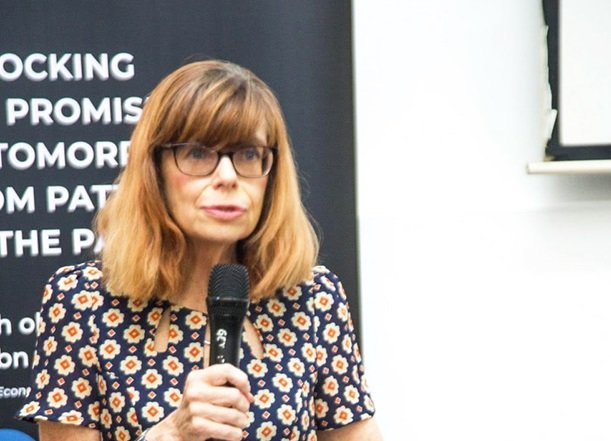
The outgoing Australian High Commissioner to Ghana, Ms Berenice Owen-Jones, has described Ghana as a resilient democracy whose warmth, determination and people have left a lasting impression on her after four years of service.
As she prepares to end her tour of duty, Ms Owen-Jones said Ghana had given her “more than I expected”, adding that her posting had transformed her both professionally and personally.
Reflecting on her tenure, she said she arrived in Ghana at a time when the world was emerging from the COVID-19 pandemic and witnessed how the country navigated economic challenges while maintaining democratic governance and political stability.
She noted that Ghana had remained a stabilising force in West Africa despite growing instability in parts of the sub-region.
Ms Owen-Jones said what stood out most to her were the people, explaining that her interactions with government officials, traditional leaders, entrepreneurs, artists, academics, students, market traders and small business owners had given her a deeper understanding of the country beyond official engagements.
She observed that Ghana’s greatest asset was the resilience of its people, who continue to support their families and businesses in the face of economic difficulties and the rising cost of living.
The High Commissioner commended Ghana’s democratic institutions for remaining strong and reaffirmed Australia’s commitment to strengthening bilateral relations based on mutual respect, shared interests and practical cooperation.
On economic relations, she said mining remained a key area of cooperation between the two countries, noting that Australian mining companies operating in Ghana had demonstrated commitment to responsible mining through investments in community development, skills training, workplace safety and environmental protection.
She also highlighted the Australia Awards Programme, which has enabled many Ghanaians to pursue higher education and specialised training in Australia and return home to contribute to national development.
Ms Owen-Jones further praised Ghanaian partner organisations implementing projects under Australia’s Direct Aid Programme in areas such as education, gender equality and community development, describing their role as critical to the success of the initiative.
She said the establishment of an office of the Australian Centre for International Agricultural Research (ACIAR) in Accra during her tenure would deepen collaboration in agricultural productivity, climate resilience and food security.
Expressing optimism about the country’s future, she said Ghana had strong democratic institutions, abundant natural resources, exceptional human capital and an influential diaspora capable of driving long-term transformation.
On a personal note, Ms Owen-Jones described her stay in Accra as rewarding, despite challenges such as the tropical climate, traffic congestion and bureaucratic processes.
She said Ghanaian hospitality, culture, music and visual arts had enriched her experience and created lasting memories.
The High Commissioner also recalled efforts to raise funds through the Melbourne Cup Charity Ball for The Children’s Heart Foundation Ghana, which supported life-saving heart surgeries for two children in Accra this year.
She described the initiative as one of the most meaningful moments of her diplomatic assignment.
“I leave a better diplomat for having been here. More than that, I leave having been genuinely changed by this country and by the people who were generous enough to let me in,” she said.
BY CLIFF EKUFUL
Follow our WhatsApp Channel now! https://whatsapp.com/channel/0029VbAjG7g3gvWajUAEX12Q

