


Ghana is to train more than 2,000 scientists to support its planned nuclear power programme as part of efforts to build the technical expertise required for the development and operation of nuclear energy infrastructure.
The training programme will form part of a nuclear power readiness initiative scheduled to run from January 2027 to December 2028, according to the 2027 Budget Statement presented to Parliament by the Minister of Finance, Dr Cassiel Ato Forson, on November 12.
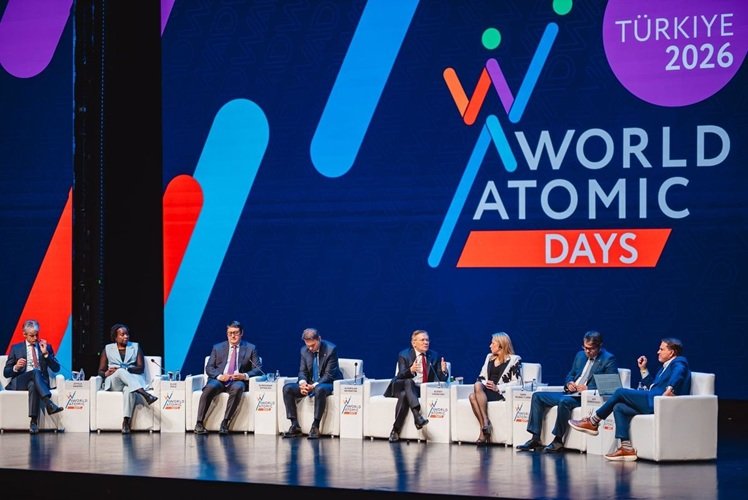
The announcement coincided with the opening of World Atomic Days 2026, an international business forum organised by Rosatom, Russia’s State Atomic Energy Corporation, in Antalya, Turkey, which placed emphasis on developing the next generation of nuclear industry professionals.
The forum opened with a youth programme dubbed “Nuclear Energy for Talent: Leadership, Development, Inspiration”, which brought together 250 representatives of the international nuclear youth community from 35 countries.
Addressing participants, the Director General of Rosatom, Mr Alexey Likhachev, said the nuclear industry required young people who could develop innovative ideas, master emerging technologies and work across different professional disciplines.
“Today the nuclear industry needs talent – young people ready to propose new ideas, master technologies and work at the intersection of different professions,” he stated.
The programme continued with a dialogue on “Workforce for a Technological Breakthrough in Response to Climate Change”, during which participants discussed the growing demand for specialists with expertise in modern technologies, digital tools and complex engineering systems.
The Deputy Director General for Human Resources at Rosatom, Ms Tatiana Terentieva, outlined the corporation’s approaches to training and developing nuclear energy specialists.
The Chief Coordinator of the BRICS Nuclear Energy Platform, Ms Elsie Pule, also proposed the establishment of shared training facilities and common regional qualifications to facilitate skills development and enable specialists to work across different regions.
Ghana already had educational links with Rosatom, whose partner universities operate joint educational programmes with the country.
An industry and education seminar on nuclear technologies was also held in Ghana in 2025/2026, while Ghanaian students had participated in the Ambassadors of Russian Nuclear Education project.
Currently, more than 360 students from 23 African countries are studying at Russian universities through Rosatom-supported programmes, with the corporation allocating approximately 100 study places to African countries annually.
Mr Likhachev also expressed support for proposals by the Impact Team 2050 Council, Rosatom’s global youth partnership, to establish regional youth nuclear platforms, including one in Africa.
The proposed platforms are expected to strengthen cooperation among young professionals, promote knowledge sharing and contribute to building the skilled workforce needed to advance nuclear energy development across the continent.
SKIP THE QUEUE, TAP THE NEWS


Read the Ghanaian Times and The Spectator newspapers from the comfort of your device via TimesNewsPlus.
Follow our WhatsApp Channel now! https://whatsapp.com/channel/0029VbAjG7g3gvWajUAEX12Q

