


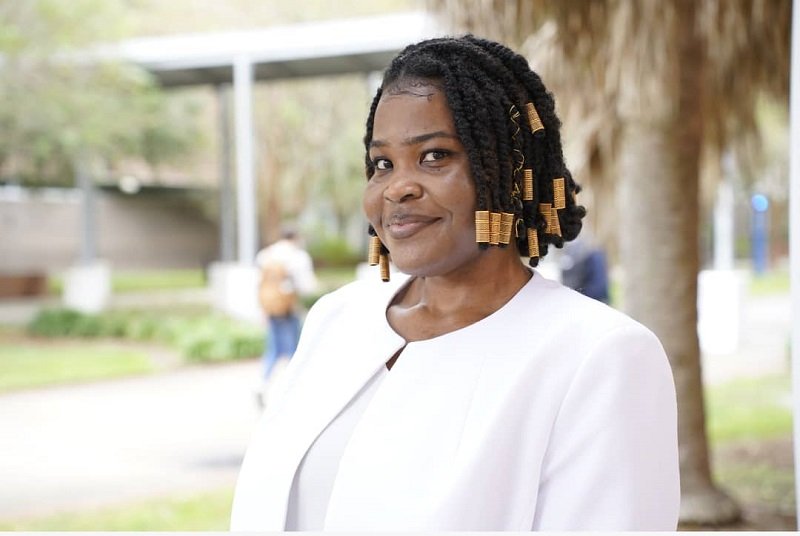
In the evolving world of neuroscience and biomedical engineering, Ghanaian-born researcher Grace Teiko Lowor has emerged as a trailblazer.
Her innovations in brain-computer interfacing and neuromodulation are not only drawing international acclaim but also pointing toward a future where neurological care is more innovative, more personalized — and more globally accessible.
With a background rooted in neural engineering, Grace’s work explores how the brain’s electrical activity can be decoded and translated into actionable medical therapies.
At the center of her current research is a sophisticated effort to improve treatment for Tourette Syndrome, a neurodevelopmental disorder characterized by involuntary motor and vocal tics that affects both children and adults.
Her lead project focuses on developing closed-loop deep brain stimulation (DBS) systems — medical devices that can monitor neural activity in real-time and deliver therapeutic stimulation only when needed.
Accodding to her, “What we’re designing is not just a device that stimulates the brain, but one that listens to it.By understanding when a tic is about to occur, we can intervene in a targeted, intelligent way.”
While DBS has been used in various neurological conditions, Grace’s approach introduces machine learning and real-time signal processing into the equation — advancing the technology toward precision medicine.
Her work is particularly notable for its multimodal strategy, combining electrophysiological recordings, wearable sensor data, and synchronized video analysis to map the brain’s response with unprecedented detail.
In a parallel stream of research, she is developing noninvasive AI-based diagnostic tools that can automatically detect and classify tics from video and motion data.
This system eliminates the need for manual scoring in clinics — a significant breakthrough, especially for regions where access to neurologists and diagnostic equipment is limited.
That global accessibility is more than a technical goal for Grace Lowor — it’s a personal mission.
Born and raised in Ghana, she remains acutely aware of the barriers that exist to neurological diagnosis and treatment in many parts of Africa.
“In Ghana, neurological conditions often go undiagnosed or mismanaged, not because the cases don’t exist, but because the systems to identify and treat them are under-resourced,” she explains.
Indeed, recent reports estimate that Ghana has fewer than one neurologist per one million people, a stark contrast to the U.S., where the ratio is closer to one per 20,000.
She adds that “The tools we’re developing could enable community clinics in Ghana to assess patients using nothing more than a smartphone and wearable sensorThat kind of technology has the power to change lives at scale.”
Her contributions have not gone unnoticed. Grace has received multiple distinctions from major scientific bodies in the United States.
She is a recipient of the 2024 Society for Neuroscience’s Trainee Professional Development Award, was named a Rising Biomedical Engineering Scholar by the University of Illinois Chicago, and has delivered invited presentations at premier international conferences, including the 2024 NYC Neuromodulation Conference and BMES Annual Meeting.
However, Grace Lowor’s influence extends beyond research. She plays a critical role in STEM advocacy and mentorship, serving in leadership positions for scientific student organizations and research outreach initiatives. She has mentored young scientists — including students from Ghana — in accessing research opportunities, winning scholarships, and building their careers in biomedical science.
Her work also reflects a broader shift in global science: African researchers are not just participating in but leading world-class innovation.
As neural engineering increasingly defines the future of medicine, Grace’s contributions place Ghana firmly on the map of global health advancement.
“Neurotechnology is one of the most promising frontiers in healthcare,” she notes.
She said, “My commitment is to ensure that these innovations don’t remain confined to elite hospitals in wealthy nations but reach the communities that need them most — including right back home in Ghana.”
As brain disorders continue to rise worldwide — projected to be the leading cause of disability by 2030 — the urgency of her work cannot be overstated. In countries with emerging health infrastructure like Ghana, scalable and accessible solutions are critical.
Through her efforts, Grace Lowor is delivering science that listens to the brain and systems that respond to real human needs.
With her groundbreaking contributions, Grace Lowor exemplifies how bold, interdisciplinary research — rooted in compassion and driven by purpose — can redefine what is possible in global healthcare.