


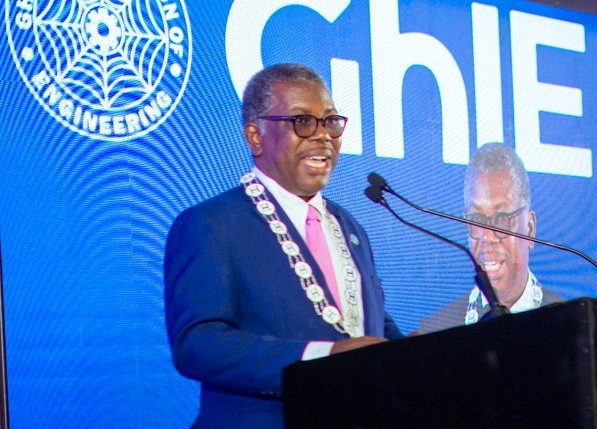
The Ghana Institution of Engineering (GhIE) has called for an independent and comprehensive audit of road projects under the government’s flagship “Big Push” infrastructure programme, citing concerns over procurement practices and project delivery.
The Institution urged the Auditor General to undertake the audit to ensure value for money, transparency and strict adherence to engineering and procurement standards, especially given the scale of public investment involved.
The call was contained in a statement shared with the Ghanaian Times by the Organisation, amid growing public debate over the execution of the projects.
According to GhIE, recent investigative reports by The Fourth Estate had revealed the extensive use of single source procurement and restricted tendering in the award of contracts under the Ministry of Roads and Highways, raising questions about compliance with established laws.
It noted that the scale of the investment, estimated at Ghc110 billion with about Ghc85 billion already committed to ongoing projects, required rigorous and independent scrutiny to safeguard the national interest.
From a professional engineering standpoint, the Institution stressed that such unprecedented expenditure must be subjected to a credible audit process to ensure that infrastructure delivery meets expected standards and delivers measurable benefits to the public.
While acknowledging a directive by President John Dramani Mahama for the Minister for Roads and Highways to respond to the allegations, GhIE maintained that the issues raised required an independent audit by the Auditor General to restore public confidence.
The Institution explained that its request was grounded in Section 16 of the Audit Service Act, 2000 (Act 584), which empowers the Auditor General to undertake special audits in the public interest and report to Parliament.
It further indicated that the proposed audit should go beyond procurement processes to cover the full lifecycle of the projects, including feasibility studies, engineering design, environmental and social compliance, as well as implementation.
GhIE also referenced provisions in the Public Procurement Act, 2003 (Act 663), which establishes competitive tendering as the default procurement method, and the Public Investment Management Regulations, 2020 (LI 2411), which require proper feasibility assessments and inclusion of projects in an approved investment plan before execution.
The Institution emphasised that strict adherence to these legal frameworks was essential to ensuring transparency, fairness and efficient use of public resources, warning that any deviation could undermine accountability and compromise value for money.
GhIE clarified that its call was not intended to apportion blame, but rather to promote high standards in public project execution, identify systemic gaps and strengthen infrastructure delivery.
It added that it was ready to support the Auditor General with technical expertise to ensure a credible audit process, and urged swift action to protect public interest in the delivery of critical national infrastructure projects.
BY TIMES REPORTER