


The Ghana Health Service (GHS) has intensified efforts to prevent malaria with the onset of the rainy season, rolling out two major interventions expected to protect about 1.5 million children each from the disease.
The interventions; the Seasonal Malaria Chemoprevention (SMC) campaign and the school-based distribution of insecticide-treated nets (ITNs), form part of the country’s strategy to reduce malaria transmission during the peak rainy season.
While the SMC targets children aged three to 59 months in seven regions, the ITN campaign is expected to reach pupils in class two and class six across the country.
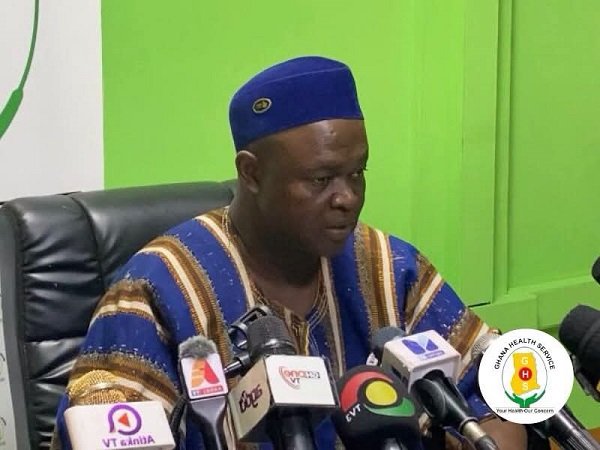
The Director-General of the GHS, Dr Samuel Kaba Akoriyea, who announced this at a press briefing in Accra last Thursday, said the interventions were key components of Ghana’s efforts to eliminate malaria as a public health threat by 2028.
Under the National Malaria Elimination Strategic Plan (2024–2028), Ghana aims to reduce malaria-related deaths by 90 per cent and malaria cases by 50 per cent by 2028.
According to Dr Akoriyea, Ghana has made significant progress in the fight against malaria, with prevalence declining from 27.5 per cent in 2011 to 8.6 per cent in 2022, while malaria-related deaths dropped by more than 98 per cent, from 3,259 in 2011 to 52 in 2025.
He explained that the SMC intervention, recommended by the World Health Organisation (WHO) for areas with highly seasonal malaria transmission, will see the administration of antimalarial medicines sulphadoxine pyrimethamine amodiaquine (SP. AO) to eligible children over four monthly treatment cycles during the rainy season.
He said completing all treatment cycles could reduce malaria episodes among young children by up to 75 per cent.
With regards to the school-based ITN distribution, Dr Akoriyea described schools as a structured, reliable and equitable platform for reaching children and increasing household ownership of insecticide-treated nets.
“In partnership with the Ghana Education Service, the programme ensures that every child, regardless of where they live, has the opportunity to sleep under an insecticide-treated net every night, while extending protection to other members of the household,” he said.
Dr Akoriyea urged parents and caregivers to ensure that eligible children completed every treatment cycle under the SMC campaign and to consistently use insecticide-treated nets to reduce the risk of malaria infection.
The Programme Manager of the National Malaria Elimination Programme (NMEP), Dr Hilarius Abiwu, said this year’s SMC campaign was targeting children in the Upper East, Upper West, North East, Northern, Savannah, Bono East and Oti regions, where malaria transmission peaks during the rainy season.
He disclosed that funding constraints had reduced the programme from five treatment cycles to four this year, with about GH¢40 million available out of an estimated operational requirement of more than GH¢65 million.
Dr Abiwu also encouraged the public to adopt preventive measures, including sleeping under insecticide-treated nets, desilting choked drains, eliminating stagnant water around homes, using insecticide sprays where necessary, and seeking early testing and treatment at the onset of malaria symptoms.
BY ABIGAIL ANNOH
Follow our WhatsApp Channel now! https://whatsapp.com/channel/0029VbAjG7g3gvWajUAEX12Q

