


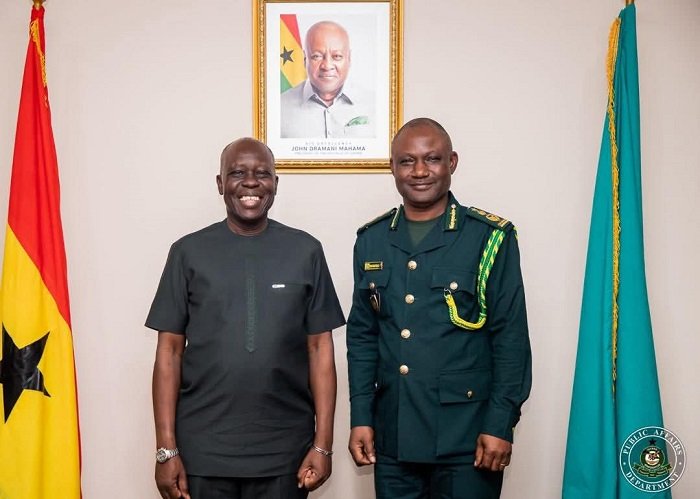
The Ghana Immigration Service (GIS) has begun the first phase of implementing its Gender-Based Violence and Protection from Sexual Exploitation, Abuse and Harassment (GBV-PSEAH) policy.
The initiative, supported technically and financially by the United Nations Population Fund (UNFPA) in 2025, has led to the development and validation of a training manual for trainers across regional commands and training schools nationwide.
In addition, two specialised training programmes have been designed for selected officers and facilitators.
The Service also plans to roll out further strategic activities this year to strengthen institutional systems, accountability and awareness.
These will include capacity-building programmes, expansion of GBV-SEAH and gender training across the Service, and stronger community engagement to help prevent gender-based violence.
Other areas of focus are improving reporting and monitoring systems, enhancing institutional awareness programmes, and mobilising resources to support implementation.
This came to light last Friday when the Country Representative of UNFPA, Dr Wilfred Ochan, paid a courtesy call on the Comptroller-General of the GIS, Mr Samuel Amadu Basintale, in Accra.
During the visit, Dr Ochan reaffirmed UNFPA’s commitment to supporting the GIS in rolling out additional activities aimed at preventing GBV-SEAH.
He noted that although a recent assessment across selected institutions showed that the GIS had a strong foundation for implementing gender-responsive policies, more needed to be done to strengthen implementation through continuous training, monitoring and institutional support.
Dr Ochan commended the leadership of the GIS for its commitment to addressing GBV-SEAH issues and pledged continued support through technical assistance, training and policy development.
The Gender Programme Analyst at UNFPA, Mrs Selina Owusu, advised the Service to adopt a rights-based and gender-responsive approach to border and migration management in addressing gender-based violence.
In his remarks, Mr Basintale stressed the need to build capacity across all operational levels of the Service.
He cautioned that relying on only a few trained personnel at the regional level could undermine the effective implementation of the policy and the training manual developed for in-service training.
According to him, decentralising and replicating training at the lowest operational levels would ensure the successful implementation of the policy.
BY BENJAMIN ARCTON-TETTEY
Follow our WhatsApp Channel now! https://whatsapp.com/channel/0029VbAjG7g3gvWajUAEX12Q

