


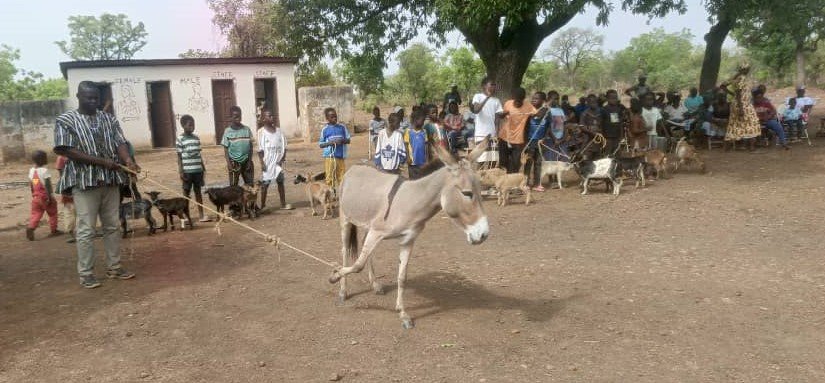
THE Ghana Rural Opportunities for Women (GROW), a locally based non-profit organisation, has created livelihoods for over 2,000 underprivileged women and young girls across 52 communities in the Nabdam District of the Upper East Region
Since 2008, beneficiaries have been supported with livestock, including goats and donkeys, while many others have received assistance to access secondary, technical, vocational and tertiary education.
The Chief Executive Officer of the organisation, Professor Vida Nyagre Yakong, disclosed this in an exclusive interview with The Ghanaian Times on the sidelines of hand over of 17 goats and a donkey to some beneficiaries at Nyabok on Saturday as part of the NGO’s corporate social responsibility to help women with limited opportunities lead dignified lives.
She noted that the donkeys, along with their carts, would support the women in farming and domestic work, while the goats being a special breed would multiply and further empower them economically.
“We are here to celebrate women’s empowerment activities under Project GROW. The project is designed to support women in gaining economic independence, facilitate healthcare development, and improve access to education,” Prof. Yakong stated.
“It is a yearly programme, so we continually explore ways to support their empowerment activities. Indeed, the main components of the project include sponsorship for girls’ education and the provision of livestock to the vulnerable,” she added.
The CEO used the opportunity to express appreciation to the organisation’s partners, the University of British Columbia, Okanagan, whom she said had played a significant role in helping the project thrive.
She described the leadership of the universities as worthy development partners and appealed to them to continue supporting the district through the GROW Project, so that more lives could be transformed.
Prof. Yakong pledged that more “life-changing” social intervention initiatives would be rolled out under the project and called on traditional authorities and opinion leaders to join the NGO in charting a progressive path for development in the area.
A beneficiary from the Zopeliga community, Sheila Tii, said her dream of enrolling in a sewing apprenticeship was nearly shattered until the intervention of GROW revived it.
“I have also been given a goat today. I must be the happiest person today,” she told this reporter.
Another beneficiary, Hawa Tiroug, mentioned that her children’s education had been partly supported through the assistance she received from GROW.
She explained that after receiving goats, she sold some of their offspring to cater for her children’s education.
Prof. Jeanette Vinek, a lecturer at the University of British Columbia, pledged that the university’s relationship with its proud alumna, Prof. Yakong, would continue to grow in leaps and bounds.
She emphasised that women across the world need support to become more resilient and capable of contributing meaningfully to the development of their communities.
She further pledged the university’s commitment to helping women in the Nabdam District to access opportunities to improve their lives, stressing that, “When women are healthy, communities are healthy. We will do everything within our capacity to ensure that women have the resources they need and can access healthcare without barriers.”
FROM FRANCIS DABRE DABANG, NYOBOK
Follow our WhatsApp Channel now! https://whatsapp.com/channel/0029VbAjG7g3gvWajUAEX12Q

