


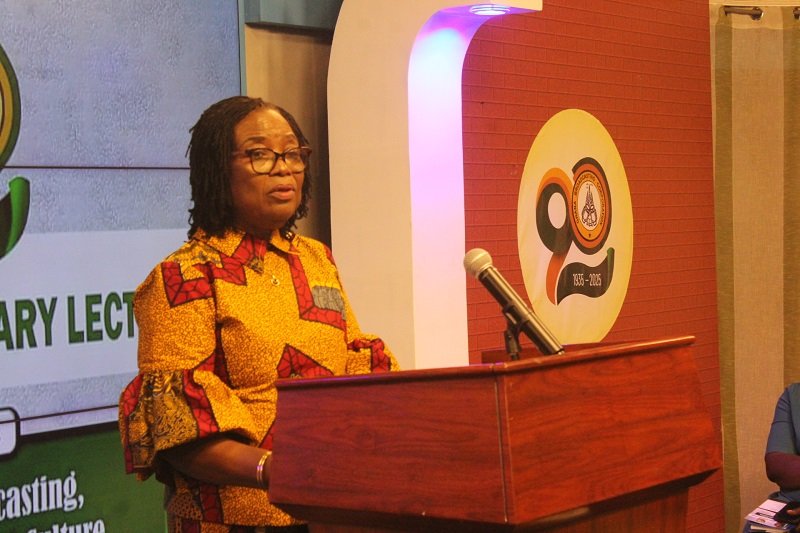
Media professionals have been urged to honour the legacy of women pioneers in broadcasting by continuing their work and promoting inclusive storytelling and ethical journalism.
This is because these trailblasers played a crucial role in shaping national culture through the airwaves and promoting a gender-equitable society.
Dr Sarah Akrofi- Quarcoo, Adjunct Lecturer at the School of Communication Studies, University of Ghana, made the call on Thursday when she delivered the 90th Anniversary lecture of Ghana Broadcasting Corporation (GBC) on the topic of Women in Broadcasting, Pioneers of National Culture.
Themed: ‘GBC, Ninety Years of lecture,’ is the second lecture in the series of lectures to commemorate GBC’s 90 years of impact in broadcasting.
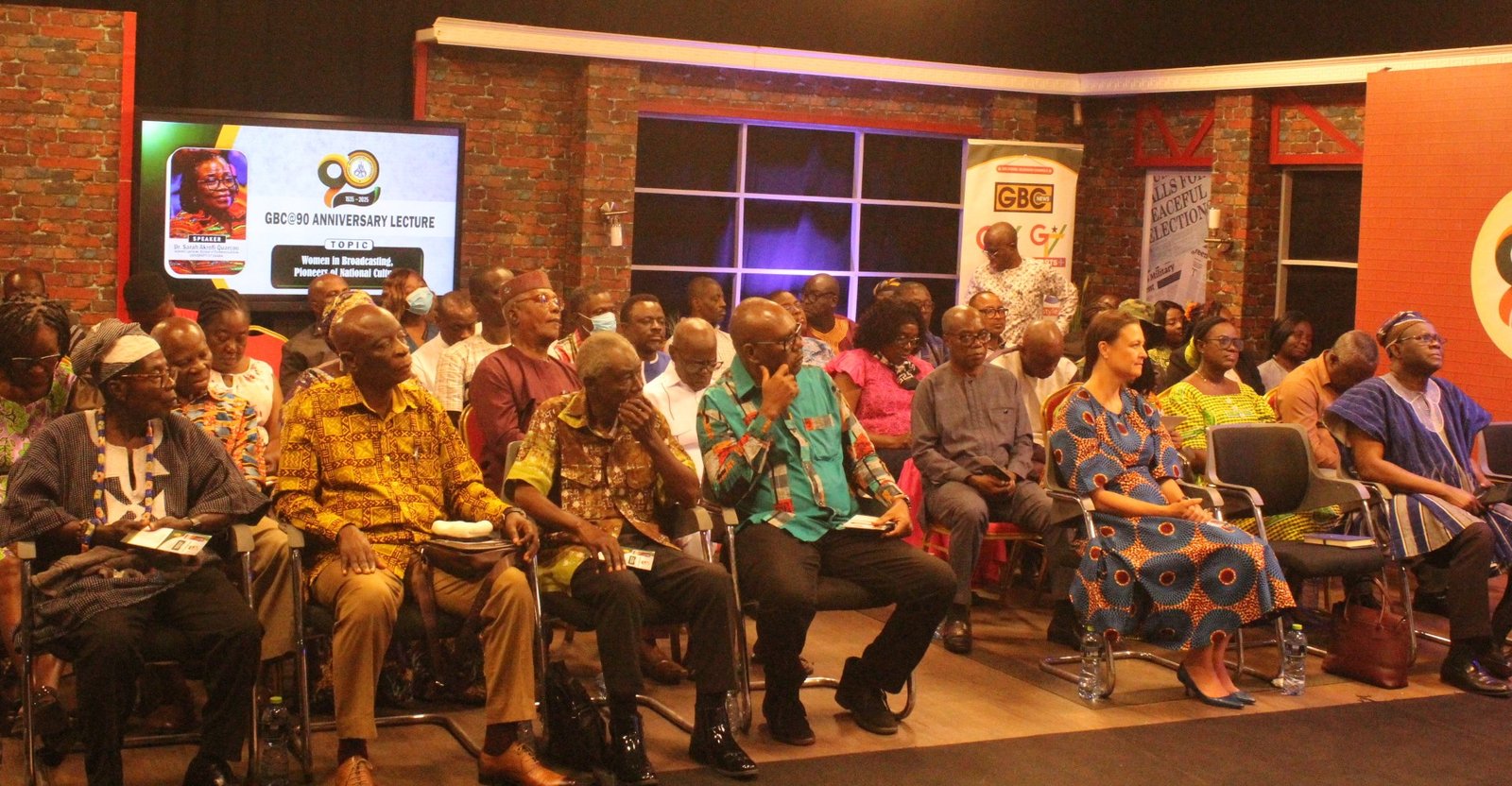
The lecture shed light on the significant contributions of women to the development of radio broadcasting in Ghana by highlighting the transformative role women played in domesticating radio, turning it from an instrument of imperial dominance to a medium for the household.
Dr Akrofi-Quarcoo again highlighted the importance of documenting the stories of women broadcasters and embedding their values in media training.
She also emphasised the need to create platforms where contemporary women in broadcasting can innovate and thrive
She stated that “Their legacy is not just what they did, it’s what we do with it,” admonishing that: “Let’s keep their voices alive, not as echoes but as foundations.”
The Director General of the GBC, Professor Amin Alhassan, noted that when radio was first introduced, it was seen as a male-dominated instrument for political discourse.
He, however, stated that with the employment of women to produce magazine programmes, radio became an integral part of the domestic space, focusing on family life, women’s issues, and other topics relevant to the household.
The lecture also emphasised the crucial role women played in shaping the medium of radio.
Moreover, he commended Dr Akrofi-Quarcoo and acknowledged the importance of her research in underling the contributions of women to radio broadcasting, making it more inclusive and relevant to a broader audience.
“When radio was introduced, it was introduced as an instrument of imperial dominance, it was a male instrument for political discourse between males. It was when women were employed to do some magazine programmes, and that aspect is the phenomenal contribution of women towards radio as an instrument of mass communication,” he explained.
BY CYNTHIA ASAMPANA