


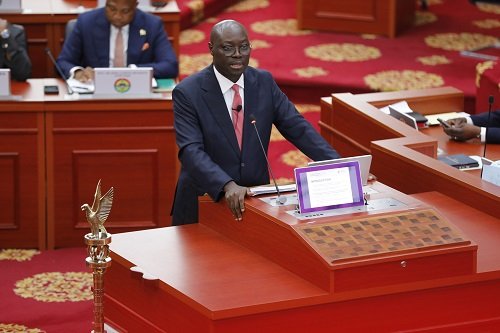
The Executive Board of the International Monetary Fund (IMF) has approved the final review of Ghana’s $3 billion Extended Credit Facility (ECF) programme, marking the successful completion of the country’s three-year economic recovery programme.
The approval unlocks a final disbursement of about $371 million to the Bank of Ghana (BoG), bringing total disbursements under the programme to the full $3 billion approved by the Fund.
A statement issued by the Ministry of Finance yesterday and copied to the Ghanaian Times said the successful completion of the programme reflected Ghana’s significant progress in restoring macroeconomic stability through fiscal discipline, declining inflation, stronger external reserves and the implementation of key structural reforms.
It said the gains achieved under the programme had laid a solid foundation for sustained economic growth and improved investor confidence.
The government further announced that following the completion of the ECF programme, Ghana would transition to a 36-month Policy Coordination Instrument (PCI) with the IMF.
Unlike the ECF, the PCI does not provide financial support but is designed to help countries maintain sound economic policies, deepen reforms and strengthen policy credibility while signalling continued commitment to macroeconomic stability.
According to the statement, the new arrangement would support the government’s reform agenda and reinforce confidence among investors, development partners and the international financial community.
Government expressed appreciation to the people of Ghana for their resilience, patience and support throughout the implementation of the economic reforms.
It also acknowledged the support of the IMF Executive Board, IMF Management and staff, development partners, civil society organisations and the private sector for their contribution to the programme’s successful implementation.
The statement reaffirmed government’s commitment to safeguarding the gains achieved under the programme and pursuing reforms aimed at building a stronger, more resilient and prosperous economy.
Ghana formally secured the IMF’s Executive Board approval for the US$3 billion Extended Credit Facility in May 2023, following months of negotiations after the country was hit by its worst economic crisis in decades.
The government sought IMF support after the economy came under severe pressure in 2022, characterised by soaring inflation, rapid depreciation of the cedi, rising public debt, dwindling international reserves and restricted access to the international capital market.
The economic difficulties were compounded by the lingering effects of the COVID-19 pandemic, rising global commodity and food prices following the Russia-Ukraine conflict and tightening global financial conditions, all of which significantly weakened Ghana’s fiscal and external positions.
As part of the programme, the government implemented wide-ranging fiscal and structural reforms, including expenditure rationalisation, domestic revenue mobilisation measures, debt restructuring, public financial management reforms and measures to strengthen the financial sector.
The programme also sought to restore debt sustainability, rebuild international reserves, reduce inflation and create conditions for private sector-led growth.
Since the programme began, Ghana has recorded improvements in key macroeconomic indicators, including declining inflation, a more stable exchange rate, stronger gross international reserves and improved fiscal performance.
The successful completion of the ECF programme is expected to further strengthen investor confidence and support the country’s efforts to sustain macroeconomic stability while advancing its long-term growth and development objectives.
BY KINGSLEY ASARE
Follow our WhatsApp Channel now! https://whatsapp.com/channel/0029VbAjG7g3gvWajUAEX12Q

