


BY KINGSLEY ASARE
The Bank of Ghana (BoG) has called on banks to translate the country’s improving macroeconomic conditions into increased support for households, small businesses and productive sectors of the economy.
He said the Ghanaian economy was showing renewed signs of recovery, with falling inflation, a more stable cedi, improving foreign reserves and stronger credit growth creating a window of opportunity for businesses to expand.
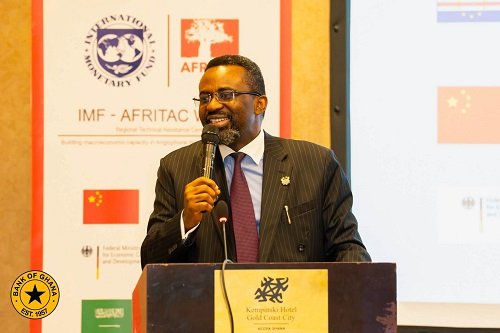
Speaking at a post-Monetary Policy Committee (MPC) engagement with heads of banks at Bank Square in Accra yesterday, the Governor of the Bank of Ghana, Dr Johnson Pandit Asiama, said the banking sector had a critical role to play in ensuring that recent economic gains lead to broader growth and job creation.
He said while the economy had demonstrated resilience amid global uncertainties, financial institutions must move beyond traditional lending approaches and develop innovative solutions that respond to the needs of businesses, particularly small and medium-sized enterprises (SMEs).
“Banks are not merely financial intermediaries; you are important business partners in the growth and transformation of the economy,” Dr Asiama said.
“I therefore encourage you to deepen your understanding of the businesses and sectors you serve, particularly the unique dynamics of agriculture and its associated value chains,” he added.
The Governor’s comments followed the 131st regular meeting of the MPC held in July 2026, where the committee maintained the Monetary Policy Rate at 14 per cent, citing the need to consolidate inflation gains while monitoring global risks.
According to Dr Asiama, Ghana’s economy expanded by 6.4 per cent in the first quarter of 2026, slightly higher than the 6.2 per cent recorded during the same period in 2025, driven mainly by growth in the services and industry sectors.
He noted that inflation had declined further to 4.6 per cent in July 2026 from 5.3 per cent in June, supported by slower food inflation and relative stability in the exchange rate.
“The current policy stance remains appropriate to steer inflation into the medium-term target band while allowing time to assess the evolving geopolitical environment and its potential impact on the domestic economy,” he said.
The Governor mentioned improvements in private sector financing, noting that private sector credit growth increased sharply to 41.2 per cent in June 2026 from 8.6 per cent a year earlier.
Real private sector credit growth stood at 34.1 per cent.
He, however, expressed concern that many SMEs, especially those operating within agricultural value chains, continued to face difficulties accessing finance due to perceived risks associated with their businesses.
Dr Asiama urged banks to design flexible credit products that reflect the seasonal nature of agricultural activities and align repayment schedules with borrowers’ cash flows.
“This approach would enable SMEs to access financing on terms that better reflect the realities of their businesses, support banks to manage risk more effectively, and ensure that the benefits of the improved macroeconomic environment translate into broader economic activity and job creation,” he stated.
On the banking sector’s performance, the Governor commended banks for strengthening their balance sheets, pointing out that total banking sector assets grew by 30.7 per cent in June 2026.
He said banks’ Capital Adequacy Ratio improved significantly to 20.4 per cent from 10.6 per cent a year earlier, while the Non-Performing Loan ratio declined from 23.1 per cent to 16.1 per cent over the same period.
Touching on regulatory concerns, Dr Asiama cautioned banks against weak monitoring practices that contribute to the rising incidence of dud cheques and urged stronger customer education.
He also called for increased vigilance in dealing with digital lending companies, advising banks to verify the licensing status of Digital Credit Service Providers before establishing partnerships.
The Governor further encouraged banks to explore opportunities in the diaspora investment market by developing products that go beyond remittance transfers.
“Remittances continue to flow largely through basic transfer channels rather than being channelled into structured savings products, bonds or other investment vehicles,” he said.
He explained that a stronger focus on diaspora-focused investment solutions could help mobilise funds for productive activities and deepen financial inclusion.
Dr Asiama assured stakeholders that the Bank of Ghana would continue to provide the policy and regulatory environment needed to support a resilient banking industry.
“The progress we have made provides a solid foundation for sustainable economic growth. Your institutions are well positioned to play a central role in translating these gains into tangible benefits for businesses, households and the broader economy,” he said.
BY KINGSLEY ASARE
Follow our WhatsApp Channel now! https://whatsapp.com/channel/0029VbAjG7g3gvWajUAEX12Q

