



The Minority Leader in Parliament, Mr Alexander Kwamena Afenyo-Markin, has called for sustained and strategic investment in Science, Technology, Engineering and Mathematics (STEM), agriculture and healthcare as the surest path to accelerating Ghana’s socio-economic transformation.
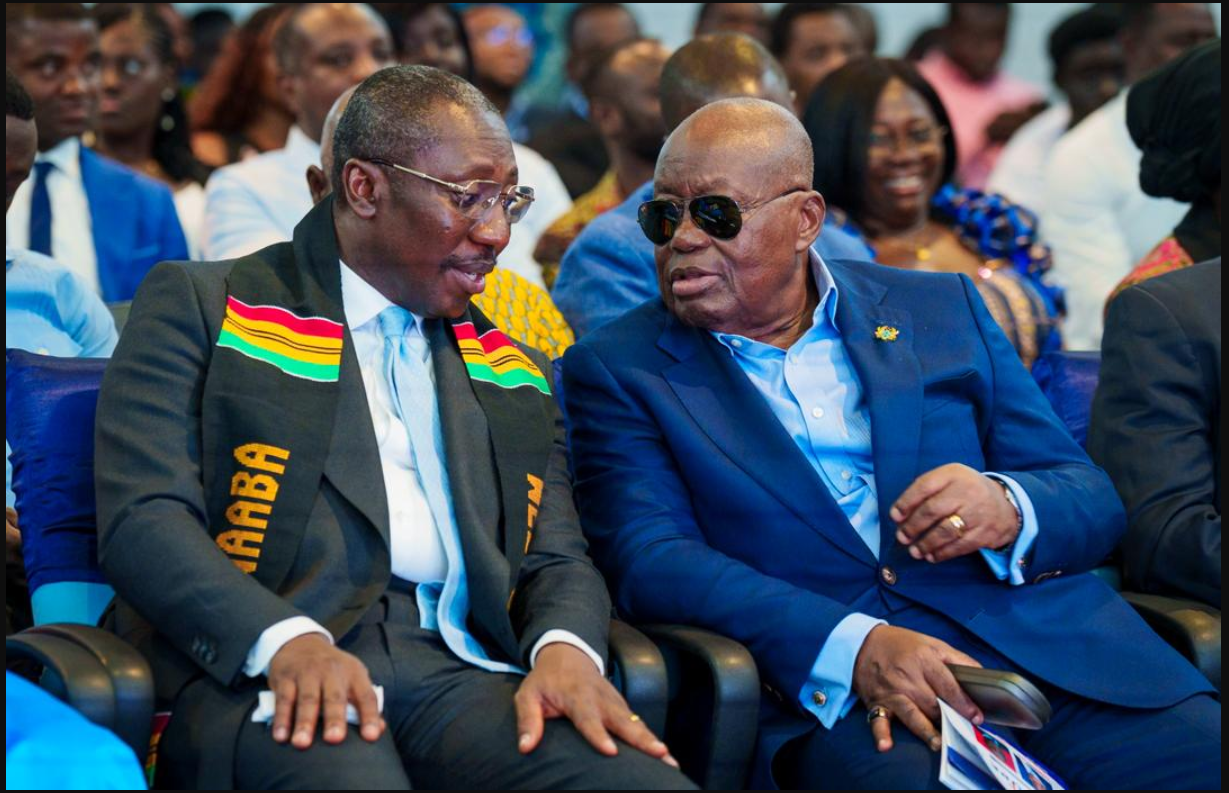
Delivering a lecture on the Danquah-Dombo-Busia centre-right ideology and its impact on Ghana’s development, with a focus on the administrations of John Agyekum Kufuor and Nana Addo Dankwa Akufo-Addo, Mr Afenyo-Markin said Ghana could not achieve rapid and inclusive growth without building strong human capital and empowering citizens to become productive owners in the economy.
The lecture, anchored on the philosophy of the New Patriotic Party (NPP) and the broader Danquah-Dombo-Busia tradition, argued that development must be driven by educated, healthy and economically active citizens.
“You cannot have a competitive economy when your young people lack skills in science and technology. You cannot build a property-owning democracy when illness wipes out family incomes. And you cannot industrialise when agriculture remains at subsistence level,” he stated.
Mr Afenyo-Markin described investment in STEM education as “not merely an educational reform, but an economic imperative.”
He cited the establishment of 20 STEM centres, 10 model STEM senior high schools and 186 modern science laboratories under the Akufo-Addo administration as deliberate efforts to prepare Ghanaian youth for the Fourth Industrial Revolution.
“In the digital age, property is no longer only land. A software application is property. A digital platform is property. Knowledge itself is property,” he said, adding that, “If we fail to invest in STEM, we are denying our young people access to the new frontier of ownership.”
According to him, equipping young Ghanaians with coding, robotics and scientific skills was central to democratising opportunity.
“In cyberspace, your father’s income does not determine your ranking. What determines your success is what you know and what you can build,” he emphasised.
Turning to agriculture, the Minority Leader stressed that no nation could develop while neglecting its farmers.
Referencing interventions such as cocoa sector reforms under President Kufuor and the Planting for Food and Jobs programme under President Akufo-Addo, he said empowering farmers with improved inputs and market access was consistent with the tradition’s belief in productive enterprise.
“The producer has rights. The farmer has dignity. Development built on weakening those who generate primary wealth cannot sustain itself,” he declared.
He argued that agricultural modernisation must go hand in hand with agro-processing and district-level industrialisation, pointing to the One-District-One-Factory initiative as an attempt to spread productive opportunity beyond major urban centres.
“A nation cannot give what it does not produce. Redistribution without production is temporary. Empowerment through production is lasting,” he mentioned.
On healthcare, Mr Afenyo-Markin described the National Health Insurance Scheme (NHIS), introduced under President Kufuor, and Agenda 111 under President Akufo-Addo, as foundational investments in national productivity.
“You cannot build a business if preventable sickness keeps you from working. You cannot talk about ownership when illness takes everything from you,” he said.
He noted that the removal of financial barriers to healthcare and the expansion of district hospitals were not acts of charity, but investments in a healthy workforce capable of driving growth.
Mr Afenyo-Markin maintained that the central distinction of the Danquah-Dombo-Busia tradition lay in placing the citizen, not the state, at the centre of development.
“Our tradition says the liberated citizen drives development. Free individuals, equipped with education, protected by law and empowered to own and build, to generate the productive energy that transforms nations,” he stated.
He urged policymakers, scholars and the youth to protect and deepen investments in education, agriculture and health, describing them as the pillars upon which Ghana’s future prosperity must stand.
“If Ghana’s future development path is to remain anchored in productive enterprise and broad-based ownership of opportunity, then investment in STEM, agric and health is not optional,” he stressed. “It is urgent. It is necessary. And it is the work that remains.”
BY BENJAMIN ARCTON-TETEY
Join our WhatsApp Channel now! GHANAIANTIMES OFFICIAL WHATSAPP CHANNEL

