


About a month ago, a very good friend and I decided to hang out at our usual fufu base somewhere in Kanda after we had both appeared on a live television programme on GHOne TV to discuss some pertinent national issues.
Indeed, it has become a regular feature of our engagements that whenever the two of us are paired on a television panel, we end the day over a bowl of fufu.
For us, it is never just about sharing a meal; it is an extension of the conversation that began on set. It is important to state that although Article 162(2) of the 1992 Constitution expressly proscribes censorship in the media, self-censorship is equally important for every panellist.
Not everything can be said, or ought to be said on national television and we have always been guided by this principle.
That is why our meetings at the Kanda fufu joint, which we have christened “The Base”—not the “Oti Bonsu” or “Agya Koo” political movement, have become so important. It affords us the freedom to interrogate issues that television’s limitations often prevent us from exploring in depth.
On this particular day, our discussion centred largely on leadership in our beloved country and some of the mistakes being committed by successive governments.
Our conversation had largely centred on one recurring issue, institutional memory and why our presidents continue to repeat the same mistakes over and over again.
While the conversation wore on, my friend revealed something that has remained etched on my mind ever since.
Earlier this year, he told me, he was privileged to be part of a group of journalists who paid a courtesy call on a former President at either his residence or office in a coded location in Accra.
The meeting according to him, offered them the rare opportunity to interact freely and pour out their hearts with the former president.
In the course of the interaction, one of the journalists asked what sounded like a simple question: “Mr President, with the benefit of hindsight, what would you consider your greatest regret while serving as President?”
Simple as the question sounded, the answer was anything but simple. The former President did not hesitate:
“My greatest regret while serving as President is that more than 85 per cent of my appointees were people I did not know personally or with whom I had never had any close interaction. Most of them were appointed through recommendations, and the painful thing was that some of those recommendations came from people who were themselves not very close to me.
“Many people may ask why I did that. The truth of the matter is that by the time I became President, most of my contemporaries—people I knew well and whose judgement I could count on had either passed away or had grown very old. I was left with only one option: to rely on the younger folks.”
I must confess that I was stunned. Of all the regrets one would expect a former President to express, appointments were perhaps the last thing that crossed my mind.
Yet, the more I reflected on his response, the more profound it became. It peeled back the curtain on the lonely burden of leadership and exposed a reality that many citizens seldom appreciate.
It quickly brought to mind the issue of officially documenting the lived experiences of our former presidents through their memoirs. Then it occurred to me that I had never read the memoir of any Ghanaian Head of State—from Osagyefo Dr Kwame Nkrumah through General Kutu Acheampong to Nana Addo Dankwa Akufo-Addo. I mean none!
It also occurred to me that, as a nation, we have never fully appreciated the need to encourage, if not compel our leaders to document their lived experiences, not merely for our reading pleasure but to preserve institutional memory for generations yet unborn.
Presidential memoirs are not ordinary books. They are living archives. They capture the difficult choices leaders make, the mistakes they regret, the pressures they endure and the lessons history must never be allowed to repeat itself. They are blueprints for nation-building.
As an avid reader of presidential memoirs, I have come to appreciate the immense value they hold. Nelson Mandela’s “Long Walk to Freedom”, Barack Obama’s, “A Promised Land”, Richard Nixon’s, “The Presidential Years”, Bill Clinton’s, “My Life”, George W. Bush’s, “Decision Points”, Charles de Gaulle’s memoirs and The Autobiography of Lee Kuan Yew, to list but a few are not merely stories about individual leaders. They are enduring lessons in leadership, sacrifice, resilience, reconciliation and nation-building.
Closer home, Professor Kwamina Ahwoi’s “Working with Rawlings”, published in 2018, performed a similar function. Whether one agreed with every account in the book or not, it opened a rare window into some of the critical decisions that shaped the nearly 20-year rule of former President Jerry John Rawlings.
It was therefore refreshing when President Rawlings publicly indicated that he intended to publish his memoirs, partly to correct what he believed were misrepresentations contained in Professor Ahwoi’s account.
Sadly, that day never came. He passed on before putting pen to paper. In my view, Ghana is the biggest loser.
The loss goes far beyond the corrections his memoir might have made to “Working with Rawlings”. More importantly, it is the permanent loss of nearly two decades of presidential experience that could have guided future leaders.
That, perhaps, is the greatest tragedy!
Memoirs are not books of luxury. They are important national assets. Indeed, they preserve institutional memory, provide context to history, explain decisions that official records often conceal and above all, they help nations avoid repeating yesterday’s mistakes tomorrow.
Fortunately, Ghana still has two living former Presidents, John Agyekum Kufuor and Nana Addo Dankwa Akufo-Addo. We should encourage both men to tell their stories while they still can. Their experiences belong not only to them but also to the nation they served.
Similarly, the same appeal must be extended to President John Dramani Mahama. Indeed, he need not wait until he leaves office. His political journey is unlike any other in Ghana’s Fourth Republic.
From Assembly Member to Deputy Minister, substantive Minister, Vice-President, President, Leader of the Opposition and President once again. That extraordinary journey deserves to be documented in his own words, not through the recollections of others.
History, after all, is always kinder to those who tell their own story. If our leaders cultivate the habit of publishing their memoirs, Ghana will be the ultimate beneficiary.
After all, nation-building is an incremental process, not an event. Every President leaves behind successes, failures, triumphs, disappointments and regrets.
Our ability to learn from those experiences while building on their successes is what will ultimately build Ghana, and make it a stronger, wiser and greater nation.
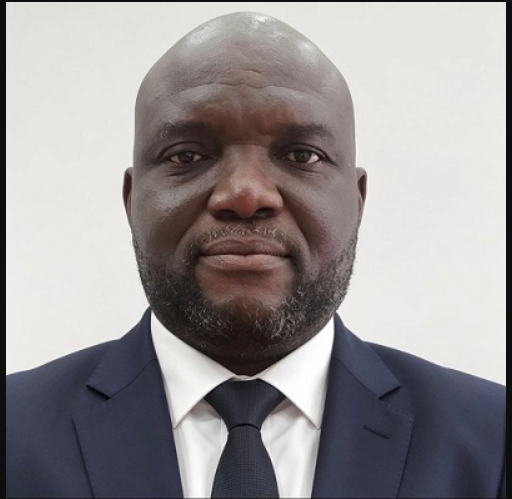
By Cliff Ekuful
The Author is an assistant editor
New Times Corporation
Cliffff86@yahoo.com
Follow our WhatsApp Channel now! https://whatsapp.com/channel/0029VbAjG7g3gvWajUAEX12Q

