


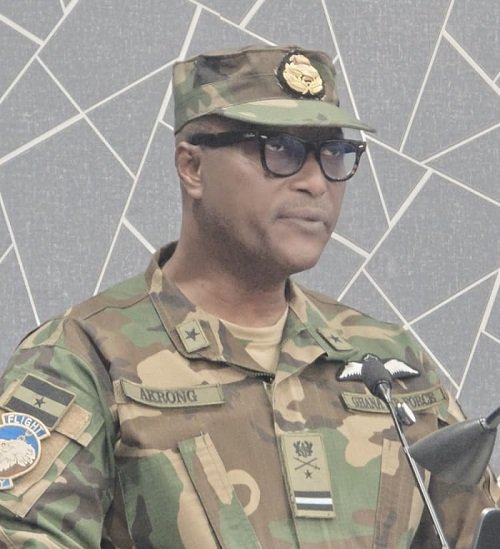
The Commandant of the Kofi Annan International Peacekeeping Training Centre (KAIPTC), Air Cdre David Anetey Akrong, has called for urgent and collective action to confront the growing threat posed by illegal small-scale mining, popularly known as galamsey.
He said galamsey had evolved from a local livelihood activity into a complex national crisis undermining the country’s stability and development.
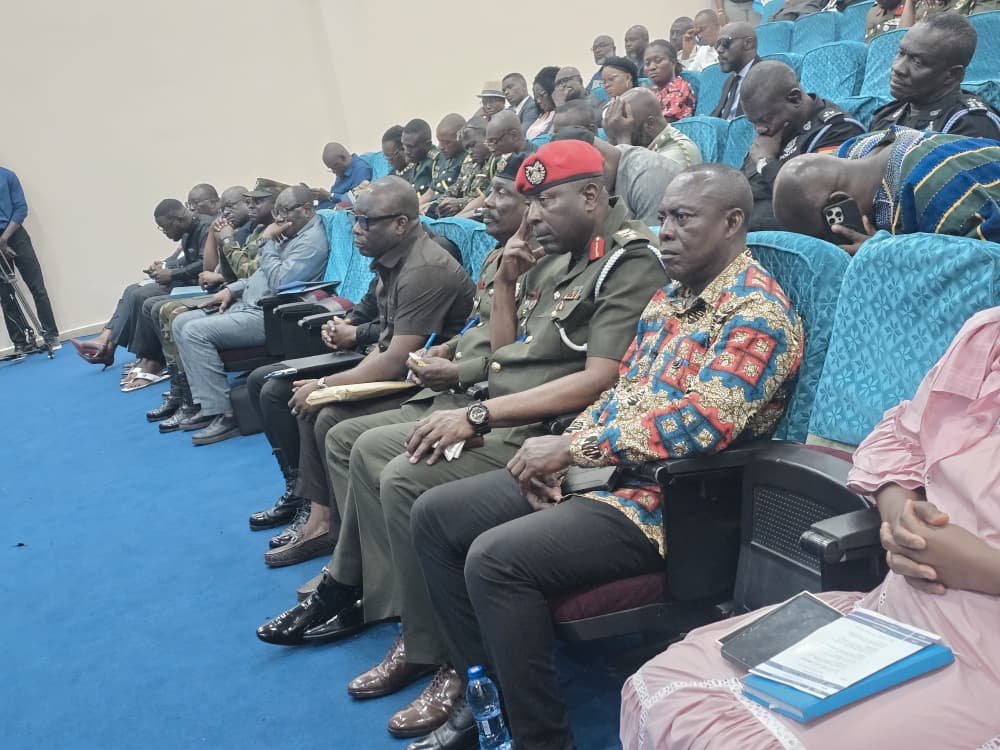
Speaking at the opening of the latest edition of the Centre’s Reflections on Security Series seminar in Accra yesterday, the Commandant of the KAIPTC described galamsey as an “existential danger” to Ghana’s environment, economy, and national security.
The Reflections on Security Series, he explained, was designed to provide an open and trusted space for dialogue on critical national, regional, and international security issues.
He said illegal mining had destroyed forests, polluted major rivers, and rendered farmlands useless, threatening food security, water supply, and public health.
“Illegal mining has degraded vast stretches of forests, polluted rivers, and destroyed arable lands, thereby undermining water security, sustainable agricultural production, public health, social stability, and economic development,” he said.
The Commandant cited the contamination of major water bodies such as the Pra, Ankobra, Birim, and Offin rivers with mercury, cyanide, and arsenic, noting that the situation had placed entire communities at risk.
He warned that the siltation of reservoirs was also threatening access to clean water for many Ghanaians and described the situation as a “silent public health crisis.”
He explained that the impact of illegal mining extended far beyond the environment to affect air quality, food safety, and the general well-being of communities.
“According to health experts, illegal mining has contributed to the spread of waterborne and vector-borne diseases, kidney diseases, respiratory conditions, and birth defects,” he stated.
The Commandant added that galamsey was no longer just an environmental issue but a multidimensional security concern that fuels organised crime, money laundering, corruption, and the exploitation of vulnerable people.
In some areas, he said, it had even caused tension between communities and state authorities.
“If left unchecked, these dynamics threaten not only the sustainability of the country’s natural resources but also the legitimacy of governance institutions and the stability of local communities,” he warned.
He acknowledged that successive governments had taken several steps to curb illegal mining, including the establishment of the Inter-Ministerial Committee on Illegal Mining, Operation Vanguard, Operation Halt, the National Anti-Illegal Mining Operations Secretariat (NAIMOS), and the introduction of the Responsible Community Mining Scheme.
These efforts, he said, showed a commitment to blending enforcement with livelihood-based interventions.
He also commended the efforts of non-state actors such as civil society organisations, the media, academia, and community groups that had played important roles in advocacy, awareness creation, and community monitoring to support the national fight against galamsey.
Despite these interventions, however, the Commandant admitted that illegal mining remained persistent, adaptive, and deeply rooted in local communities, forest reserves, and river bodies.
BY AGNES OPOKU SARPONG
🔗 Follow Ghanaian Times WhatsApp Channel today. https://whatsapp.com/channel/0029VbAjG7g3gvWajUAEX12Q
🌍 Trusted News. Real Stories. Anytime, Anywhere.
✅ Join our WhatsApp Channel now! https://whatsapp.com/channel/0029VbAjG7g3gvWajUAEX12Q

