


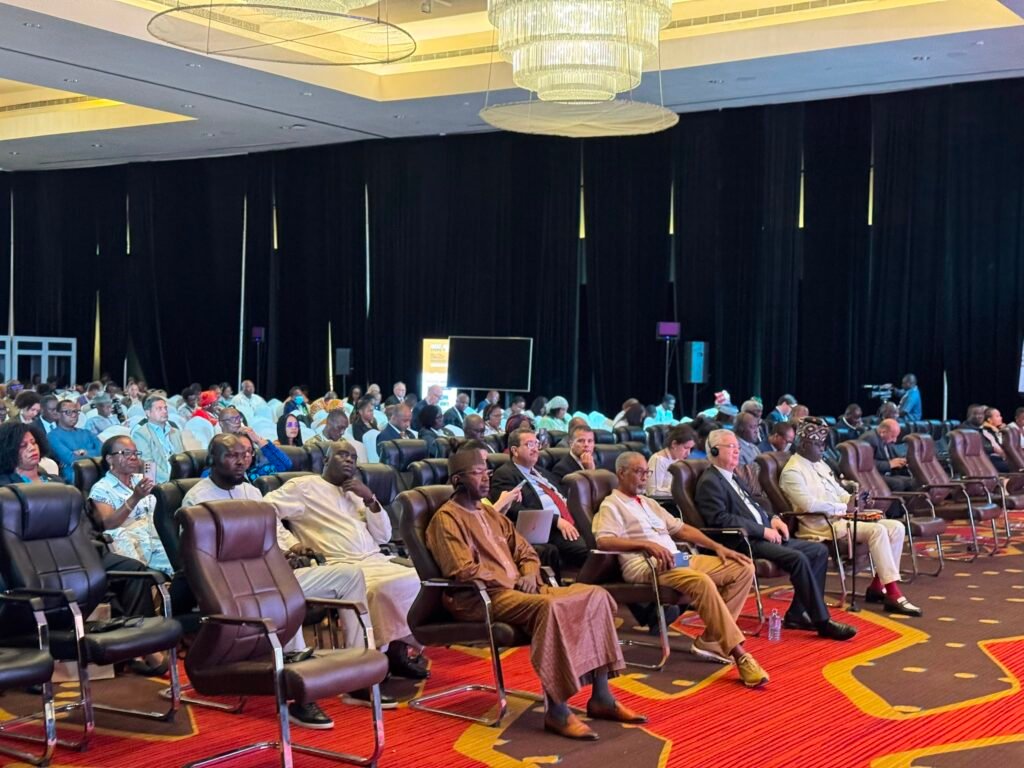
Veteran journalist Kwesi Pratt has expressed strong dissatisfaction with the participation of French President Emmanuel Macron in the ongoing High-Level Consultative Conference on the next steps following the landmark United Nations resolution on the trafficking of enslaved Africans.
Speaking during a session on reparatory justice on the second day of the conference in Accra, Pratt argued that the gathering should focus on securing justice for Africans and people of African descent who suffered from slavery and colonial exploitation.

He said he found Macron’s presence at the conference “totally unacceptable,” insisting that the forum should not become a platform for what he described as hollow expressions of sympathy from countries and institutions linked to historical injustices against Africa.
According to Pratt, reparations must be understood as justice rather than charity. He maintained that the transatlantic slave trade was organised and supported by governments, companies, churches and institutions that benefited from the exploitation of Africans.
The veteran journalist argued that reparatory justice must go beyond apologies and compensation to include restitution, rehabilitation, institutional reforms, cultural restoration and educational correction.
He called on African governments and the African diaspora to ensure that the recent United Nations resolution becomes the foundation of a concrete international programme of action rather than a symbolic declaration.
Mr. Pratt also advocated the establishment of a permanent reparations mechanism involving the African Union, CARICOM, African states, legal experts, historians, economists and civil society organisations to coordinate the global campaign for reparatory justice.
He further called for legal action and research into states, companies, banks, churches and other institutions that participated in or profited from slavery and colonial exploitation, saying responsibility must be clearly established.
The journalist stressed the need for a global reparations education campaign to challenge narratives that portray Africa as poor and underdeveloped by destiny.
According to him, Africa’s present condition cannot be separated from centuries of slavery, colonialism and exploitation, which contributed to the wealth of industrialised nations.
Mr. Pratt maintained that reparations are not about begging but about correcting a historical injustice and addressing the lasting consequences of slavery and colonialism.
Despite what he described as political resistance to the reparations agenda, he expressed confidence that the campaign would succeed.
“We are not alone, and we are not begging. We are engaged in a struggle for justice,” he said, adding that nothing would stop the fight for reparatory justice.
The conference brought together African leaders, policymakers, academics, activists and members of the African diaspora to discuss practical steps for implementing the UN resolution and advancing the global reparations agenda.
By: Jacob Aggrey