


Public health surveillance embraces the systematised collection, analysis, and interpretation of health-related data of essence to the planning, execution, and evaluation of policy-cum-practice. It is an essential tool in diverse ways to sense and prevent disease occurrence via: (i) providing timeous point estimates and trends; (ii) facilitating routine data collection and analysis to guide policy; (iii) serving as a pivotal basis for evaluating policy implementation; (iv) furnishing cogent-cum-clear bench markers and profiles for public health decision-making, ultimately (v) to curb the menace of disease burden.
Effectively, surveillance acts as an early warning system to detect outbreaks, monitor trends, and inform evidence-based interventions to protect the health and wellbeing of populations.
Sequel
Activities in this enterprise follow a prescribed sequence from data collection, entailing the assemblage of layer-specific diseases and health-related data from districts, clinics, and specialised diagnostic facilities and laboratories.
More broadly, the omnibus purpose of a surveillance regime is to monitor disease trends, detect epidemics (defined here as disease prevalence above expectation), and identify high-priority health events (e.g., mortality).
According to the World Health Organisation (WHO), an epidemic signals the occurrence of cases of illness and specific health-related behavior within a defined population in excess of normal expectancy, by area, season, and time .
NB: The perception and scope of epidemiology in the realm of public health has evolved from being a study of ailments usually caused by an infectious agent, to encompass chronic non-infectious hazards as well.
NB: An epidemic (representing a sudden rise in disease prevalence) is distinct from an endemic (a constant presence of disease in an area).
Global
Global and regional bodies such as the Africa Centre for Disease Control (Af-CDC), US Centre for Disease Control and Prevention (CDCP), West African (WAHO) and Pan-American (PAHO) Health Organisations, respectively, and various national Ministries of Health (MOH) under the global aegis of WHO deploy the tenets of disease surveillance in their routine operations to enhance regional and global health security.
One intriguing feature of such systems is the urgent dissemination and sharing analysis with decision-makers for prompt-cum-prudent needful remedial action.
Types:
The types of surveillance systems vary in format and style. Some are passive – where health departments receive reports submitted by healthcare institutions and laboratories through defined administrative transmissions and packaged as annual-, quarterly-, mid-year, etc., reports and disseminated for public information.
Some other routines are active, where detailed healthcare officials purposively contact providers to track to discover cases.
Luminaries
One unique surveillance-related story that public health students are told often is that of Dr John Snow (1813-1858), an English pioneer in the fascinating enterprise of epidemiology. During a major cholera epidemic in 1854 in London, he (reportedly) collected and mapped data on the locations (by street addresses) where cholera deaths occurred.
His approach appeared slow and laborious, but, according to the literature, it ultimately led to the identification of a contaminated public water server as the epidemic s source.
NB: Protein-Energy Malnutrition (PEM) remains a major health concern in Ghana, particularly among children under-5years, with biostatistical estimates linking it to about 40-50 per cent of deaths beyond early infancy. Stunting (i.e., being shorter for ones height) for instance, afflicts an estimated 20-30 percent of young children nationwide, with a significant persistent region-specific variance. These cases, nonetheless, are manageable via specialized care both at home and in rehabilitation centers.
Another intriguing narration relates to Dr Cicely Williams (1893-1992), a Jamaican physician, who described the clinical features of Kwashiorkor in the medical literature, circa 1933. This unpalatable-cum-unfortunate a scenario as it appeared, scripted a remarkable moment for Ghana, particularly in nutrition and child health matters. NB: The human body is made of nutrients, and we can (and must) ensure food and nutrition security more purposefully, a feat not beyond our means.
Targeted public education to mothers, child care-takers, particularly the young, apparently inexperienced, and probably single, to refrain from the misplaced notion that one needs tonnes of money to provide a nourishing meal for a child, towards the fact that with proper education backed by self-confidence, sumptuous meals can be provided with relatively little money, that may otherwise be blown on frivolous cosmetic ventures.
Observation
Dr Williams’ classic writings were predicated on her close observation of cases reported at the Princess Marie Louise (PML) Children’s Hospital in Accra.
Dr Cicely Williams in later years on a visit to Ghana (Credit: The Wellcome Trust, London).
Through that, she named the disease kwashiorkor, a Ga language coinage depicting the disease of the deposed child.
In other words, the disease that Kwashie (male first born) gets when Korkor (female second born) follows too early; because the attention that the former was receiving from the household will be shifted to the latter, for the unfortunate perception that the latter is the latest arrival.
The term has been corrupted over time to its present pronunciation as Kwashiorkor.
Mapping:
Geographic methods that study the systems and processes involved in meteorology and how life is managed in vicinities have enormous utility in public health escapades that merit timeous clarification of their practicable architecture.
Such studies backed by those tilted towards epidemiology (i.e., the study of the distribution and determinants of disease in populations) and catapulted by its public health cousin biostatistics (i.e., the expatiation of biological concepts in contextual statistical parlance) constellate a promising trio. Together, they assess the causality of observed associations, estimate magnitude, and apportion attribution. Additionally, they identify putative risk factors, albeit with substantive trails and traits of uncertainty in both individual and public health status assessments.
Prologue
The analytical options of disease mapping, cluster investigation, ecological scrutiny, and surveillance activities must be continually evaluated and updated if/when necessary. This must be in tandem with functional collaboration among actors in the specialised fields of geography, applied statistics, nutrition, medicine, public health, politics and the media.
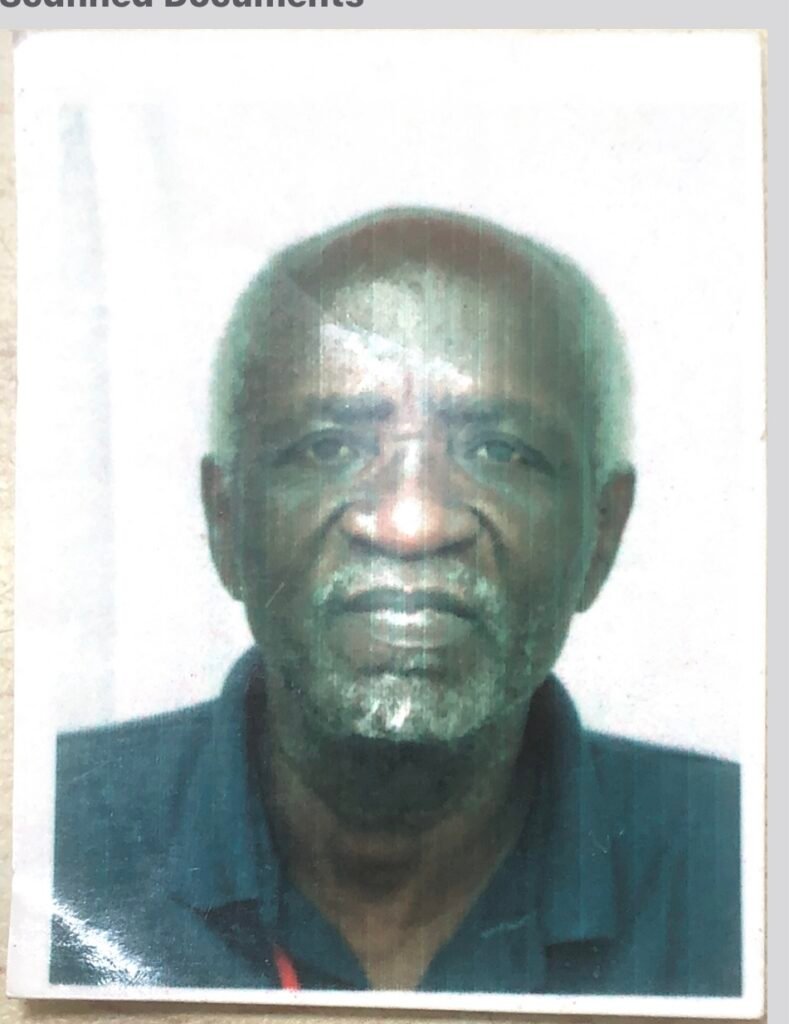
The writer is a retired UG-, Queens, and Harvard-trained freelance writer on science and public health matters.
e-mail: wbowusu2021@gmail.com
BY Dr (Dr) W. B. Owusu
Follow our WhatsApp Channel now! https://whatsapp.com/channel/0029VbAjG7g3gvWajUAEX12Q

