


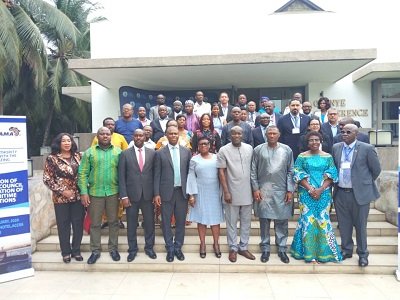
Maritime experts and administrative bodies from more than 16 African countries have begun a two-day meeting in Accra to discuss ways to strengthen the sector and address pressing issues including maritime crime.
Participating countries include Ghana, Cote d’Ivoire, Cameroon, Cape Verde, Tanzania, Comoros, Mozambique, South Africa, Uganda, Congo, Angola, Sierra Leone, Gambia and Kenya.
The meeting is the 4th Session of the Association of Maritime Administrations’ (AAMA) Executive Council (ExCo) and other members. AAMA is the coordinating body of maritime authorities in Africa.
The ExCO meeting, being held in Ghana for the first time, would discuss the African Integrated Maritime Strategy (AIMS) 2050, African maritime regulations, country performances and development of trading codes.
At the opening in Accra yesterday, the Minister of Transport, Kweku Ofori Asiamah, in a speech read on his behalf, advocated the creation of a special wing at the African Union (AU) for maritime issues.
He said although the AU had initiated the AIMS to regulate African maritime issues and resources, it was “regrettable” that there was no wing to effectively executive it and therefore, tasked the AAMA to engage the AU on the matter.
According to Mr Asiamah, albeit 90 per cent of Africa’s imports and exports were conducted by sea with 38 out of 54 African states being coastal, the continent’s share of the international seaborne trade was not encouraging.
He said contributing factors included lack of investment in shipping, low patronage of African seaborne trade as well as environmental pollution, piracy and armed activities and charged the association to find workable solutions, adding that, “If these issues are overcome, it will enable Africa to position itself appropriately on the global scene.
Observing that Africa had only three countries on the International Maritime Organisation (IMO) council, the minister charged the association to do more to increase Africa’s presence at the international level.
The AAMA Chairman, Dakuku Peterside, said the association would work to ensure that the African maritime and shipping sector was competitive and productive.
Member countries, he said, had the responsibility to uphold the tenets of the African Maritime Transport Chapter to help improve, amongst other things, the capacity and performance of the sector.
For his part, the Director General of the Ghana Maritime Authority, Thomas Alonsi called for greater collaboration and feasible solutions to ensure maritime security.
He disclosed that there was an alarming increase in crew kidnapping across the gulf of guinea by more than 50 per cent from 78 in 2018 to 121 last year although global incidents of piracy reduced last year.
BY JONATHAN DONKOR