


The Minister for the Interior, Mohammed Muntaka Mubarak, has called on Metropolitan, Municipal and District Chief Executives (MMDCEs) to take full ownership of local security structures and adopt a proactive approach to addressing emerging threats.
He said local chief executives, as direct representatives of the President, must actively chair and prioritise the work of their respective District and Municipal Security Councils (DISEC and MUSEC).
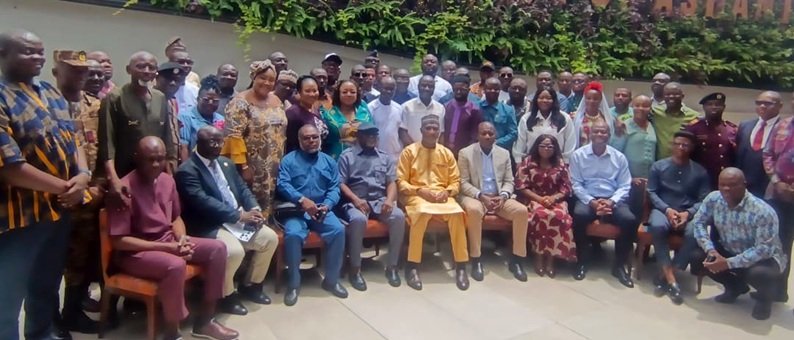
Mr Mubarak made the call in Kumasi yesterday when he opened a capacity-building workshop on the Security and Intelligence Agencies Act, 2020 (Act 1030), organised by the National Security Council Secretariat.
The workshop forms part of a nationwide initiative to deepen understanding of the Act and strengthen security coordination at all levels of governance.
Addressing regional commanders, MMDCEs and heads of security agencies in the Ashanti Region, the Minister said effective security management required foresight, community-based early warning systems and strategic coordination rather than intervention after incidents had occurred.
“You are supposed to be aware of everything that is happening within your municipality, and you have to take responsibility just as the President takes responsibility for the whole country,” he said.
Mr Mubarak said the effectiveness of any legal framework depended not only on its provisions but also on the quality of its implementation.
He identified illegal mining (galamsey), organised crime, land disputes, chieftaincy conflicts and the illegal trade and storage of commercial explosives as some of the security challenges confronting the Ashanti Region, a major commercial and transit hub.
The Minister urged local authorities to work closely with intelligence agencies, traditional authorities, youth groups and surveillance institutions, including the National Signals Bureau, to identify and address threats before they escalated.
He also encouraged MMDCEs to adopt initiatives such as the district peace-building committees in the Eastern Region, which help gather and analyse community-level intelligence and prevent local disputes from developing into wider crises.
Mr Mubarak further cautioned against rivalry and lack of cooperation among security agencies, urging them to break down operational silos and promote seamless information sharing.
In a speech read on his behalf, the National Security Coordinator, COP Osman Abdul-Razak, also urged participants to strengthen information sharing and intelligence coordination at the local level.
He said while national security institutions had broad mandates, many threats first emerged within communities, placing MCEs and DCEs in a strategic position as first responders.
COP Abdul-Razak said Ghana was confronted by both traditional and emerging threats, including terrorism, violent extremism, cybercrime, transnational organised crime, and targeted misinformation and disinformation campaigns.
He called for greater trust, professionalism, confidentiality and cooperation among security agencies and local authorities to build a proactive security system capable of preventing crises.
FROM KINGSLEY E. HOPE, KUMASI
You can now read the *Ghanaian Times* and *The Spectator* newspapers digitally on [TimesNewsPlus](https://timesnewsplus.com/newspapers).
Follow our WhatsApp Channel now! https://whatsapp.com/channel/0029VbAjG7g3gvWajUAEX12Q

