


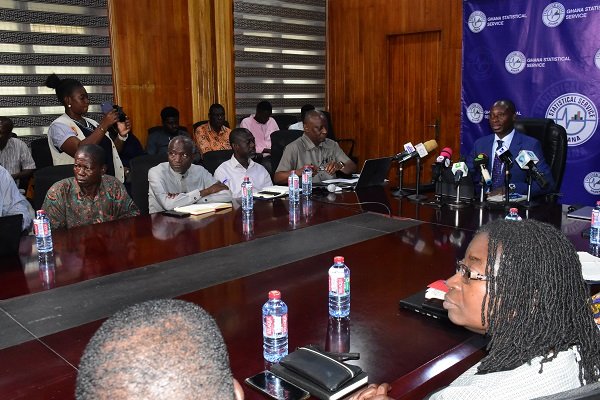
Multidimensional poverty in the country has steadily declined from 23.9 per cent in the first quarter of 2025 to 21.9 per cent in the third quarter of 2025, a study by the Ghana Statistical Service (GSS) has revealed.
The Quarterly Multidimensional Poverty Report, covering the first quarter of 2024 to the third quarter of 2025, disclosed that between the second quarter of 2025 and the third quarter of 2025, the multidimensional poor population reduced by a little over 360,000 persons.
It further stated that within a one-year period, between the third quarter of 2024 and the third quarter of 2025, about 950,000 people moved out of multidimensional poverty.
The report covers four main indicators, health, living conditions; education and employment, which together provide a broader assessment of poverty beyond income levels.
Multidimensional poverty refers to a situation where a person is considered poor not only because of low income, but also because they experience several deprivations at the same time, such as poor health, inadequate housing or limited access to education.
Speaking at the launch of the report in Accra yesterday, the Government Statistician, Dr Alhassan Iddrisu, said Ghana was making progress in reducing multidimensional poverty, but stressed that significant regional disparities remained.
He said the report revealed that urban poverty was higher than rural poverty in some instances, while overall trends showed persistent inequalities across regions.
Dr Iddrisu explained that the incidence of multidimensional poverty in the third quarter of 2025 was largely driven by health and living conditions, which together accounted for more than 70 per cent of overall deprivation.
He also highlighted that health alone contributed 40.9 per cent of multidimensional poverty, while living conditions accounted for 30.8 per cent, underscoring the need for targeted interventions in those areas.
Furthermore, Dr Iddrisu said employment contributed the least both quarters from 9.4 in second quarters 2025 to 12.3 per cent in third quarter 2025.
The Government Statistician said report showed that the North East and Savannah Regions recorded poverty incidence rates of above 50 per cent in the second and third quarters of 2025, far exceeding the national average of 21.9 per cent.
In contrast, he indicated that regions such as Greater Accra and Western recorded incidences below 20 per cent, highlighting stark geographical inequalities.
According to the Government Statistician, rural poverty stood at about 31.9 per cent in the third quarter of 2025, compared to 14.2 per cent in urban areas, representing a wide gap of approximately 18 percentage points.
“The Ashanti and Northern regions, despite recording poverty rates close to the national average, each accounted for more than one million multidimensional poor persons due to their large populations,” the Government Statistician elaborated.
He mentioned that the report further revealed that education and employment status strongly influenced poverty outcomes.
“Households headed by persons with no formal education recorded a poverty incidence of 38.5 per cent, compared to just 5.7 per cent among those headed by persons with tertiary education. Similarly, households headed by unemployed persons recorded the highest poverty incidence at 35.6 per cent, while those headed by public sector workers recorded a much lower rate of 5.3 per cent,” Dr Iddrisu stated.
Among a raft of recommendations, the Government Statistician urged the government to expand National Health Insurance Scheme coverage, improve sanitation and living conditions, strengthen education and school feeding programmes, and scale up social protection and job creation initiatives, particularly in high-poverty and rural regions.
BY KINGSLEY ASARE
Follow Ghanaian Times WhatsApp Channel today. https://whatsapp.com/channel/0029VbAjG7g3gvWajUAEX12Q
🌍 Trusted News. Real Stories. Anytime, Anywhere.
✅ Join our WhatsApp Channel now! https://whatsapp.com/channel/0029VbAjG7g3gvWajUAEX12Q

