


SCORES of communities in the Nabdam District of the Upper East Region continue to be faced with acute water shortages and inadequate toilet facilities, some residents have revealed.
According to them the situation was affecting women, adolescent girls and children, putting their health at risk.
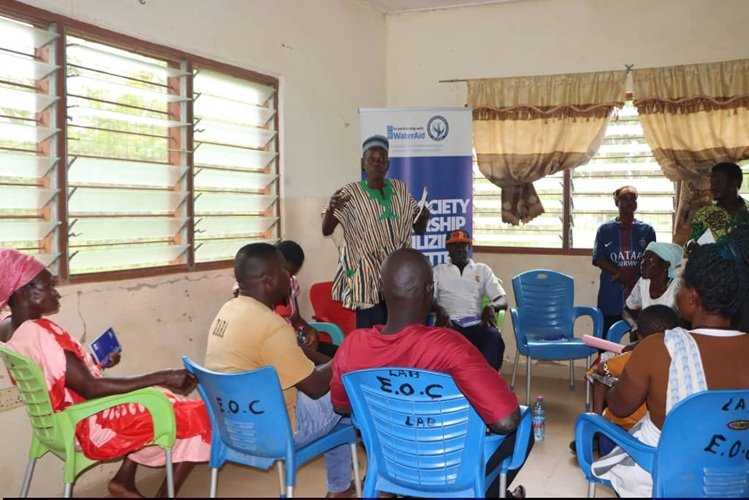
The residents raised the concerns at a training workshop organised by the Belim Wusa Development Agency (BEWDA) at Logre to strengthen community advocacy on the impact of climate change on water, sanitation and hygiene (WASH).
The District-Level Training of Community Climate Change Advocacy Champions formed part of the Sweden International Development Agency (SIDA)-funded CLIMB Phase II-Better WASH Project.
The project covers Bawku West, Nabdam, Bongo, Kassena-Nankana District and Kassena-Nankana Municipality.
Forty focal persons from four communities in Nabdam participated in the one-day training, which focused on climate-resilient and gender-responsive WASH advocacy.
A resident of Zua, Mrs Faustina Pumora, said the water shortage had placed a heavy burden on women, who sometimes travelled long distances to access safe water.
She said some boreholes constructed by government agencies, non-governmental organisations and development partners were producing water that appeared contaminated.
“You can see larvae in the water, which is not safe for drinking,” she said.
Mrs Pumora attributed the worsening water situation to rising temperatures and changing rainfall patterns, saying the few boreholes producing safe water were often located far from the communities.
She said the shortage had also affected women and adolescent girls during menstruation because they lacked enough water to properly wash reusable sanitary materials.
“This issue of water crisis is actually hurting us women. Women who rely on reusable cloth pads cannot properly wash and dry them in sanitary conditions, forcing them to use unwashed materials,” she said.
She said the situation could expose women and girls to infections and called for urgent measures to improve access to safe water.
A resident of Dasabligo, Mr Richard Azoro, said the community also lacked adequate toilet facilities, forcing residents to depend on the only toilet facility at a local clinic.
The residents appealed to the government, development partners and philanthropic organisations to provide additional boreholes and toilet facilities to the affected communities.
The Project Officer of BEWDA, Mr Sebastian Agumah, said the training, organised in partnership with WaterAid Ghana, was aimed at helping community champions understand the link between climate change and WASH.
He said the participants would be equipped to gather and communicate evidence of WASH challenges in their communities and engage duty bearers and other stakeholders to address them.
Mr Agumah said the training would also enable the champions to conduct community scorecard sessions and advocate solutions to WASH challenges associated with climate change.
FROM FRANCIS DABRE DABANG, LOGRE
You can now read the *Ghanaian Times* and *The Spectator* newspapers digitally on [TimesNewsPlus](https://timesnewsplus.com/newspapers).
Follow our WhatsApp Channel now! https://whatsapp.com/channel/0029VbAjG7g3gvWajUAEX12Q

