



Ghana will need an estimated $53.3 billion over the next decade to implement its revised climate action plan, underscoring the scale of investment required to tackle climate change while sustaining national development.
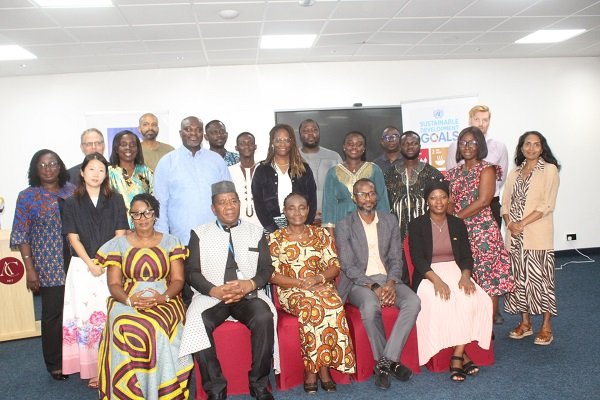
The Director of Environment at the Ministry of Environment, Science and Technology (MEST), Peter Justice Dery, who disclosed this at a stakeholders consultation on Ghana’s update held in Accra , said the funding would support the country’s updated Nationally Determined Contributions (NDCs) aimed at cutting greenhouse gas emissions and strengthening resilience to climate impacts.
He explained that the revised framework, which runs from 2025 to 2035, would position Ghana to contribute meaningfully to global efforts to address climate change, particularly by reducing emissions significantly by 2030.
Dr Dery said the plan covered key sectors such as agriculture, energy, forestry, water, health and land use, with a dual focus on mitigation and adaptation.
“We are looking at reducing emissions substantially from now to 2030 while also ensuring that sectors are able to withstand the shocks arising from the negative impacts of climate change,” he stated.
Providing further details, the Chief Director of MEST, Suweibatu Adam, outlined that the framework would be driven by five strategic pillars, including national energy transition, sustainable transport and infrastructure, circular economy development, nature-based solutions and carbon removal, as well as a national adaptation and resilience framework.
She indicated that implementation would be carried out in phases, with the first phase spanning 2025 to 2030, after which progress would be reviewed ahead of the next phase towards 2035.
Touching on the evolution of Ghana’s climate commitments, Dr Dery said the country first submitted its Intended Nationally Determined Contributions (INDCs) in 2015 ahead of the Paris Agreement. This was followed by its first official NDCs in 2016 and subsequent updates in 2020 and 2021.
He explained that the current exercise sought to revise the 2021 submission into a more comprehensive framework to guide climate action over the next decade, with another review expected around 2030.
On financing, Dr Dery said government budgetary allocations would serve as the main domestic funding source, complemented by corporate social responsibility contributions from private sector players.
He added that development partners, including the governments of Germany, the Netherlands and the United Kingdom, as well as agencies within the United Nations system and the World Bank, were expected to play a key role.
The revised NDCs also identify multilateral climate financing mechanisms such as the Green Climate Fund, Adaptation Fund, Climate Investment Funds and the Special Climate Fund as critical sources of support.
Dr Dery noted that Ghana had already benefited from some of these funding streams in the past.
Beyond traditional funding, he said the country was exploring innovative financing options, including carbon markets, where emissions reductions could be traded internationally to generate revenue for further climate action.
He added that green and blue bonds were also being considered to support implementation.
“These are some of the financing sources identified to support the implementation of the NDCs,” he said.
The revised NDCs are expected to serve as Ghana’s main climate action blueprint over the next decade, as the country works to balance economic growth with environmental sustainability in the face of rising climate risks.
BY NELLY QUARCOOPOME
Follow our WhatsApp Channel now! https://whatsapp.com/channel/0029VbAjG7g3gvWajUAEX12Q

