


THE Fisheries Commission has explained that the extension of Ghana’s Inshore Exclusion Zone (IEZ) from six to 12 nautical miles is necessary to protect fish stocks, sustain the livelihoods of artisanal fishers and preserve marine resources for future generations.
It said the decision was informed by scientific evidence and the need to safeguard fish breeding grounds while strengthening the artisanal fishing sector, which plays a significant role in the country’s fisheries industry.
The Commission, however, underscored the need for cooperation among industrial and artisanal fishers, civil society organisations and maritime institutions to ensure the effective implementation of the revised zone and balance marine conservation with the economic interests of fishing communities.
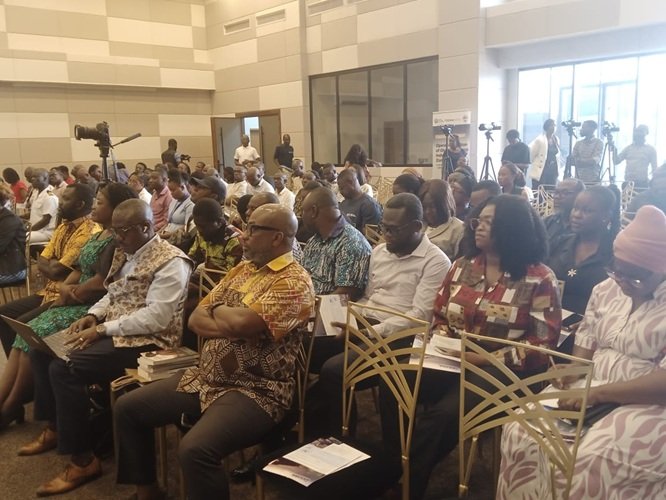
Speaking at a stakeholder engagement on the implementation of the revised exclusion zone in Accra yesterday, the Deputy Executive Director of the Fisheries Commission, Dr Eric Cobbinah, said the Commission’s primary responsibility was to ensure the sustainable management of the country’s fisheries resources, rather than generate revenue.
He stated that the Fisheries and Aquaculture Act, 2025 (Act 1146), empowered the Minister of Fisheries and Aquaculture to designate the exclusion zone, extending the previous six-nautical-mile limit to 12 nautical miles.
Dr Cobbinah acknowledged concerns about the decision but cited that stakeholders had reached a consensus on the need to protect the country’s fisheries resources for the benefit of future generations.
He, therefore, called for sustained collaboration among stakeholders to facilitate enforcement and promote the long-term sustainability of the sector.
The Director of the Technical Services Division of the Ghana Maritime Authority (GMA), Naval Captain Derek Attachie, who spoke on behalf of the Director-General, Dr Kamal-Deen Ali, said the authority would intensify communication with maritime users to ensure compliance with the new regulations.
He said the authority would formally notify mariners and update navigational charts to reflect the expanded exclusion zone once the relevant legislation had been gazetted.
He explained that after the Ministry of Fisheries and Aquaculture had gazetted the law, the GMA would communicate the changes to the international maritime community and ensure that all categories of sea users were adequately informed.
Naval Captain Attachie explained that the GMA collaborated with the United Kingdom Hydrographic Office (UKHO) in producing and publishing navigational charts, adding that the new boundary would be incorporated into the charts after the necessary processes had been completed.
He further indicated that the authority would also use Very High Frequency (VHF) radio broadcasts and Notices to Mariners to communicate the changes to sea users, including artisanal fishers and ocean-going vessels.
He emphasised that timely and effective communication was essential to maritime safety and the successful enforcement of the revised exclusion zone.
BY EUGENE AMPIAW
SKIP THE QUEUE, TAP THE NEWS


Read the Ghanaian Times and The Spectator newspapers from the comfort of your device via TimesNewsPlus.
Follow our WhatsApp Channel now! https://whatsapp.com/channel/0029VbAjG7g3gvWajUAEX12Q

