


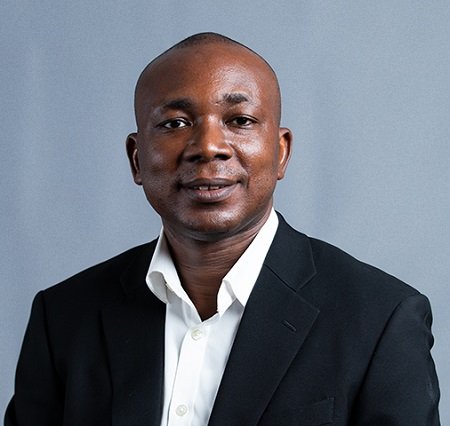
Ghana must urgently review and renegotiate mining lease agreements nearing expiry to secure better value from its natural resources, a Professor of Finance and Economics at the University of Ghana, Prof. Godfred Bokpin, has advised.
He indicated that all 30 mining leases due to expire should be reassessed under new terms to ensure the country derives optimal benefit while maintaining investor confidence.
Prof. Bokpin said proposals by the Institute of Economic Affairs (IEA), including calls for greater state control over mining assets, should not be dismissed but subjected to rigorous scrutiny in the national interest.
He made the remarks on JoyNews’ Newsfile programme last Saturday, monitored by this paper.
Prof. Bokpin observed that despite Ghana’s rich mineral endowment, returns from the sector remained relatively low compared to other resource-rich countries with stronger fiscal regimes.
His comments followed the IEA’s recent call on the government not to renew the mining lease of Gold Fields when it expires next year.
He stressed the need for a reassessment of Ghana’s fiscal policies and mining agreements to secure better value from extraction activities.
Prof. Bokpin explained that renegotiating the agreements would enable the country to maximise benefits from its natural resources while preserving investor confidence.
He, however, cautioned that an outright refusal to renew mining agreements without viable alternatives could discourage investment in the sector.
Prof. Bokpin further noted that Ghana had not optimally benefited from its natural resources despite numerous agreements with multinational mining companies.
He emphasised the need to prioritise value addition and processing, as practised in more advanced economies.
He stated that profitability levels must be balanced to avoid unsettling foreign investors and warned that the sector must be managed carefully to prevent adverse spillover effects.
Prof. Bokpin also urged the government to give attention to the small-scale and artisanal mining sector during any review process, noting that the country continued to lose significant revenue while illegal mining degraded the environment.
Contributing to the discussion, the Senior Vice-President of Imani Africa, Mr Kofi Bentil, said Ghana must address weaknesses within the natural resource value chain to manage its resources effectively.
He noted that although Ghana had been on a weaker footing when many mining contracts were signed, the country now had individuals with demonstrated capacity within parts of the value chain.
“At the time we were signing the mining contracts, we were on a weaker footing. But today, we are not in the same position. We now have people like Ibrahim Mahama, Sam Jonah and McDan who have demonstrated capacity in parts of the value chain,” he said.
He stressed the need to support Ghanaian private firms interested in the natural resource sector without political interference.
“It is a fact that if you look at the value chain, we do not have everything, and this emotional resource nationalism has led us into trouble in the past. We should rewrite the contracts better, create value-chain collaborations, and support groups, not individuals, into these mining areas,” Mr Bentil stated.
A legal practitioner and Director of Legal Affairs of the opposition New Patriotic Party (NPP), Mr Gary Nimako Marfo, supported increased participation of Ghanaian-owned companies but opposed direct state involvement in mining.
He argued that state-owned enterprises had historically performed poorly since independence.
The Chief Executive Officer of the Ghana Chamber of Mines, Mr Kenneth Ashigbey, said although some Ghanaian firms had the capacity to operate in the mining sector, the complexity of the industry remained a major challenge.
Meanwhile, the IEA has urged the government not to renew the mining lease of Gold Fields’ Tarkwa mine when it expires in April 2027, arguing that the opportunity should be used to channel mining revenues into national development and transform mining communities.
At a press conference in Accra, a former Chief Justice, Justice Sophia Akuffo, lamented the poor state of development in mining communities, including Tarkwa, despite decades of mining activity.
She noted that many communities continued to face deteriorating infrastructure, limited social services and widespread socio-economic deprivation.
Justice Akuffo further indicated that the expiration of the lease presented a rare opportunity for Ghana to reclaim strategic control of the mine at a time of high global gold prices.
She described attempts to secure a 20-year lease extension as inimical to Ghana’s long-term interests.
BY BENJAMIN ARCTON-TETTEY
Follow our WhatsApp Channel now! https://whatsapp.com/channel/0029VbAjG7g3gvWajUAEX12Q

