


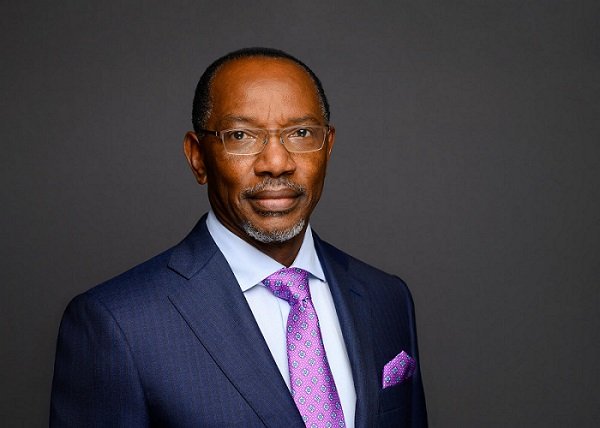
I still remember the faint glow of a kerosene lamp in my childhood home. Growing up in rural Kenya, electricity seemed like a distant aspiration. It appeared to be reserved for those living in cities, not for children like myself, who strained to read beneath dim flames after sunset. Firewood served as our primary source of cooking fuel, and the radio only functioned when we managed to find batteries. These are not simply childhood memories, but daily reminders of limitations that shaped our potential, our hope, and our progress.
That early experience instilled in me a deeply held belief. Africa’s energy future must be imagined and shaped by Africans themselves. It must be based on what works in our context, not on external narratives, however well-intentioned, that do not fully grasp the realities we live every day.
In many global settings today, including climate summits and corporate boardrooms, Africa’s energy story is frequently told by others. The prevailing narrative often presents us as passive recipients of aid, expected to leap directly into a green future, powered entirely by solar and wind, and guided by global carbon reduction targets. However, the truth is more complex, and the stakes are far greater. For communities still without electricity, the promise of achieving net zero emissions by the year 2050 offers little comfort when their children cannot study in the evening.
Africa must begin to define its own energy future. This is not a rejection of global collaboration, but rather a call for genuine partnership built on context and mutual respect. Many existing frameworks are based on abstract targets and ambitious timelines, with an almost singular focus on renewable energy. While well-meaning, this approach is not universally applicable. More than six hundred million people across the continent still lack access to electricity. This reality demands practical solutions, not ideology. Africa cannot afford to choose between sustainability and reliability. We require both. The path forward lies not in ideological purity, but in pragmatic, blended strategies that serve both our present needs and our long-term ambitions.
In global forums, there is often a preference for discussing carbon budgets, climate finance, and the pursuit of 1.5 degrees Celsius. African countries are encouraged to phase out coal, limit the use of natural gas, and adopt renewable energy exclusively. While these goals are commendable, they can feel detached from our on-the-ground realities. For example, the $100 billion annual climate finance pledge made in 2009 remains unfulfilled more than a decade later. This illustrates the significant gap between international ambition and African implementation.
To suggest that Africa should bypass all traditional energy infrastructure and transition directly to full renewable energy is to ask us to run before we have learned to walk. Energy poverty continues to hinder progress in education, health care, and industry. It is difficult to reconcile the expectation that Africa should abandon gas while European countries continue to build new liquefied natural gas terminals. Africa has contributed less than four percent of historic global emissions. Asking the continent to carry a disproportionate share of the burden in the name of climate justice may risk undermining that very principle. True justice means energy sovereignty. It means that African countries must be free to determine their own path and pace.
What Africa needs is not another international summit, but real, tangible infrastructure. Power plants, substations, extended transmission grids, and battery storage systems are the building blocks of meaningful change. Kenya offers a strong example. The country has achieved over eighty percent electricity access, and it did so not through idealism alone, but through a balanced approach that included grid expansion, off-grid solar solutions, private sector involvement, and regulatory reform.
More African nations must embrace a similar urgency. To achieve energy sovereignty, we must take ownership of the full energy value chain, including planning, financing, and operations. This will also require improving governance, addressing inefficiencies, and ensuring that public policies create an enabling environment for investment. We must support independent power producers and entrepreneurs who are innovating at the frontlines. These actors should be encouraged rather than discouraged by excessive regulation.
Africa’s future lies in hybrid energy systems that combine the reliability of traditional power sources such as natural gas with the environmental benefits of renewables. Africa has the potential to harness up to 11 terawatts of solar power—yet we are only scratching the surface. Hydropower potential stands at 350 GW, but less than six per cent has been developed. Similarly, while we have 110 GW of wind capacity and 15 GW of geothermal potential, only a fraction has been tapped. More than 55 per cent of Africa’s energy already comes from renewable sources, paving the way for long-term development.
At Janus Continental Group, we are embracing this philosophy. In Uganda, our Kabulasoke Solar Park generates twenty-four megawatts of renewable energy, demonstrating that solar can work at scale in East Africa. At the same time, we are investing in long-duration energy storage technologies through Highview Power’s cryogenic battery system. This enables solar energy to be delivered consistently, even at night, providing the reliability of a conventional power plant.
In Tanzania, our partnership with TAQA Arabia in compressed natural gas is helping to develop cleaner transport infrastructure, while our investments in fuel logistics ensure energy is delivered efficiently across East and Southern Africa.
Currently, Zambia is actively developing its solar energy sector to diversify its energy sources and address growing energy demand. The country aims to set up 200 solar mini grids with the goal of creating a capacity to generate 1,000 MW and to connect 8.5 million Zambians to power by 2030. This is partly driven by a need to reduce reliance on hydropower, which can be affected by droughts. In rural communities across Africa, a small hybrid system combining solar, diesel, and batteries can power clinics, schools, and households within months. These solutions are effective and should not be dismissed simply because they include non-renewable components.
When I consider the figure of six hundred million Africans without electricity, I do not see a crisis alone. I see an opportunity. These are 600 million potential entrepreneurs, students, engineers, and visionaries. Bringing energy to these communities represents one of the greatest economic opportunities of our time.
According to the International Energy Agency, achieving universal access by the year 2030 will require connecting 90 million people annually. This is ambitious, but it is achievable. Countries such as Ghana, Kenya, Egypt, Morocco, Tanzania, and Rwanda are already demonstrating that with focused leadership, political will, and innovation, tremendous progress is possible.
To reach this goal, African nations must prioritise domestic use of natural resources, not only for export. Gas can power fertiliser plants, build cement factories, and support job creation across the continent. Our investment must extend to grid infrastructure, long-term storage, and workforce development. In time, Africa can become not only a supplier of raw fuel, but an exporter of power and energy expertise.
Africa’s energy future must be written by Africans. It should be told in our voices, grounded in our context, and driven by our priorities. This will not be a perfect or linear journey. It will not always satisfy the expectations of external observers. However, it will deliver what truly matters: electricity to homes, opportunity to young people, and dignity to communities.
This is not about rejecting renewable energy or clinging to fossil fuels. It is about embracing blended strategies, balancing sustainability with reliability, and recognising that Africa’s development cannot be delayed in the name of abstract targets.
We have a chance to lead the world in designing a new model of energy transition—one based not on rhetoric, but on results. It should be done in our own way, guided not by the image of another continent, but by the clarity of our own determination.
BY HUMPHREY KARIUKI