



The Director of Communications of the New Patriotic Party (NPP), Richard Ahiagbah, has defended the flood management record of
former president Nana Addo Dankwa Akufo-Addo administration, arguing that it pursued long term solutions to address flooding in Accra.
In a facebook post on Tuesday 30th June 2026, Mr Ahiagbah maintained that flooding in the capital had been a challenge for successive governments and could not be solved through short term emergency responses alone.
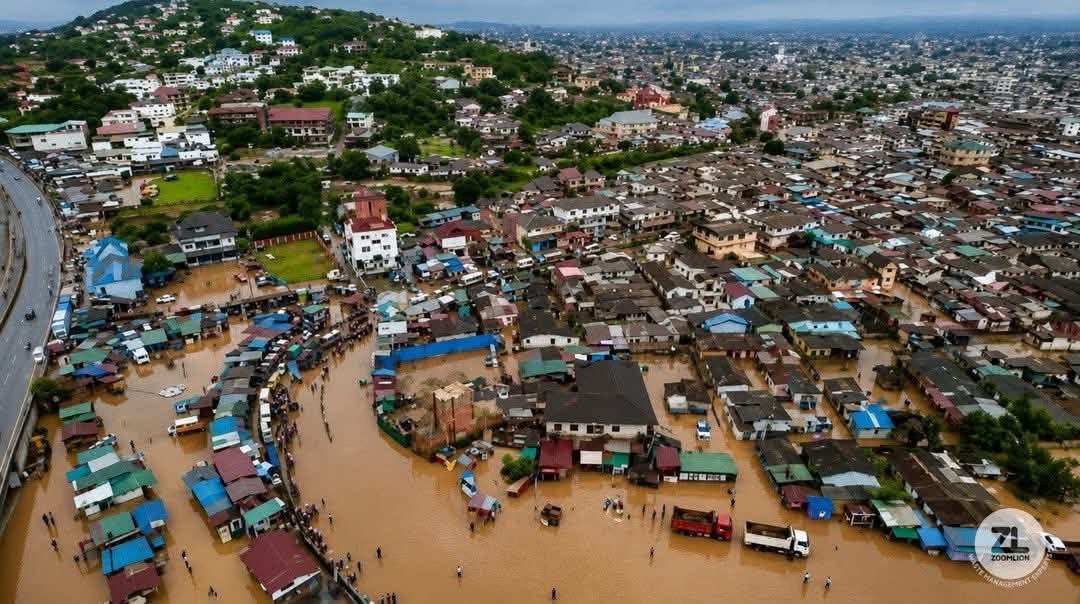
According to him, the Akufo Addo administration established a Cabinet Sub Committee in 2017 to develop a comprehensive plan to tackle persistent flooding, particularly in Accra.
He indicated that the government invested more than GH¢550 million over eight years in emergency flood relief, drainage repairs and desilting exercises in flood prone communities.
Mr Ahiagbah highlighted the Greater Accra Resilient and Integrated Development Project (GARID), a US$200 million programme supported by the World Bank, as a key intervention undertaken by the previous administration.
According to him, the project focused on drainage construction, flood mitigation infrastructure, solid waste management, upgrading vulnerable communities and improving disaster preparedness within the Odaw River Basin.
He explained that about US$92 million was allocated for climate resilient drainage infrastructure, US$42.2 million for solid waste management systems and US$58.8 million for upgrading low income communities located in flood prone areas.
Mr Ahiagbah further noted that the government secured an additional US$150 million in 2024 to continue implementing the GARID project after changes to World Bank funding during the COVID-19 pandemic.
He stated that by the end of the Akufo Addo administration, dredging works on the Odaw River had begun, drainage projects were underway at Achimota Abofu and South Kaneshie, while drainage works along the Busia Highway had been awarded.
He added that protection works at Atomic East had been completed and that a modern flood early warning system for Accra was also being introduced.
Mr Ahiagbah described the proposed Atomic East and Atomic West detention ponds as one of the most significant flood control projects planned under the previous administration, explaining that they had reached the final design stage before the NPP left office in January 2025.
He argued that the current administration inherited ongoing projects, secured funding and active contractors, but claimed that many of the projects had slowed down.
According to him, Ghanaians deserved an explanation for the delays, insisting that the previous administration had laid a strong foundation for addressing Accra’s flooding challenges.
By: Jacob Aggrey