


The National Road Safety Authority has begun deploying a digital onboarding system to regulate commercial transport operations and address long-standing challenges in the sector.
Mr Henry Asomani, Deputy Director of Planning and Programmes at the National Road Safety Authority (NRSA), said the system would enable the registration of transport unions, vehicles and drivers to improve accountability in public transport.

In an interview with the Ghana News Agency, he said the lack of effective regulation in the past had allowed some commercial drivers to operate outside recognised stations and unions, resulting in traffic congestion, indiscriminate parking and the charging of exorbitant fares.
“If you look at the law that is being amended, LI 2180, it already states that every commercial driver should belong to a union before carrying passengers.
“For a long time, however, the sector has been self-regulated. It has been difficult to identify drivers who do not belong to any union because when you apprehend them, you move from one union to another, and nobody owns them,” he said.
Mr Asomani said the Government’s decision to designate the NRSA as the regulator marked a turning point in addressing those challenges.
He said although the Authority received the regulatory mandate in 2019 and the Legislative Instrument was passed in 2022, practical regulation had only recently taken shape with the introduction of the digital platform.
Mr Asomani said the Authority was currently registering transport unions nationwide and had made significant progress, with most unions already captured on the system.
“After the registration of the unions, the next step is for the unions to onboard their vehicles and drivers onto the platform,” he said.
Mr Asomani said once vehicles and drivers were onboarded, both the NRSA and the unions would be able to trace operators easily in the event of complaints, crashes or traffic violations.
“If anything happens, we just pick the vehicle details or the driver details and we know where the person is coming from,” he explained.
Mr Asomani said commercial drivers operating without belonging to a recognised union would be prosecuted once enforcement commenced, as such operations would be illegal.
He acknowledged challenges with technology and human capacity at the union level but said significant progress had been made.
“One good thing about the platform we are creating is that we can see all vehicles on the roads. The unions will also be able to see their vehicles, while the NRSA will have oversight over all of them,” he said.
Mr Asomani said the system would also enhance driver discipline, as reports of reckless driving could be traced to specific drivers and vehicles for action through their respective unions.
He said onboarding would be carried out in phases, starting with long-distance and intercity buses due to their high passenger capacity and frequent use of highways.
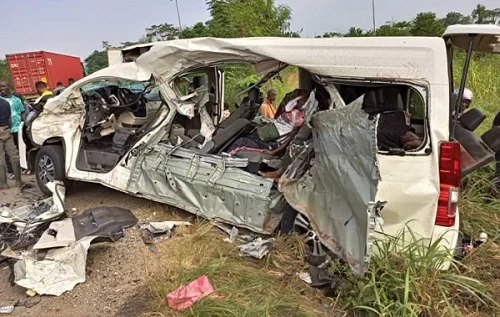
“We want to tackle the intercity buses first because when crashes happen on the highways, the casualties are usually many,” he said.
Mr Asomani said although full implementation would take time, the NRSA was confident the digital system would bring order, improve safety and strengthen regulation in the commercial transport sector.
GNA
Follow Ghanaian Times WhatsApp Channel today. https://whatsapp.com/channel/0029VbAjG7g3gvWajUAEX12Q
🌍 Trusted News. Real Stories. Anytime, Anywhere.
✅ Join our WhatsApp Channel now! https://whatsapp.com/channel/0029VbAjG7g3gvWajUAEX12Q

