


A Mother’s Choice
When 30-year-old Cecelia Egyiri went into labour in Ekumfi Bogyano, a small farming village in Ghana’s Central Region, she did not call an ambulance. The nearest health centre lay hours away, reachable only by rutted, muddy roads that turn impassable during the rains.
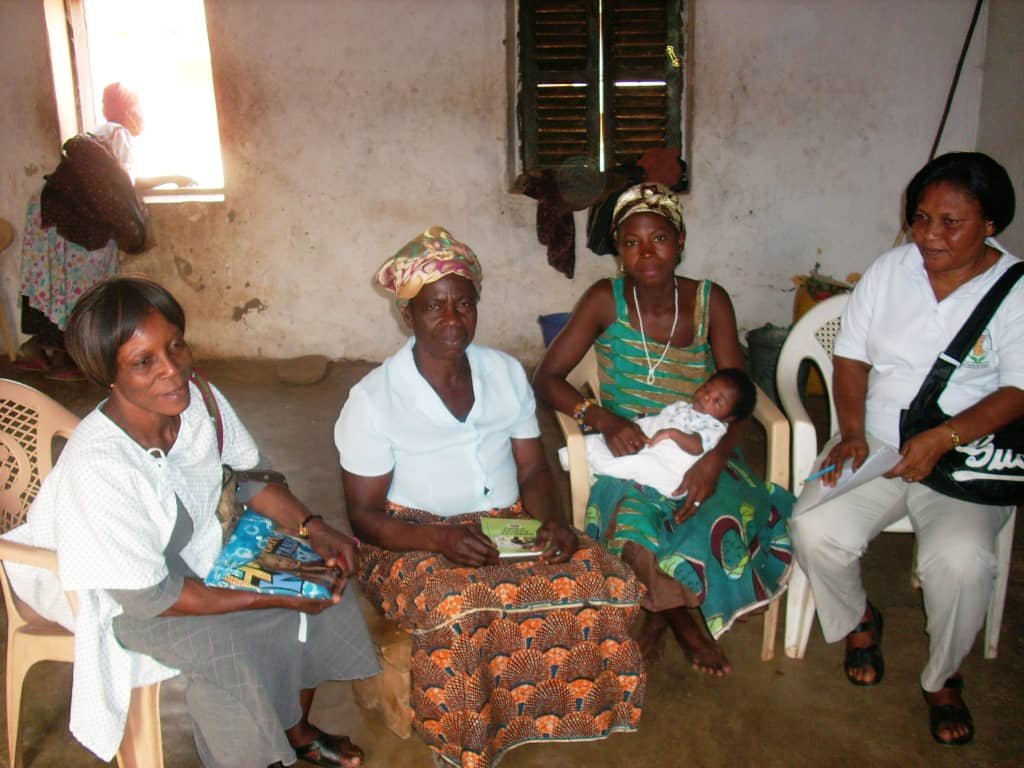
Instead, she walked to the home of Abrewa Kotwewaa, a respected Traditional Birth Attendant (TBA) in the community.
“The clinic is too far, and when it rains, no car can pass,” Cecelia explained. “Kotwewaa delivered my last child safely, so I trusted her again.”
Her decision captures a dilemma faced daily by thousands of Ghanaian women: risk the long, uncertain journey to a health facility, or rely on TBAs trusted community figures who may be their only accessible option.
For many rural women, childbirth is not just a medical process. It is a gamble with distance, resources, and survival.
The Maternal Health Challenge
Ghana has made progress in reducing maternal deaths over the past two decades, yet the risks remain stubbornly high.
According to the 2022 Births and Deaths Registry, 88.2 percent of births occurred in healthcare facilities — hospitals, polyclinics, health centres, clinics, and CHPS compounds. But nearly 12 percent still happened outside, most in homes under the care of TBAs.
The 2021 Population and Housing Census reported a maternal mortality ratio of 301 deaths per 100,000 live births — a modest improvement from 310 in 2017. Yet this remains more than four times the Sustainable Development Goal (SDG) target of fewer than 70.
The gap between rural and urban realities is even starker. In 2021, the maternal mortality ratio in rural Ghana stood at 374 per 100,000 live births, compared with 233 in urban areas.
Poor roads, limited transport, and long distances to health facilities make pregnancy a life-threatening ordeal for many women in the countryside.
Health leaders have long recognized the urgency. Former President John Dramani Mahama, now the reigning President of Ghana once described maternal deaths as “a silent emergency,” urging investments in antenatal care and emergency response. “No woman should die in the process of giving life,” he stressed.
Yet for many communities like Ekumfi Bogyano, the emergency remains.
TBAs: Trusted but Limited
For generations, TBAs have been at the heart of childbirth in Ghana’s villages.
They are revered not just for their midwifery skills, but for the emotional and spiritual support they provide. Many are mothers or grandmothers who learned the craft through apprenticeship and experience rather than formal training.
Abrewa Kotwewaa recalls her first delivery at the age of 23.
“I had no gloves, no lamp — only my hands and the little knowledge I had. When the baby cried, it felt like a miracle.”
But she is the first to admit that miracles are not guaranteed.
Complications like bleeding, prolonged labour, or obstructed delivery can quickly overwhelm a TBA’s abilities.
“Sometimes, before we could get a woman to the hospital, she would die. Those moments haunt me,” she said softly. “I wish I had more training to save them.”
Her reflection captures the paradox: TBAs are indispensable yet limited. They are often the first responders in emergencies, but without training or equipment, their care can only go so far.
The Cost of Delay
Health workers see firsthand the deadly consequences of delayed referrals. At the Ajumako Abaasa Health Centre, community nurse Awura Ama Jackson (not her real name) shared a case she can never forget.
“Ama, just 22, laboured for more than a day with a TBA. By the time her family rushed her here on a motorbike, she had lost too much blood. We couldn’t save her or the baby.”
Her voice faltered as she added:
“Childbirth at home is like crossing a river in the rainy season. It may look calm, but the current can change in seconds.”
Stories like Ama’s highlight a painful truth: every hour of delay reduces a mother’s chances of survival. And yet, in many rural settings, TBAs remain the only option women trust and can reach in time.
A Model of Collaboration in Volta
But there is hope — and it is coming from the Volta Region.
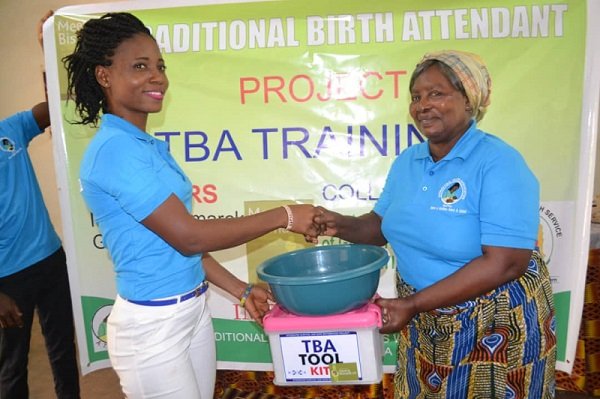
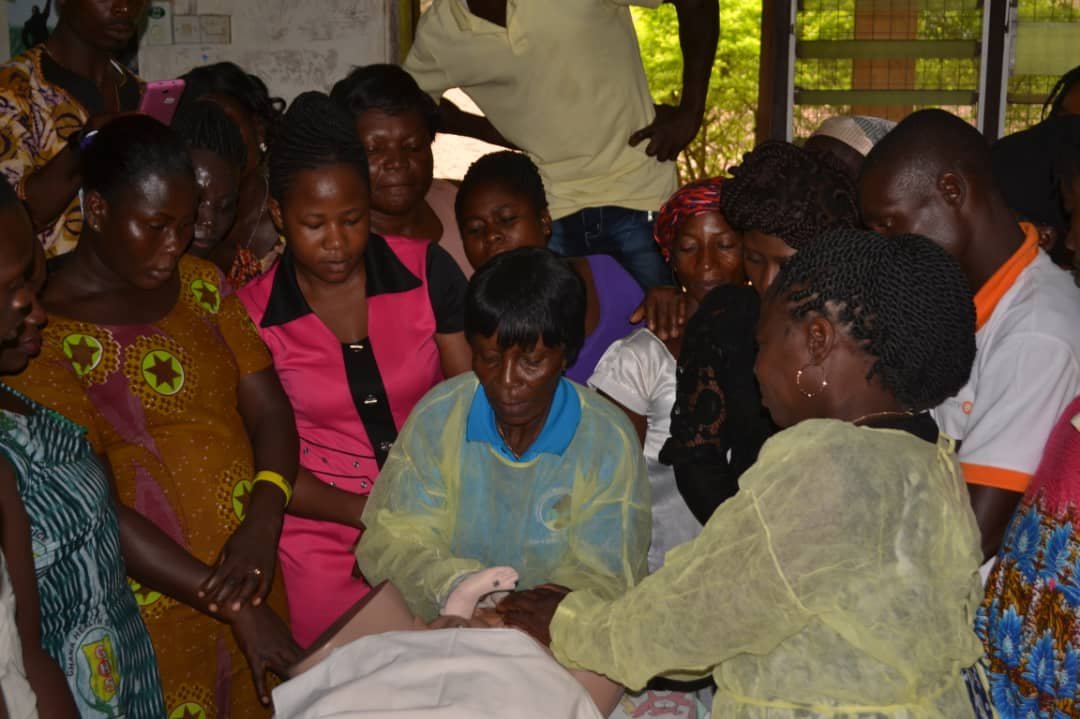
The Mamacare Foundation, a maternal health NGO, has been piloting a model that trains TBAs not to compete with clinics, but to collaborate with them. Over the past decade, more than 860 TBAs have been trained in hygiene, safe delivery practices, early danger-sign recognition, and timely referral systems.
Each trained TBA is paired with a supervising midwife, creating a support system that blends tradition with modern care. The results are promising: referrals from TBAs to clinics have risen by 40 per cent, District hospitals report fewer emergency cases arriving in critical condition. Mothers arrive earlier, and survival rates improve.
For TBAs like Adzo Mawugbe, the change is transformative.
“Before, I panicked when a mother started bleeding. Now I can check her blood pressure and send her quickly to the clinic. This training has given me hope.”
Mothers, too, notice the difference. Esi Atatsi, who delivered all four children with TBAs, explained:
“We trust our TBAs. If they now work with nurses, we can keep our traditions but also be safe.”
Even health workers see the collaboration as a breakthrough.
Amina Ayine (not real name), a nurse at Likpe Polyclinic, said “TBAs now call ahead or even accompany mothers to the clinic. Women arrive earlier and in better condition. This collaboration is saving lives.”
Why Policy Matters
Despite these successes, national policy has often treated TBAs as a problem to be eliminated rather than partners to be empowered. Past attempts to ban TBAs from attending deliveries have done little to change realities in rural Ghana, where women continue to rely on them.
Medical Superintendent, St. Gregory Hospital Dr Laryea Yemoh added that removing TBAs from policy will not remove them from practice. Women still relied on them. The best approach is to train, supervise, and make them partners, not enemies.
Encouragingly, the Ghana Health Service (GHS) is beginning to rethink its approach. New strategies are under discussion to formalize TBAs as Community Maternal Health Agents.
Instead of attending deliveries unsupervised, they would focus on Antenatal education, identifying risk signs, making timely referrals and providing postnatal support.
Such reforms could scale the Volta model nationally weaving TBAs into a safer system rather than pushing them underground.
The Road Ahead
Back in Ekumfi Bogyano, Kotwewaa continues to deliver babies with little more than her hands and her experience. She has heard of the training TBAs receive in the Volta Region and wishes it could reach her community.
“We want training and tools,” she said. “We want to save more lives.”
For Cecelia, who once again chose tradition over distance, the issue was never about rejecting modern medicine. It was about survival.
Her dilemma mirrors Ghana’s own: how to bridge the gap between cultural trust and medical safety. Until rural roads are improved, ambulances become reliable, and every village has a staffed clinic, TBAs will remain central to maternal care.
The challenge, then, is not to erase them but to equip them. To ensure that no mother’s life depends on chance, but on a system where tradition and medicine walk hand in hand. Because behind every statistic is a mother like Cecelia her life too precious to be lost to preventable causes.
This story was made possible by Nigeria Health Watch with support from the Solutions Journalism Network, a non profit organisation dedicated to rigorous and compelling reporting about responses to social problem, http://solutionsjournalsim.org.”
By Benedicta Gyimaah Folley