


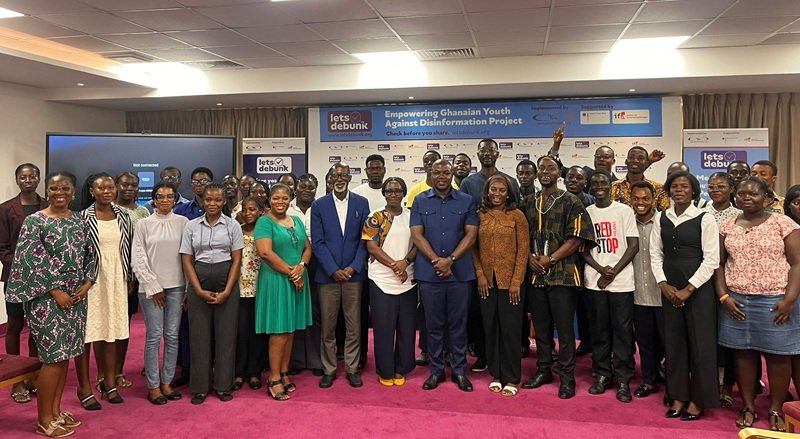
A growing exposure of Ghanaian youth to disinformation, coupled with significant gaps in their ability to verify and respond to misleading content, has prompted the launch of a new platform to strengthen the country’s information resilience.
The LetsDebunk website (www.letsdebunk.org), developed from findings of a baseline survey of young people, is designed to help the youth, community-based organisations and media practitioners identify, verify and challenge disinformation before it spreads.
The platform was unveiled yesterday in Accra at the launch of the Empowering Ghanaian Youth against Disinformation Project, which seeks to equip young people with media and information literacy skills and strengthen community-level responses to information manipulation.
Presenting the findings, the researcher, Ms Rebecca Avusu, said the study examined how young people accessed, consumed and shared information, the types of disinformation they encountered and their capacity to verify and respond to questionable content.
The study was conducted across four regions and complemented by interviews with community-based organisations, community media practitioners, assembly members and civil society organisations to assess institutional readiness.
WhatsApp emerged as the leading source of information, cited by 74.6 per cent of respondents, followed by Facebook, television, TikTok, and friends and family, underscoring the influence of digital networks on youth information consumption.
Politics featured prominently among the areas where respondents encountered disinformation, alongside finance and entertainment, showing that misleading information cuts across several aspects of everyday life.
The findings exposed a gap between awareness and action, with 50.8 per cent of respondents saying they avoided sharing information they considered doubtful, while only 48.4 per cent reported taking action through verification, correction or reporting.
However, 81 per cent of respondents expressed willingness to use LetsDebunk, with verified sources, reliable information and transparent methodology identified as important factors in building trust.
The findings will directly inform the next phase of the project, including youth training programmes beginning in October 2026, responsible content-creation micro-grants and partnerships with youth-focused organisations and community media.
The initiative is being supported by the German Government, whose interim representative said collective action was needed to strengthen Ghana’s resilience against disinformation and protect democratic values, social cohesion and peace.
BY JESSIE PRINCESS DUAH & NELLY QUARCOOPOME
You can now read the *Ghanaian Times* and *The Spectator* newspapers digitally on [TimesNewsPlus](https://timesnewsplus.com/newspapers).
Follow our WhatsApp Channel now! https://whatsapp.com/channel/0029VbAjG7g3gvWajUAEX12Q

