


The Finance Minister, Dr. Cassiel Ato Forson, on Thursday, November 13, 2025, presented the 2026 Budget Statement and Economic Policy of the Government of Ghana. This presentation fulfilled the requirements of Article 179 of the 1992 Constitution and Section 21 of the Public Financial Management Act, 2016 (Act 921).
The 2026 budget articulates the aspirations of President John Dramani Mahama and the governing National Democratic Congress (NDC) for the people of Ghana. The theme, “Resetting for Growth, Jobs and Economic Transformation”, reinforces the campaign promise made to Ghanaians ahead of the 2024 elections, which culminated in the NDC’s electoral victory over the New Patriotic Party (NPP).
While 2026 opens a new chapter of optimism and stability for the macroeconomic environment, it is appropriate to commend the Finance Minister for presenting the budget with honesty and professionalism, without seeking validation through theatrics or symbolic gestures. His presentation reflected the leadership qualities of the President and a commitment to public service.
2025: A Year of Transition and Fiscal Consolidation
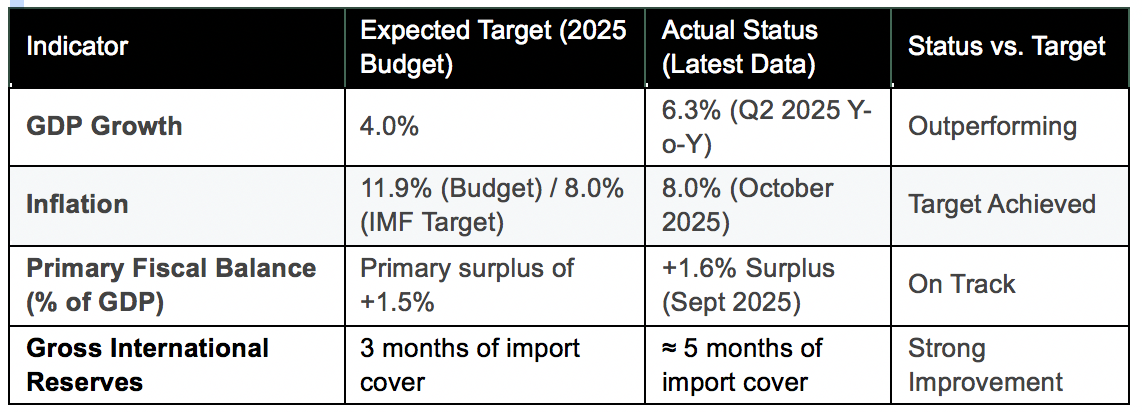
Although 2025 was largely a transition year, macroeconomic fundamentals improved significantly under Dr. Forson’s stewardship. The superior performance of the 2025 budget relative to IMF targets reflects deliberate fiscal discipline and alignment between fiscal and monetary policies.
Key achievements include:
- Debt restructuring and management reduced the debt-to-GDP ratio from 61.8% in December 2024 to 45% in October 2025.
- The sinking fund was revived to serve as a buffer for debt repayment.
- Disinflation trends exceeded IMF targets, allowing for easing of the policy rate.
- Exchange rate stabilisation led to a significant appreciation of the Ghana Cedi against major currencies.
Sectoral growth highlights in H1 2025 include:
- Service sector: 8.8% growth, driven by ICT (17.2%), financial and insurance services (9.5%), transport and storage (6.7%), and education (14.9%).
- Agriculture: 6% growth, with crops (6.2%), livestock (5.8%), and fishing/aquaculture (7.7%).
- Industry: 3.2% growth.
2026 Budget: Strategic Investments for Growth
The 2026 budget aims to expand the economy through:
- Major road and transport infrastructure, including expressways and bridges.
- Reliable energy supply.
- Climate-smart agriculture-led industrialisation.
- Agro-processing value-chain investments.
The government plans to leverage its IMF programme compliance to implement structural reforms, including the passage of a Value for Money Bill to strengthen Public Financial Management (PFM) and institutionalise efficient expenditure management.
The “whole of government” approach to commitment control will be digitised and supported to eliminate waste in public fund management.
Prioritising PFM Diagnostics
Despite these initiatives, inherent risks to budget implementation persist. A data-driven diagnosis of PFM systems at national and sub-national levels is necessary to address weaknesses. While GIFMIS is operational, financial irregularities highlighted in Auditor General reports indicate that internal controls remain insufficient.
Through collaboration with development partners, Ghana can deploy tools such as:
- PEFA (Public Expenditure and Financial Accountability) framework
- Public Expenditure Reviews (PERs)
- Public Expenditure Tracking Surveys (PETS)
- IMF Fiscal Transparency Evaluation (FTE)
- Public Investment Management Assessment (PIMA)
- Tax Administration Diagnostic Assessment Tool (TADAT)
- Open Budget Surveys and OECD MAPS methodology
These tools can guide reforms to reset Ghana’s PFM system, ensuring fiscal discipline and sustainable expenditure management.
Conclusion
The 2026 budget is formulated to serve the people of Ghana, rebuild trust, and prepare the economy for growth. Citizens, households, and businesses have endured the turbulence of past mismanagement, but prudent expenditure management, debt restructuring, and fiscal discipline have restored macroeconomic stability.
The establishment of the Value for Money Office (VfMO) and the Conduct of Public Officers Bill are key initiatives under the 2026 budget. For effective implementation, non-state actors such as CSOs, traditional authorities, and religious leaders should actively support the reset of the economy as a civic duty, contributing to building the Ghana we want.
The writer is Economic Policy Advisor to the Vice President
Email: hzakaria@presidency.gov.gh
🔗 Follow Ghanaian Times WhatsApp Channel today. https://whatsapp.com/channel/0029VbAjG7g3gvWajUAEX12Q
🌍 Trusted News. Real Stories. Anytime, Anywhere.
✅ Join our WhatsApp Channel now! https://whatsapp.com/channel/0029VbAjG7g3gvWajUAEX12Q

