


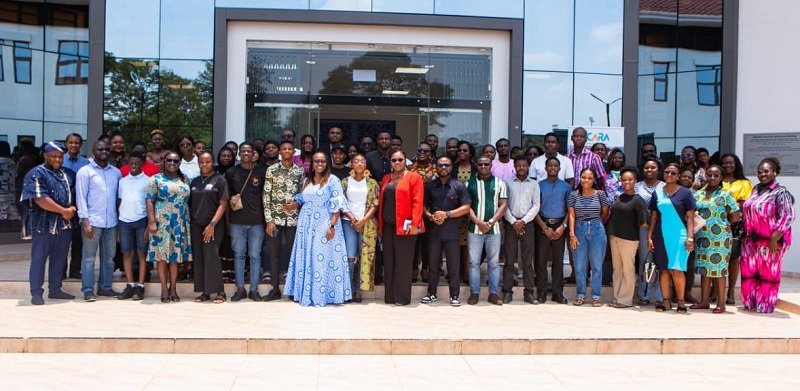
A clinical psychologist, Mrs Ethel Obeng-Treve, has called for the reform of the country’s education system to better support neurodiverse learners who are often excluded by traditional teaching methods.
According to her, the current one-size-fits-all approach to teaching does not serve the diverse needs of all children, particularly those whose brains process information differently.
Neurodiversity refers to the natural variation in how human brains function, learn, and respond to their environment. This includes conditions such as autism, ADHD, dyslexia, and other cognitive or developmental differences.
Speaking at the forum in Accra on Saturday, Mrs Obeng-Treve who is also the Executive Director of Fafranto Psych Org said while most people were considered neurotypical, neurodiverse individuals learn and interact in ways that required different educational approaches.
She highlighted that early childhood—especially between birth and age five—is a critical window for brain development.
She warned that if children are not engaged in stimulating, hands-on learning experiences during this period, it may hinder their long-term cognitive and emotional growth.
“Children learn through movement, touch and active interaction—not passive screen time or rote memorisation,” she said.
Mrs Obeng-Treve noted that emotional safety in the classroom is essential for effective learning.
Since the brain regions responsible for learning also govern emotional responses, children who feel anxious or misunderstood often struggle academically.
The psychologist added that many children with learning differences are misdiagnosed or overlooked due to misinformation and social stigma.
“Some children need visual or tactile support to understand basic concepts, but our system continues to favour only one style of learning,” she said.
The founder of eCampus LLC, Mr Cecil Senna Nutakor, challenged longstanding cultural beliefs that associate learning difficulties with spiritual causes.
He urged parents and educators to seek professional assessments to better understand children’s cognitive needs.
“It’s not spiritual—the child just learns differently,” Mr Nutakor said. “Just as we know our blood group or eye condition, we should also assess how our brains function on the neurodiversity scale.”
Mr Nutakor called for stronger national advocacy, early screening, and public education to encourage open discussion around neurodiversity and reduce stigma.
He emphasised that identifying how a child’s brain works should become routine in parenting and health care.
Also speaking, a Physician Clinical Psychologist at the 37 Military Hospital, Dr Erica Danfrekua Dickson, advocated for inclusive teaching practices and the adoption of assistive learning technologies in schools.
“While some children can learn through lectures, others need to touch, feel or even taste to understand concepts,” Dr Dickson said.
“Failing to recognise this results in unfairly labelling children as slow or unintelligent.”
She stressed that while assistive technologies can support learning, the identification of neurodivergent learners must be done through clinical assessments by trained professionals, not machines.
The fair featured a range of educational tools designed to bridge the gap between conventional teaching methods and the needs of neurodiverse learners.
It brought together educators, health professionals, parents and innovators committed to building a more inclusive education system for every child.
BY RAYMOND APPIAH-AMPONSAH
🔗 Follow Ghanaian Times WhatsApp Channel today. https://whatsapp.com/channel/0029VbAjG7g3gvWajUAEX12Q
🌍 Trusted News. Real Stories. Anytime, Anywhere.
✅ Join our WhatsApp Channel now! https://whatsapp.com/channel/0029VbAjG7g3gvWajUAEX12Q

